Summary

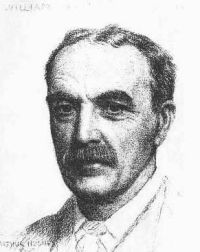
Portrait of William Hale White William Hale White Pages from a Journal with Other Papers

Arnold, although he is so dissatisfied with Byron because he “cannot reflect,” would probably in another mood admit that “reflections” are not what we demand of a poet. We do not ask of him a rhymed book of proverbs. He should rather be the articulation of what in Nature is great but inarticulate. In him the thunder, the sea, the peace of morning, the joy of youth, the rush of passion, the calm of old age, should find words, and men should through him become aware of the unrecognised wealth of existence. Byron had the power above most poets of acting as a kind of tongue to Nature.
Source: Gutenberg

Portrait of William Hale White William Hale White Pages from a Journal with Other Papers

No love even can long endure without complaint, silent it may be, an invalid who is entirely self-centred; and what an agony it is to know that we are tended simply as a duty by those who are nearest to us, and that they will really be relieved when we have departed! From this torture we may be saved if we early apprentice ourselves to the art of self-suppression and sternly apply the gag to eloquence upon our own woes. Nobody who really cares for us will mind waiting on us even to the long-delayed last hour if we endure in fortitude.
Source: Gutenberg

Portrait of William Hale White William Hale White Pages from a Journal with Other Papers

You have known what it is to be in a fog, unable to tell which way to turn, and all at once the cold, wet mist was lifted, the sun came out, the fields were lighted up, the sea revealed itself to the horizon, and your road lay straight before you stretching over the hill. I will not shame myself by apologies that I am no longer young. My love has remained with me. It is a passion for you, and it is a reverence for a mind to which it will be a perpetual joy to submit.
Source: Gutenberg

Get perspective with Kwize: daily news enlightened by great literature