Summary

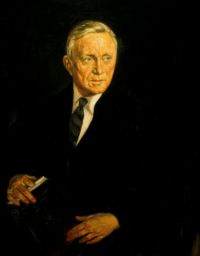
Portrait of William O. Douglas William O. Douglas Colorado Interstate Gas Company v…

If Congress had prescribed a formula it would be the duty of the Commission to follow it. But we cannot say that under the Natural Gas Act the Commission can employ only one allocation formula and that that formula must entail a segregation of property. A separation of properties is merely a step in the determination of costs properly allocable to the various classes of services rendered by a utility. But where as here several classes of services have a common use of the same property difficulties of separation are obvious. Allocation of costs is not a matter for the slide-rule.
Source: Wikisource

Portrait of William O. Douglas William O. Douglas Colorado Interstate Gas Company v…

If the supply comes from a region where there is such overproduction that owners are ready to sell for less than a fair return on their investment, there is no reason why the public should pay more. On the other hand, if the supply is not too plentiful and the price is not a sufficient incentive to exploit it and fails to bring forth the quantity needed, the price is unwisely low, even if it does square perfectly with somebody's idea of return on a 'rate base.' The problem, of course, is to know what price level will be adequate to perform this economic function.
Source: Wikisource

Portrait of William O. Douglas William O. Douglas Colorado Interstate Gas Company v…

Whether the facilities for the production of natural gas should be regulated and, if so, whether the regulation should be left to the states, as we think Congress has left it, are matters for Congress to determine. If it be thought that petitioner's profits from production of gas are too great because they are unregulated, and if it be thought to be important that they be reduced it is immensely more important that that be not accomplished by lawless action.
Source: Wikisource

Get perspective with Kwize: daily news enlightened by great literature