Summary

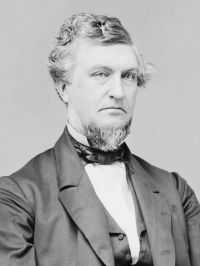
Portrait of Zachariah Chandler Zachariah Chandler Report of the Secretary of the Interior… (1876)

As soon as the Indian is taught to toil for his daily bread and realize the sense of proprietorship in the results of his labor, it cannot but be further to his advantage to be able to appreciate that his labor is expended upon his individual possessions aud for his personal benefit. As long as the land is cultivated and the products owned in common, the homely truth that what is every man's business is no one's, will generally prevail, and the agent with his employes do the most of the farming.
Source: Wikisource

Portrait of Zachariah Chandler Zachariah Chandler Report of the Secretary of the Interior… (1876)

The only punishment which can be inflicted upon a white man for a crime against an Indian is to force him off the reservation. This immunity for crime is most unfortunate, and loudly calls for correction. Were the jurisdiction of the United States courts extended over the reservations, and the Indian taught that he must suffer the same penalty for his crime as a white man, and at the same time be protected in like manner, the labors of the Department would be made much easier.
Source: Wikisource

Portrait of Zachariah Chandler Zachariah Chandler Report of the Secretary of the Interior… (1876)

The Indian must be made to see the practical advantage to himself of his work, and feel that he reaps the full benefit of it. Everything should teach him that he has a home, not only in common with his tribe, but a hearth-stone of his own around which he can gather his family, and in its possession be entirely secure and independent.
The Commissioner's recommendations for the allotments of lands to Indians in severalty—such allotments to be inalienable for a term of years—must ultimately be adopted, and I warmly favor its consideration.
Source: Wikisource

Get perspective with Kwize: daily news enlightened by great literature