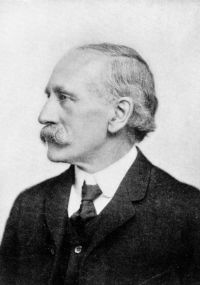
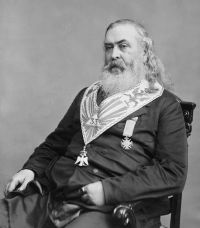
Albert Pike

Definition and stakes

Various,  Graham's Magazine, Vol. XX, No… (1842)

“ The signature is far bolder and altogether better than the general hand.
We believe that Mr. Albert Pike has never published his poems in book form; nor has he written anything since 1834. His “Hymns to the Gods,” and “Ode to the Mocking Bird,” being printed in Blackwood, are the chief basis of his reputation. His lines “To Spring” are, however, much better in every respect, and a little poem from his pen, entitled “Ariel,” and originally published in the “Boston Pearl,” is one of the finest of American compositions. Mr. Pike has unquestionably merit, and that of a high order.
”
Source: Gutenberg

Maurice Garland Fulton,  Southern Life in Southern Literature (1917)

“ ALBERT PIKE
[Albert Pike was a New Englander, born in Boston in 1809, who settled in the Southwest. The larger part of the time he lived in Arkansas, where he was editor, lawyer, and soldier. After the Civil War, in which he served on the Southern side, he moved to Washington, where he practiced law. There he died in 1891.]
TO THE MOCKING BIRD
Thou glorious mocker of the world! I hear
⁠Thy many voices ringing through the glooms
Of these green solitudes; and all the clear,
Bright joyance of their song enthralls the ear,
⁠And floods the heart.
”
Source: Wikisource

John McElroy,  The Struggle for Missouri

“ After the fall of Gens. McCulloch and Mcintosh the command in that part of the field devolved upon Gen. Albert Pike, and it is rare that so great a responsibility falls upon one so unfit. Something of a poet Pike certainly was; much more of a successful politician and place-hunter, but nothing of a leader of men upon the battlefield. ”
Source: Gutenberg

Get perspective with Kwize: daily news enlightened by great literature