Alfonso X of Castile

Definition and stakes

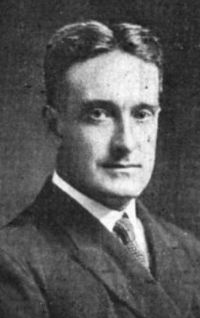
Portrait of John A. Gade John A. Gade Cathedrals of Spain

Three hundred years later, Alfonso X of Castile was not only a distinguished linguist and poet, but the greatest astronomer and lawgiver of his age. When the Spanish people have once more made education as general as it was under the accomplished Arabs, and adopted the division of power insisted on in a letter from Bishop Hosius to the Emperor Constantius, "Leave ecclesiastical affairs alone.... We are not allowed to rule the earth," they will take the rank their character and genius deserve among the nations.
Source: Gutenberg

T. F. Tout The Empire and the Papacy, 918-1273

Richard was a good friend of the Pope, and yet had been the brother-in-law and ally of Frederick II. He scattered his money freely, and the Jews, his faithful dependants in England, actively furthered his candidature. But France took the alarm at the extension of the power of her English enemies, and the inveterate Ghibelline partisans of the Italian cities would hear of no Emperor indifferent to their ancient feuds. The citizens of Pisa suggested that Alfonso X. of Castile would be a better candidate than the Earl of Cornwall, and the French party eagerly took up his claims.
Source: Gutenberg

James Wood The Nuttall Encyclopædia — A

Alfonso X., the Wise, or the Astronomer, king of Castile and Leon, celebrated as an astronomer and a philosopher; after various successes over the Moors, first one son and then another rose against him and drove him from the throne; died of chagrin at Seville two years later. His fame connects itself with the preparation of the Alfonsine Tables, and the remark that “the universe seemed a crank machine, and it was a pity the Creator had not taken advice.”
Source: Wikisource

Get perspective with Kwize: daily news enlightened by great literature