
“ The man I give up to you; as to the poet, it is a different thing. In the opinion of every one, the peculiarity of M. D’Argenton’s genius is the sympathetic quality of his verses. Musset had its irksome degree; and I think that the beginning of this poem, ‘The Parting,’ is very touching: the young woman who goes away in the morning fog in her ball-dress without one word of farewell.” Jack could not restrain himself. “But the woman is yourself,” he cried, “and you know under what circumstances you left.” ”
Quotes about “Alphonse de Musset”
 Alfred de Musset,
The Confession of a Child of the Century…
Alfred de Musset,
The Confession of a Child of the Century…
“ The anguish of death entered into the soul at the sight of that spectre, half mummy and half foetus; they approached it as does the traveller who is shown at Strasburg the daughter of an old count of Sarvenden, embalmed in her bride’s dress: that childish skeleton makes one shudder, for her slender and livid hand wears the wedding-ring and her head decays enwreathed in orange-blossoms. As on the approach of a tempest there passes through the forests a terrible gust of wind which makes the trees shudder, to which profound silence succeeds, so had Napoleon, in passing, shaken the world ”
Alfred de Musset,
The Confession of a Child of the Century…
“ Moreover, he had the slow yet jerky way of speaking that characterizes the pedant. Even his manner of walking, which was not that of youth and health, repelled me; as for his glance, it might be said that he had none. I do not know what to think of a man whose eyes have nothing to say. These are the signs which led me to an unfavorable opinion of Mercanson, an opinion which was unfortunately correct. He sat down on a bench and began to talk about Paris, which he called the modern Babylon. He had been there, he knew every one; he knew Madame de B———, who was an angel ”
Alfred de Musset,
The Confession of a Child of the Century…
“ I replied with a smile, "that it is important? You see very well that I was only joking, and that I did it only to pass away the time.""Ah! my friend, my friend," said Brigitte, "it is a pity that you must seek pastimes."A few days later I proposed that we go to the prefecture to see Madame Daniel dance; she unwillingly consented. While she was arranging her toilette, I sat near the window and reproached her for losing her former cheerfulness."What is the matter with you?" I asked. (I knew as well as she.) "Why that morose air that never leaves you? In truth, you make our life quite sad. ”
Alfred de Musset,
The Confession of a Child of the Century…
“ Of those who have done as I, few would say those words; all have them in their hearts; I have found no others in mine.Returning to Paris in the month of December, I passed the winter attending pleasure parties, masquerades, suppers, rarely leaving Desgenais, who was delighted with me: not so was I with him. The more I went about, the more unhappy I became. It seemed to me after a short time that the world which had at first appeared so strange would hamper me, so to speak, at every step; yet where I had expected to see a spectre, I discovered, upon closer inspection, a shadow. ”
Alfred de Musset,
The Confession of a Child of the Century…
“ Yes, far from this odious world in which you have grown old before your time, yes, my child, you shall really love. I shall have you as you are, and, wherever we go you will make me forget the possibility of a day when you will no longer love me. My mission will have been accomplished, and I shall always be thankful for it."Finally we decided to go to Geneva and then choose some resting place in the Alps. Brigitte was enthusiastic about the lake; I thought I could already breathe the air which floats over its surface, and the odor of the verdure-clad valley ”
Alfred de Musset,
The Confession of a Child of the Century
“ Let us go to Switzerland! Too many people go there, and most of them are deceived as to the nature of its attractions; but it is there, are unfolded the three most beautiful colors on God's earth: the azure of the sky, the verdure of the plains, and the whiteness of the snows on the summits of glaciers."Let us go, let us go," cried Brigitte, "let us fly away like two birds. Let us pretend, my dear Octave, that we just met each other yesterday. You met me at a ball, I pleased you and I love you; you tell me that some leagues distant, in a certain little town you loved a certain Madame Pierson ”
Alfred de Musset,
The Confession of a Child of the Century…
“ Since you have become mine, I realize what I have done; I have felt, in kissing you, that my lips were not, like yours, unsullied. In the name of heaven, help me live! God made me a better man than the one you see before you."Brigitte held out her hands and caressed me tenderly. She begged me to tell her all that had led to this sad scene. I spoke of what I had learned from Larive, but did not dare confess that I had interviewed Mercanson. She insisted that I listen to her explanation. M. de Dalens had loved her; but he was a man of frivolous disposition, dissipated and inconstant ”
Alfred de Musset,
The Confession of a Child of the Century…
“ The name of the young man I was going to see was Smith; he was living near us. When I knocked at his door, I experienced a strange sensation of uneasiness; I was dazed as though by a sudden flash of light. His first gesture froze my blood. He was in bed, and with the same accent Brigitte had employed, with a face as pale and haggard as hers, he held out his hand and said:"What do you wish?"Say what you please, there are things in a man's life which reason can not explain. I sat as still as if awakened from a dream, and began to repeat his questions. ”
Alfred de Musset,
The Confession of a Child of the Century…
“ Whom did she receive as her friends?” “In faith, sir, I have never seen her do otherwise than she does every day, that is to say, walk in the valley, play picquet with her aunt, and visit the poor. The peasants call her Brigitte la Rose; I have never heard a word against her except that she goes through the woods alone at all hours of the day and night; but that is when engaged in charitable work. She is the ministering angel in the valley. As for those she receives, there are only the cure and Monsieur de Dalens during vacation.” ”
Various, Lippincott's Magazine of Popular Literature and Science…
“ A more amiable portrait cannot be imagined than the one to be drawn of him from the history of his intercourse with his brother and from Alfred's own letters and verses to him. This, however, was not the person to give us such an account and analysis of the life and character of Alfred de Musset as the subject called for: he has neither the necessary impartiality nor ability. ”
Alfred de Musset,
The Confession of a Child of the Century…
“ CHAPTER V A TORTURED SOUL It was Mercanson who had repeated in the village and in the chateau my conversation with him about Dalens and the suspicions that, in spite of myself, I had allowed him clearly to see. Every one knows how bad news travels in the provinces, flying from mouth to mouth and growing as it flies; that is what had happened in this case.Brigitte and I found ourselves face to face with each other in a new position. However feebly she may have tried to flee, she had nevertheless made the attempt. It was on account of my prayers that she remained ”
Alfred de Musset,
The Confession of a Child of the Century…
“ Perhaps, before I knew you, another woman might have cured me; but now you alone, of all the world, have power to destroy me or to save me, for I bear in my heart the wound of all the evil I have done you. I have been an ingrate, blind and cruel. God be praised! You love me still. If you ever return to that home under whose lindens I first met you, look carefully about that deserted house; you will find a phantom there, for the man who left it, and went away with you, is not the man who entered it.""Is it true?" said Brigitte, and her face, all radiant with love, was raised to heaven ”
Alfred de Musset,
The Confession of a Child of the Century…
“ I said, “fear nothing; if I have offended you, you know how to punish me. I was angry and I gave way to my grief; treat me as you choose; you may go away now, you may send me away! I know that you love me, Brigitte, and you are safer here than a king in his palace.” As I spoke these words, Madame Pierson fixed her humid eyes on mine; I saw the happiness of my life come to me in the flash of those orbs. I crossed the road and knelt before her. How little he loves who can recall the words he uses when he confesses that love! ”
Alfred de Musset,
The Confession of a Child of the Century…
“ On occasion she could be both good and stupid. One fine day, when they were walking together, she threw herself into Brigitte's arms, and told her that she had noticed I was beginning to pay court to her, and that I had made certain proposals to her, the meaning of which was not doubtful; but she knew that I was another's lover, and as for her, whatever might happen, she would die rather than destroy the happiness of a friend. Brigitte thanked her, and Madame Daniel, having set her conscience at ease, considered it no sin to render me desolate by languishing glances. ”
Alfred de Musset,
The Confession of a Child of the Century…
“ On such days, contrary to my usual inclination, I liked to talk of Paris and speak of my life of debauchery as the most commendable thing in the world. "You are nothing but a saint," I would laughingly observe; "you do not understand what I say. There is nothing like those careless ones who make love without believing in it." Was that not the same as saying that I did not believe in it?"Very well," Brigitte replied, "teach me how to please you always. I am perhaps as pretty as those mistresses whom you mourn; if I have not their skill to divert you, I beg that you will instruct me. ”
Various, The Galaxy, June 1877
“ It is noticeable, by the way, that from our modest Anglo-Saxon point of view these same "Andalusian passions," dealing chiefly with ladies tumbling about on disordered couches, and pairs of lovers who take refuge from an exhausted vocabulary in biting each other, are an odd sort of thing for an ingenuous lad, domiciled in the manner M. Paul de Musset describes, and hardly old enough to have a latch-key, to lay on the family breakfast table. But this was very characteristic all round. Musset was not a didactic poet, and it was not for him to lose time by taking his first steps as one. ”
Alfred de Musset,
The Confession of a Child of the Century
“ Gradually I became more calm and less bitter tears began to course gently down my cheeks. Tenderness succeeded fury. I leaned over Brigitte and looked at her as though, for the last time, my good angel was urging me to grave on my soul the lines of that dear face!How pale she was! Her large eyes, surrounded by a bluish circle, were moist with tears; her form, once so lithe, was bent as though under a burden; her cheek, wasted and leaden, rested on a hand that was spare and feeble; her brow seemed to bear the marks of that crown of thorns which is the diadem of resignation. ”
Alfred de Musset,
The Confession of a Child of the Century…
“ When her tears ceased to flow, he approached her, took her hand in his and kissed it."Believe me," said he, "to be loved by you, whatever the name of the place I occupy in your heart, will give me strength and courage. Rest assured, Brigitte, no one will ever understand you better than I; another will love you more worthily, no one will love you more truly. Another will be considerate of those feelings that I offend, he will surround you with his love; you will have a better lover, you will not have a better brother. ”
Alfred de Musset,
The Confession of a Child of the Century…
“ I sat down near her and kissed the child on its fat cheeks, as if to imbibe some of its innocence. Brigitte accorded me a timid greeting; she could see her troubled image in my eyes. For my part I avoided her glance; the more I admired her beauty and her air of candor, the more I was convinced that such a woman was either an angel or a monster of perfidy; I forced myself to recall each one of Mercanson’s words, and I confronted, so to speak, the man’s insinuations with her presence and her face. “She is very beautiful,” I said to myself, “and very dangerous if she knows how, to deceive ”
Alfred de Musset,
The Confession of a Child of the Century…
“ I had taken Brigitte's hand, and, in a dream, doubtless, she had pronounced my name.I arose and went to my room; a torrent of tears flowed from my eyes. I held out my arms as if to seize the past which was escaping me. "Is it possible," I repeated, "that I am going to lose you? I can love no one but you. What! you are going away? And forever? What! you, my life, my adored mistress, you flee me, I shall never see you more? Never! never!" I said aloud; and, addressing myself to the slumbering Brigitte as if she could hear me, I added: "Never, never ”
Alfred de Musset,
The Confession of a Child of the Century…
“ No, I can not abandon Brigitte; in these circumstances it would be cowardly. She has just lost her aunt, and is all alone; she is exposed to the power of I know not what enemy. Can it be Mercanson? He may have spoken of my conversation with him, and, seeing that I was jealous of Dalens, may have guessed the rest. Assuredly he is the snake who has been hissing about my well-beloved flower. I must punish him, and I must repair the wrong I have done Brigitte. Fool that I am! ”
Alfred de Musset,
The Confession of a Child of the Century…
“ Was it merely charity that served as your divinity in that beautiful temple of verdure that you visited so bravely?"Brigitte's glance when I adopted this tone I shall never forget; I shuddered at it myself. "But, bah!" I thought, "she would do the same thing that my other mistress did—she would point me out as a ridiculous fool, and I should pay for it all in the eyes of the public."Between the man who doubts and the man who denies there is only a step. All philosophy is akin to atheism. Having told Brigitte that I suspected her past conduct, I began to regard it with real suspicion. ”
Various, Lippincott's Magazine of Popular Literature and Science…
“ One morning Alfred made his appearance in spurs, with his hat very much on one side and a huge bunch of hair on the other, by which signs his brother understood that his vanity was satisfied. He was just eighteen. That a man of respectable life and notions like Paul de Musset should take these adventures as a matter of course makes it difficult for an American to find the point of view whence to judge a society so abominably corrupt. ”
Alfred de Musset,
The Confession of a Child of the Century
“ On account of Brigitte's tone of reserve in his presence, I did not think he was in her confidence. I therefore welcomed him with pleasure, although there was always a sort of awkward embarrassment in our meeting. He was asked to act as intermediary between Brigitte and her relatives after our departure. When we three were together, he noticed a certain coldness and restraint which he endeavored to banish by cheerful good humor. If he spoke of our liaison, it was with respect and as a man who looks upon love as a sacred bond ”
Various, The Galaxy, June 1877
“ When the winter came the two intimates talked of leaving Paris together, and, as an experiment, paid a visit to Fontainebleau. The experiment succeeded, but this was not enough, and they formed the project of going to Italy. To this project, as regarded her son, Mme. de Musset refused her consent. (Alfred's father, we should say, had died before the publication of "Rolla," leaving his children without appreciable property, though during his lifetime, occupying a post in a government office, he had been able to maintain them comfortably.) ”
Various, The Idler Magazine, Volume III.…
“ So remarkable were his verses felt to be by the critics of the day, that one of them wrote, “When dying, Alfred de Musset left his two pens as a last legacy to our literature—Feuillet has taken that of prose; into Daudet’s hand has slipped that of verse.”But some years passed before the poet-journalist became the novelist; at one time he dreamed of being a great dramatist, and before he was five-and-twenty several of his plays had been produced at leading Paris theatres. ”
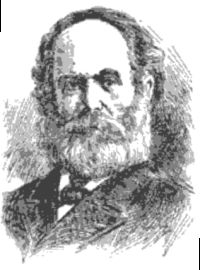 William Cleaver Wilkinson,
French Classics
William Cleaver Wilkinson,
French Classics
“ Musset—the juxtaposition and contrast of the two men irresistibly provokes the reflection—was as much less than Balzac by inferiority of will as he was greater by superiority of genius.Already, such is the pace of progress in these last days of the nineteenth century, the “men of 1830” are beginning to seem a generation long gone by. The future will see whether their successors of the present time enjoy a more protracted supremacy. XXIV.JOUBERT: 1754-1824; Madame Swetchine: 1782-1859; Amiel: 1821-1881. ”
