Battle of Patay

Definition and stakes

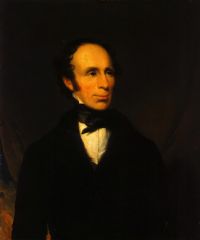
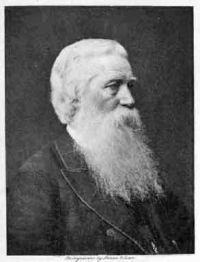
Portrait of John Gibson Paton John Gibson Paton John G. Paton, missionary to the New Hebrides (1889)

Early next morning, Miaki, the war-chief, despatched his herald to sound the Conch and summon the people to battle. He made the Harbour and all the country resound with it for six miles around, and the savage hordes gathered to the call. Putting our trust in God, we quietly resolved to attend as usual to our work and await the result. Excitement and terror drove the Natives hither and thither. One man close to us being nearly killed, his friends assembled in great force, and with clubs and spears, tomahawks and muskets, drove the offending tribe more than a mile into the bush.
Source: Gutenberg

J. G. Wood The uncivilized races of men in all countries of the world… (1875)

The Patagonian can even kill the little cavies with the bolas, so accurate is his aim.
The reader may easily imagine that such a weapon as this would be serviceable in warfare. When the Patagonian uses it in battle, he does not always fling it, apparently because he does not like to deprive himself of his weapon. Sometimes he dashes alongside of a foe, and throws one of the balls at him, just as if he were throwing a stone, retaining the other ball in his hand, so as to recover the weapon after the blow has sped.
Source: Gutenberg

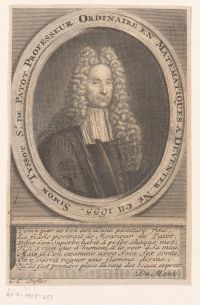
Portrait of Simon Tyssot de Patot Simon Tyssot de Patot The Travels and Adventures of James Massey

When the Forces are ready in the Field, a thousand Artifices and Stratagems are invented and made use of to surprise the Enemy; at length they come to close Engagement, and after they have fought a whole Day many times, it happens sometimes that the greatest Advantage which the Conqueror has to boast of is, having kept the Field of Battle, which costs him upon those Occasions 15 or 20000 fighting Men, while perhaps his Enemy retreats about 500 Paces, with the Loss of not half that Number.
Source: Gutenberg

Get perspective with Kwize: daily news enlightened by great literature