“ After the Buddha had spoken this sutra, the group of five bhikṣus did not give rise to outflows, and their minds attained liberation. After the Buddha had spoken this sutra, the bhikṣus heard what the Buddha had truly said, and blissfully practiced in accordance. ”
Quotes about “Bhiksu”
J. N. Larned, History for ready reference, Volume 3… (1895)
“ Brahmanism is a religion which may be described as all theology, for it makes God everything, and everything God. Buddhism is no religion at all, and certainly no theology, but rather a system of duty, morality, and benevolence, without real deity, prayer or priest. The name Buddha is simply an epithet meaning the perfectly enlightened one,' or rather one who, by perfect knowledge of the truth, is liberated from all existence, and who, before his own attainment of Nirvana, or 'extinction,' reveals to the world the method of obtaining it. ”
André Ferdinand Herold, The Life of Buddha — 18. The Buddha Enters Nirvana (1927)
“ Listen: the air is joyous with the songs that the happy Gods are singing in the sky in honor of the Buddha. But the Buddha is paid a more enduring honor than this. Monks, nuns, believers, all those who see the truth, all those who live within the law, they are the ones that do the Buddha supreme honor. Therefore you must live according to the law, Ananda, and, even in the most trivial matters, you must follow the sacred path of truth. ”
 Ernest Binfield Havell,
A Handbook of Indian Art
(1920)
Ernest Binfield Havell,
A Handbook of Indian Art
(1920)
“ For the two central ideas which run through all Buddhist iconography are as certainly derived from an ancient Indo-Aryan tradition as are the stūpa and the sikhara, to which they are closely related. In the first the Buddha is conceived as the Great Guru, the Muni [2] who by the power of Yoga has obtained full insight into all the mysteries of the universe and has become the teacher of the law. He is the Buddhist counterpart of the Brahman Mahā-Yogi, Siva, worshipped through the jnāna-marga, the Path of Knowledge. ”
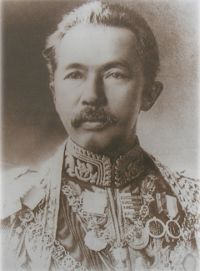 Damrong Rajanubhab,
Angkor From a Siamese Point of View
(1925)
Damrong Rajanubhab,
Angkor From a Siamese Point of View
(1925)
“ A king would resort to Buddhism for spiritual matters, whilst he would strictly follow the precepts of Hinduism in affairs temporal, such as in Coronation Ceremonies, or those connected with Swinging and the Commencement of Ploughing, the like of which you have most likely seen here year by year. In the Hindu monument of Bayon, I noticed a statue of a Bodhisattva, and in Buddhist places were also to be found statues of Vishnu riding on his Garuda, in just the same way as you can see them on the gable of the Chapel of the Emerald Buddha in the Grand Palace at Bangkok. ”
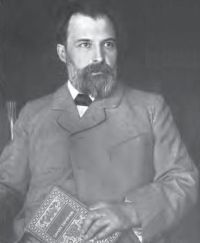 Paul Carus,
The Gospel of Buddha, Compiled from Ancient Records
Paul Carus,
The Gospel of Buddha, Compiled from Ancient Records
“ A bhikkhu duly appointed should address the congregation and expound the Dharma. He should exhort the people to walk in the eightfold path of righteousness; he should [Pg 99] comfort them in the vicissitudes of life and gladden them with the bliss of the fruit of good deeds. Thus the brethren should keep the Uposatha. 4Now the bhikkhus, in obedience to the rule laid down by the Blessed One, assembled in the vihāra on the day appointed, and the people went to hear the Dharma, but they were greatly disappointed, for the bhikkhus remained silent and delivered no discourse. ”
J. N. Larned, History for ready reference, Volume 3… (1895)
“ There is still a sixth, which is perhaps the most noteworthy of all; viz., that the Buddha recognized no supreme deity. The only god, he affirmed, is what man himself can become. A Buddhist, therefore, never really prays, he only meditates on the perfections of the Buddha and the hope of attaining Nirvana. ... Brahmanism and Buddhism [in India] appear to have blended, or, as it were, melted into each other, after each had reciprocally parted with something, and each had imparted something. ”
Paul Carus,
The Buddha: A Drama in Five Acts and Four Interludes
“ The Buddha called his disciples together, and having ordained them, bade them spread the Gospel, with these words translated from the Buddhist Canon:"Go ye now, O disciples, and wander forth for the benefit of the many, for the welfare of mankind, out of compassion for the world. Preach the doctrine which is glorious in the beginning, glorious in the middle, and glorious in the end, in the spirit as well as in the letter. There are beings whose eyes are scarcely covered with dust, but if the doctrine is not preached to them they cannot attain salvation. Proclaim to them a life of holiness. ”
Rachel Harriette Busk, Sagas from the Far East; or, Kalmouk and Mongolian traditionary tales… (1873)
“ Having found a way into the temple, he made a hole in the Buddha-image, and placed himself inside it. Early in the morning, the old man and his wife came, with their daughter, and offered their sacrifice. Then said the father, "Divine Chongschim Bodhisattva! let it now be made known to us, whether is better, that we choose for our daughter the secular or religious condition of life? And if it be the secular, then show us to whom we shall give her for a husband." ”
Paul Ambroise Bigandet, The Life or Legend of Gaudama, the Buddha of the Burmese…
“ The mission of a Buddha is that of a saviour. His great object, to make use of a Buddhistic expression, is, during his existence, to procure the deliverance of all the beings that will listen to his instructions and observe the precepts of the law. He is distinguished by feelings of compassion and an ardent love for all beings, as well as by an earnest desire of labouring for their welfare. ”
Paul Ambroise Bigandet, The Life or Legend of Gaudama, the Buddha of the Burmese…
“ Since the Buddhist knows that his Buddha is no more, and, therefore, can afford him no assistance whatever, that there is no virtue inherent in his relics or images, in fact, that there is no Providence, it is difficult to account for the zeal that he often displays in honouring the great founder of his religion, and all that has a reference to him. ”
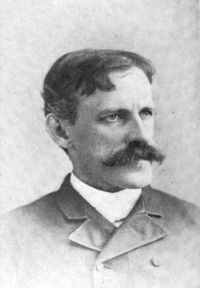 William Elliot Griffis,
The Religions of Japan, from the Dawn of History to the Era of Méiji
William Elliot Griffis,
The Religions of Japan, from the Dawn of History to the Era of Méiji
“ Glancing rapidly at the condition of religion in the era ushering in the birth of Buddha, we note that the old joyousness of life manifested in the Vedic hymns is past, their fervor and glow are gone. In the morning of Hindu life there was no caste, no fixed priesthood, and no idols; but as wealth, civilization, easy and settled life succeeded, the taste for pompous sacrifices conducted by an hereditary priestly caste increased. ”
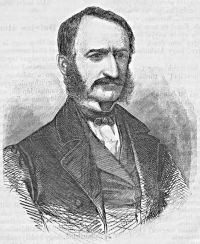 Theodore Duka,
Life and works of Alexander Csoma de Körös
(1885)
Theodore Duka,
Life and works of Alexander Csoma de Körös
(1885)
“ That the doctrine of Buddha must have been diffused among many people, is evident from a similarity of terms in denomination in many languages of a spiritual head or chief ecclesiastic; thus ‘Buddha’ in Sanskrit, ‘peer’ in Persian, ‘sheik’ in Arabic, ‘presbyter’ in Greek and other European languages. I mention all these [60] facts to excite the curiosity of the learned to search after the ancient state of the Buddhists, and to respect a religion which is founded on the same moral principles with our own, namely, on the love of all men. ”
Buddhist birth stories; or, Jataka tales…
“ Advancing to the perfection of equanimity, thou shalt attain supreme Buddhaship. Then he thought, “These are the only conditions in this world that, bringing Buddhaship to perfection and constituting a Buddha, have to be fulfilled by Bodhisattas; beside the ten Perfections there are no others. And these ten Perfections are neither in the heaven above nor in the earth below, nor are they to be found in the east or the other quarters, but reside in my heart of flesh.” ”
viscount John Russell Amberley, An analysis of religious belief
“ Below the fortunate travelers along the path stands the mass of ordinary believers. All of these, of course, aim ultimately—or should aim—at that perfection of knowledge and of character which ensures Nirvâna; but in popular Buddhism at the present day this distant goal appears to be well-nigh forgotten, and to have given place to some heaven, or place of enjoyment, above which the general hope does not rise.Believers in general are divided into two classes, Bhikshus and Bhikshunîs, or monks and nuns; and Upâsakas, lay disciples. ”
William Elliot Griffis,
The Religions of Japan, from the Dawn of History to the Era of Méiji
“ The Buddha is the adept in the wisdom of Buddhism (Bodhijnána) whose first duty, so long as he remains on earth, is to communicate his wisdom to those who are willing to receive it. These willing learners are the 'Bodhisattwas,' so called from their hearts being inclined to the wisdom of Buddhism, and 'Sanghas,' from their companionship with one another, and with their Buddha or teacher, in the Viháras or coenobitical establishments. ”
 Andrew Dickson White,
History of the Warfare of Science with Theology in Christendom
Andrew Dickson White,
History of the Warfare of Science with Theology in Christendom
“ As the Buddhist scriptures were more fully examined, there were disclosed interesting anticipations of statements in later sacred books. The miraculous conception of Buddha and his virgin birth, like that of Horus in Egypt and of Krishna in India; the previous annunciation to his mother Maja; his birth during a journey by her; the star appearing in the east, and the angels chanting in the heavens at his birth; his temptation—all these and a multitude of other statements were full of suggestions to larger thought regarding the development of sacred literature in general. ”
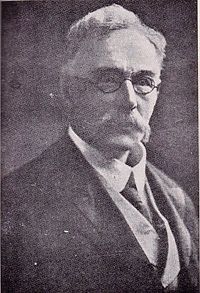 Thomas William Rhys Davids,
The Great Events by Famous Historians…
(1905)
Thomas William Rhys Davids,
The Great Events by Famous Historians…
(1905)
“ Not so many years ago, at the time when Buddhism first became known in Europe through philosophic writings of about six centuries after Buddha, then newly translated, it caused amazement that a religion which had brought three hundred millions of people under its sway should acknowledge no god. But the religion of Buddha, during a thousand years of practice by the Hindus, is entirely different from the representations given us in these translations. ”
Sacred Books of the East (1900)
“ Thus the earth spirits shouted, the spirits of the air took up the strain, the Devas all joined in the hymn of praise, up to the highest Brahma heaven. The Devas of the triple world, now hearing what the great Rishi taught, in intercourse together spoke, "The widely honored Buddha moves the world! Widespread, for the sake of all that lives, he turns the wheel of the law of complete purity!" ”
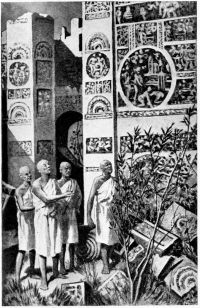 Faxian,
A Record of Buddhistic Kingdoms
Faxian,
A Record of Buddhistic Kingdoms
“ Hwuy-king, Hwuy-tah, and Tâo-ching went on ahead towards (the place of) Buddha’s shadow in the country of Nagâra;5 but Fâ-hien and the others remained in Woo-chang, and kept the summer retreat.6 That over, they descended south, and arrived in the country of Soo-ho-to.7 1 Udyâna, meaning ‘the Park;’ just north of the Punjâb, the country along the Subhavastu, now called the Swat; noted for its forests, flowers, and fruits (E. H., p. 153) . 2 See chap. iii note 6. 3 Bhikshu is the name for a monk as ‘living by alms,’ a mendicant. All bhikshus call themselves Śramans. ”
Paul Ambroise Bigandet, The Life or Legend of Gaudama, the Buddha of the Burmese…
“ The Buddhist religious constitute the thanga, or assembly of the perfect, that is to say, of the disciples who have left the world, conformed their life to that of their teacher, and striven to acquire the science that will qualify them for entering into the way leading to perfection. They are the strict followers of Buddha, who, like him, have renounced the world, to devote themselves to the two-fold object of mastering their passions and acquiring the true wisdom which alone can lead to the deliverance. ”
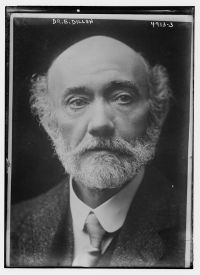 Emile Joseph Dillon,
The Sceptics of the Old Testament…
Emile Joseph Dillon,
The Sceptics of the Old Testament…
“ And the two classes of perfect and imperfect disciples in Mânî's community were copied from those of Buddhism, which divides all believers into two categories: those who sincerely and fervently seek to attain to Nirvana and are termed Bhikshus, and the Upasakas or laymen who, while holding on to life, practise such virtues as are compatible with this unholy desire.The Jewish religion, in certain of its phases, reveals in like manner unmistakable traces of the influence of the religion of the Buddha. ”
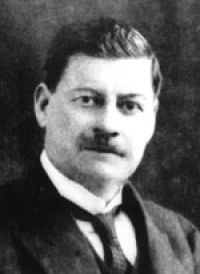 Charles Eliot,
Hinduism and Buddhism, An Historical Sketch…
Charles Eliot,
Hinduism and Buddhism, An Historical Sketch…
“ The deification of the Buddha, the invention of Bodhisattvas who are equivalent to gods and the extraordinary alliance between late Buddhism and Śivaism, are all instances of the general Indian view overcoming the special Buddhist view. But Buddhism is closely connected with the theory of incarnations and the development of the Advaita philosophy, and in the externals of religion, in rites, ceremonies and institutions, its influence was great and lasting. We may take first the doctrine of Ahiṃsâ, non-injury, or in other words the sanctity of animal life. ”
Paul Ambroise Bigandet, The Life or Legend of Gaudama, the Buddha of the Burmese…
“ It may be said in favour of Buddhism, that no philosophico-religious system has ever upheld, to an equal degree, the notions of a saviour and deliverer, and of the necessity of his mission for procuring the salvation, in a Buddhist sense, of man. The rôle of Buddha, from beginning to end, is that of a deliverer, who preaches a law designed to secure to man deliverance from all the miseries under which he is labouring. ”
 Alexander J. McIvor-Tyndall,
Cosmic Consciousness: The Man-God Whom We Await
Alexander J. McIvor-Tyndall,
Cosmic Consciousness: The Man-God Whom We Await
“ When we consider that there are in the religion of Buddhism, as many as sixty different expositions of the teachings of the Lord Buddha, and that these vary, even as the Christian sects vary in their interpretations and presentments of the instructions of the Master, Jesus of Nazareth, we begin to have some idea of the difficulties of correct interpretation of the obscure and mystical language in which mukti is ever described. ”
Paul Ambroise Bigandet, The Life or Legend of Gaudama, the Buddha of the Burmese…
“ As a fit reward of the good work that I have happily brought to a close, I desire to become in some future existence a true Buddha, possessing all the science which will enable me to know all beings, their state and condition, and all the relations subsisting between them, and likewise to be gifted with a true compassion for and benevolence towards all beings, which will prompt me to labour for their deliverance. ”
Anne C. Lynch Botta, Handbook of Universal Literature…
“ Much has been added to the original doctrines of Buddha in the way of mythology, sacrifices, penances, mysticism, and hierarchy.Buddhism possesses a literature of its own; its language and style are simple and intelligible to the common people, to whom it is particularly addressed. For this reason the priests of this religion prefer to write in the dialects used by the people, and indeed some of their principal works are written in Prakrit or in Pali. Among these are many legends, and chronicles, and books on theology and jurisprudence. ”
John Edward Mercer, Nature Mysticism
“ In the East, and more especially in India, the grand aim of life has come to be the release from the appetites and the senses. The Buddhist struggles to suppress all natural desires, and undergoes all manner of self-inflicted tortures, that he may rise above the world of illusion, and attain to absorption in the Universal Spirit. He sacrifices the body that the soul may see. ”
P. V. N. Myers, A General History for Colleges and High Schools (1890)
“ Buddhism gradually gained the ascendancy over Brahmanism; but after some centuries the Brahmans regained their power, and by the eighth century after Christ, the faith of Buddha was driven out of almost every part of India. But Buddhism has a profound missionary spirit, like that of Christianity, Buddha having commanded his disciples to make known to all men the way to Nirvana ”
Arthur Lillie, The Influence of Buddhism on Primitive Christianity
“ The man who was born blind obeyed; and the parable ends with its obvious interpretation. Buddha is the old Rishi, and the four simples are the four great truths. He weans mankind from the lower life and opens the eyes of the blind. ”
Charles Eliot,
Hinduism and Buddhism, An Historical Sketch…
“ The earliest Buddhist texts teach that when this clinging and craving cease, a feeling of freedom and happiness takes their place and later Buddhism treated itself to visions of paradise as freely as Christianity. Many forms of Hinduism teach that the soul released from the body can enjoy eternal bliss in the presence of God and even those severer philosophers who do not admit that the released soul is a personality in any human sense have no doubt of its happiness. ”
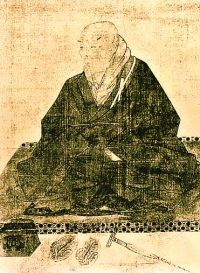 Shinran,
Buddhist Psalms translated from the Japanese of Shinran Shonin
Shinran,
Buddhist Psalms translated from the Japanese of Shinran Shonin
“ The innumerable Buddhas, countless as the sands of Ganges, are a testimony and a shield to all that have life in this sorrowful and sinful world, declaring unto them that teaching most high and difficult of acceptance, which is the true faith.83. Whoso attaineth unto a Soul clear and enduring as diamond shall testify unto his thankfulness for the limitless grace of the Blessed One, for even the testimony and the safeguarding that he hath of all the Buddhas proceed only from the fulfilment of His most merciful promise. ”
 John P. Jones,
India, Its Life and Thought
John P. Jones,
India, Its Life and Thought
“ One can imagine no place more dear to the contemplative Buddhist than this centre of the activities of his great Master, where he spent many of the best years of his life in expounding the teachings of his new cult, and in leading many souls toward the light for which he had struggled with so much of heroic self-denial, and which had ultimately dawned upon him under the sacred Boh tree at Buddha Gaya. ”
