Chancellor of Scotland

Definition and stakes

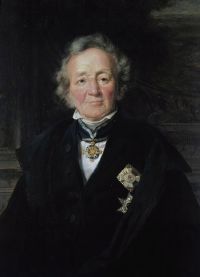
Portrait of Leopold von Ranke Leopold von Ranke,  A history of England principally in the seventeenth century… (1875)

“ At the delivery of the propositions on July 24 at Newcastle, the Chancellor of Scotland insisted as strongly as possible that the King must accept them without further delay. He told him plainly that if he refused he would lose all his friends in Parliament, the city and the country, that England would rise as one man against him, that they would bring him to trial, depose him, and settle the kingdom without him to the ruin of him and his posterity. But the King had already formed his resolution. ”
Source: Gutenberg

1911 Encyclopædia Britannica (1911)

“ He was lord treasurer of Scotland from 1663 till 1667, when he was made lord chancellor of Scotland for life. His estates having been sequestrated by the parliament in 1651, he received a re-grant in 1663 of the earldom of Rothes, together with the title of Lord Leslie and Ballinbreich, with remainders to his heirs male and female, providing that in every case where a female should succeed to the peerage the name of Leslie should be assumed by her husband. ”
Source: Wikisource

Robert Chambers,  Domestic Annals of Scotland from the Reformation to the Revolution (1859)

“ The joy of the Presbyterian monarchists of Scotland might therefore well be mixed with fear.
Very naturally, the men of high rank who had done and suffered most for the cause of monarchy in the late evil days, were appointed to be at the head of affairs in Scotland. The Earl of Glencairn, chief of the guerrilla resistance to Cromwell in 1653, was made Chancellor. Major-general Middleton, who had finally commanded in that insurrection, and was now promoted to the peerage as Earl of Middleton, was appointed to be his majesty’s commissioner to parliament.
”
Source: Gutenberg

Get perspective with Kwize: daily news enlightened by great literature