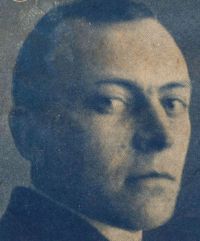
Charles Barry

Definition and stakes

Alfred Barry,  The life and works of Sir Charles Barry (1867)

“ The death of Sir Charles Barry, at a moment when he appeared in the full enjoyment of life and intellect, is a severe public, no less than an artistic loss. We are glad to learn that his claims as one of the worthies of the age are to be recognised by a public funeral, and a resting-place beneath the vault of Westminster Abbey.... It is undeniable that Sir C. Barry has not been for many years popular with officials; but we are not inclined to think the worse of him on that account. He was through life a man of large and expansive ideas, and of resolute determination to carry out those ideas ”
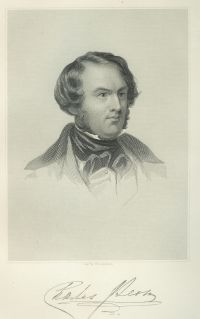
Source: Gutenberg

Alfred Barry,  The life and works of Sir Charles Barry (1867)

“ I know not how any moral, that the ablest rhetorician in the world could draw from Sir Charles Barry’s professional career, could be made to speak more strongly, or admonish us more stringently, than the facts of his life and the monuments which he has left behind him, do for us unerringly, if we will but open our hearts to apprehend and study them aright. ”
Source: Gutenberg

Alfred Barry,  The life and works of Sir Charles Barry (1867)

“ In most cases its influence on the reputation of its subject is but a secondary one. The true and lasting reputation of a man will depend very little on any other memorial than the work which he has done, and{4} the influence which he has exerted in his life-time; and on the results which he has thus left behind for the use and the verdict of posterity.
Charles Barry, the fourth son of Walter Edward and Frances Barry, was born in Bridge Street, Westminster, on the 23rd of May, 1795, in a house which (until last year) lay under the shadow of the Clock Tower of the New Palace at Westminster.
”
Source: Gutenberg

Get perspective with Kwize: daily news enlightened by great literature