Claude Marot

Definition and stakes

Various,  Encyclopaedia Britannica, 11th Edition…

“ The boy was “brought into France”—it is his own expression, and is not unnoteworthy as showing the strict sense in which that term was still used at the beginning of the 16th century—in 1506, and he appears to have been educated at the university of Paris, and to have then begun the study of law. But, whereas most other poets have had to cultivate poetry against their father’s will, Jean Marot took great pains to instruct his son in the fashionable forms of verse-making, which indeed required not a little instruction. ”
Source: Gutenberg

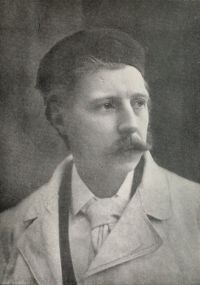
Portrait of Edward Dowden Edward Dowden,  A History of French Literature

“ Clément Marot, born at Cahors in 1495 or 1496, a poet's son, was for a time in the service of Francis I. as valet de chambre, and accompanied his master to the battle of Pavia, where he was wounded and made prisoner. Pursued by the Catholics as a heretic, and afterwards by the Genevan Calvinists as a libertine, he was protected as long as was possible by the King and by his sister. He died at Turin, a refugee to Italy, in 1544.
In his literary origins Marot belongs to the Middle Ages; he edited the Roman de la Rose and the works of Villon
”
Source: Gutenberg

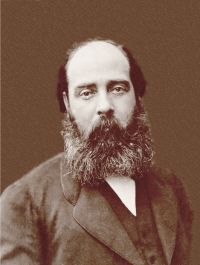
Portrait of George Saintsbury George Saintsbury,  1911 Encyclopædia Britannica (1911)

“ In character Marot seems to have been a typical Frenchman of the old stamp, cheerful, good-humoured and amiable enough, but probably not very much disposed to elaborately moral life and conversation or to serious reflection. He has sometimes been charged with a want of independence of character; but it is fair to remember that in the middle ages men of letters naturally attached themselves as dependants to the great. ”
Source: Wikisource

Get perspective with Kwize: daily news enlightened by great literature