“ Marthe's little sentence evoked that light. Le Corbier, from the beginning of the scene, had noticed the young woman's strange attitude, her silence, her fevered glances that seemed to probe Philippe Morestal's very soul. He understood the full value of the question from her accent. No more vain declamations and eloquent theories! It was no longer a matter of knowing which of the two, the father or the son, thought the more justly and served his country with the greater devotion. [Pg 209] One thing alone carried weight; and Marthe had stated it in undeniable fashion. ”
Marthe
Definition and stakes
The literary figure of Marthe emerges across 19th- and early 20th-century fiction as a complex character, frequently representing moral, emotional, or spiritual struggles. From Émile Zola’s The Conquest of Plassans, where she grapples with belief and commitment, to Maurice Leblanc’s The Frontier, where her speech plays a crucial role in ideological disputes, Marthe’s function shifts significantly.
Elizabeth Bibesco presents her as a symbol of quiet resistance, while D. K. Broster conveys her through calm, almost holy imagery. These portrayals, ranging across genres and writers, demonstrate Marthe as a means through which themes of responsibility, affection, and existential struggle are examined, mirroring the varied human experiences her authors aimed to highlight.
Quotes about “Marthe”
“ He wanted a velvet lawn, a cedar, a rose garden, lavender, a sun dial, iced lemonade and solitude. Or he wanted his own cool apartment, with drawn sunblinds, vases full of flowers, his immense writing table, and a deserted Paris around him.Women always did to you as they wanted to be done by. That sort of literal interpretation of Christianity showed such a lack of imagination. It was no good telling Marthe that you didn't like the sea, she simply wouldn't believe it. ”
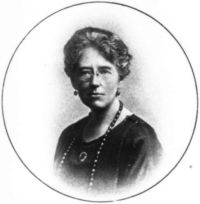 D. K. Broster,
The Yellow Poppy
D. K. Broster,
The Yellow Poppy
“ Could a heart, not very young, break with excess of happiness and gratitude? Spring’s joy was not like this—not so secure, not so blest. Surely this, the joy of autumn, was better!Her eyes were full of tears as she looked at the golden tranquillity before her, the still trees whence floated the murmur of Marthe’s pigeons, the late flowers, the windless blue sky behind the poplars. But they did not fall; and after sitting a moment longer gazing before her she rose, and going to the window, looked in. Marthe, alone once more, was still seated at the harpsichord. ”