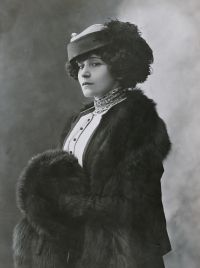
“ Madame Colette Willy has never ceased to be the plain woman par excellence, who rises at dawn to give oats to the horse, maize to the chickens, cabbage to the rabbits, groundsel to the canaries, snails to the ducks and bran-water to the pigs. At eight o'clock, summer and winter, she prepares the café au lait for her maid—and herself. Scarcely a day passes that she does not meditate upon this admirable book:Orchard, kitchen-garden, stable, poultry-yard, bee-hive and hot-house, have no further mysteries for Madame Colette Willy. ”
Colette
Definition and stakes
The literary concept of "Colette" encompasses a multifaceted figure explored by various authors, often symbolizing resilience, introspection, and human connection. In Colette’s own work, Barks and Purrs, she embodies a grounded, almost mythic figure attuned to nature’s rhythms, while Romain Rolland portrays her as a fluid, adaptive presence in Jean-Christophe.
Marguerite Audoux, in Marie Claire, frames Colette as a catalyst for communal empathy and spiritual contemplation. These varied depictions highlight Colette’s role as both a mirror and a metaphor for the interplay between individuality and collective experience.
Quotes about “Colette”
Romain Rolland,
Jean-Christophe in Paris: The Market-Place…
“ He paid no more attention to her than to Colette's little cousin, a child of twelve, shy and silent, whom the Stevens had adopted, to whom also Christophe gave lessons on the piano.But Colette was too clever not to feel that all her charms were lost on Christophe, and too adroit not to adapt herself at once to his character. She did not even need to do so deliberately. It was a natural instinct with her. She was a woman. She was like water, formless. The soul of every man she met was a vessel, whose form she took immediately out of curiosity. ”
“ It has pleased Madame Colette Willy to embody in a couple of delightful animals, the aroma of gardens, the freshness of the field, the heat of state-roads,—the passions of men.... For through this girlish laughter ringing in the forest, I tell you, I hear the sobbing of a well-spring. One does not stoop to a poodle or tom-cat, without feeling the heart wrung with dumb anguish. One is sensible, in comparing ourselves to them, of all that separates and of all that unites us. ”
Marguerite Audoux,
Marie Claire
“ Her eyelids were deep violet. I thought to myself that the end of her martyrdom had come, and I was filled with a deep joy. Quite close to me, the picture of the Virgin in a flowing white robe smiled as it looked at me, and in an outburst of all my faith my thoughts cried out, "Oh, Mirror of Justice, make Colette whole!" My temples were stretched tightly. I was straining every nerve to keep my thoughts from wandering, and I went on saying, "Oh, Mirror of Justice, make Colette whole!" Colette went up to the communion table. Her stick made a little clickety noise on the flagstones. ”
Molly Elliot Seawell,
The Berkeleys and their neighbors
(1888)
“ It is bright, witty, fresh, and humorous. ‘The Story of Colette’ is a fine example of what a French novel can be, and all should be.”—Charleston News and Courier.“Colette is French and the story is French, and both are exceedingly pretty. The story is as pure and refreshing as the innocent yet sighing gayety of Colette’s life.”—Providence Journal. ”
A. Mary F. Robinson,
Twentieth Century French Writers…
(1920)
“ One day it must have dawned on Madame Colette Willy that all men were not made on the same pattern—that there was fresh air somewhere in the world even for a married woman—that a man might be a support, and a comfort, and an example—or perhaps, more simply, that one might do without one altogether. Anyhow, Madame Colette Willy became Madame Colette ”
Marguerite Audoux,
Marie Claire
“ Madeleine told me, mysteriously, that we were not allowed to talk to Colette alone, and when I wanted to know why, she reeled out a long complicated story which told me nothing at all. I asked Bonne Justine, who used a lot of words which I didn't understand, but told me that a little girl like me must not be alone with Colette. I could never understand why. I noticed that every time one of the big girls gave her her arm to help her to walk about a little, three or four other girls always came up and talked and laughed with them. ”
Marguerite Audoux,
Marie Claire
“ I kneeled down in front of her, and when she looked at me, I said: "Perhaps you can get married even though you are a cripple." Colette's story was soon known to everybody. Everybody felt so sad about it that we stopped playing noisy games. Ismérie thought she was telling me a tremendous piece of news when she told me all about it. Sophie told me that we must submit to the will of Our Lady, because She knew what was necessary for Colette's happiness better than we did. I should have liked to have known whether Sister Marie-Aimée knew about Colette. ”
Romain Rolland,
Jean-Christophe in Paris: The Market-Place…
“ Christophe was no psychologist. Lucien Lévy-Coeur could easily beat him on that score. Christophe was Colette's confidant: but Colette was the confidante of Lucien Lévy-Coeur. That gave him a great advantage. It is very pleasant to a woman to feel that she has to deal with a man weaker than herself. She finds food in it at once for her lower and higher instincts: her maternal instinct is touched by it. Lucien Lévy-Coeur knew that perfectly: one of the surest means of touching a woman's heart is to sound that mysterious chord. ”
Marguerite Audoux,
Marie Claire
“ Then she said almost roughly, "Don't you love Ismérie any more?" "Yes, mother." "Really. Then what about Colette?" "I love Colette too." "Oh, you love everybody!" she said. I used to give Colette my arm nearly every day. She never talked to me much, and then only about the other girls. When I sat down next to her she used to look at me queerly. She said she thought I was a queer little thing. One day she asked me if I thought her pretty. Directly she said it, I remembered that Sister Marie-Aimée said that she was as black as a mole. ”
Alphonse Daudet,
The Immortal; Or, One of the "Forty…
“ It was so hard to succeed; one must hold on so long to reach the desired point, always close at hand and always receding. Why was it that Colette seemed every moment on the point of falling into his arms, and yet when he went back he had to begin again from the beginning? ”
Marguerite Audoux,
Marie Claire
“ Bonne Justine, who knew all about everybody, told us that Colette had been brought in with both legs broken, when she was quite a tiny child. She was twenty now. She walked with great difficulty, helping herself with two sticks, and she would never use crutches because she was afraid of looking like an old woman. During recreation I always used to see her alone on a bench. She kept on throwing herself back and stretching. Her dark eyes had such big pupils that one hardly saw the whites at all. ”
Romain Rolland,
Jean-Christophe in Paris: The Market-Place…
“ She went to it with the Stevens: and she was tortured by the hideous sight of the rabble amusing themselves with insulting an artist.... An artist? The man who, in Grazia's eyes, was the very type of art, the personification of all that was divine in life! She was on the point of tears; she longed to get away. She had to listen to all the caterwauling, the hisses, the howls, and, when they reached home, to the laughter of Colette as she exchanged pitying remarks with Lucien Lévy-Coeur. ”
“ For nothing has mollified man—not the prey brought him by a famishing spaniel, nor the humble guilelessness of the shepherd-dog, guarding the peace of the shadowy flocks under the stars.A tragic fear shines in the cat's eyes. "What are you going to do to me now?" it seems to ask, lying on a rubbish-heap, a prey to mange and hunger—and feverishly it waits the new torture that will shatter its nervous system.But have no fear... Madame Colette Willy is very kind. She quickly dispels the hereditary dread of Toby-Dog and Kiki-the-Demure. ”
Th. Bentzon, Jacqueline — Complete
“ She has had a man who has gone abroad to get himself killed—and all for her!” Colette imagined herself under the same circumstances, making the most of a slain lover, with a crape veil covering her fair hair, her mourning copied from that of her divorced sister, who wore her weeds so charmingly, but who was getting rather tired of a single life. As for Miss Kate Sparks and Miss Nora, they could not understand why the breaking of half-a-dozen hearts should not be the prelude to every marriage. ”
S. Baring-Gould, The Lives of the Saints, Volume 03…
“ If a poor person came to the door whilst the family was at meals, she would rise and give him her share.In 1402, at the age of twenty-two, Colette bade farewell to nature, to her friends, to all of life that was most lovely, and enclosed herself in an anchorite's cell, built against the walls of the church of Corbie. These voluntary recluses were common in the Middle Ages. ”
Th. Bentzon, Jacqueline — Volume 2
“ Her sister Colette was selling flowers, like several other young girls, but while for the most part these waited on their customers in silence, she was full of lively talk, and as unblushing in her eagerness to sell as a 'bouquetiere' by profession. ”
Marguerite-Yerta Méléra, Six Women and the Invasion
“ Yvonne has large black eyes, a tiny mouth, and splendid golden locks. She is the musician of the family; thinks nothing better in the world than the harmony of sweet sounds, and lives only for her art. Antoinette bears proudly an imperial beauty and a bachelor's degree, which she has recently carried off. As to Colette, the pet child of the family, by turns charming and execrable, she counts seventeen summers, and rejoices our eyes with the sweetest face ever seen, a rose-bud complexion, and cornflower eyes. ”
Herman Cyril McNeile,
Colette Cares Help!
(1923)
“ So now we all know one another, Colette. And what we want to know is how you came into this unpleasant place. Then, after we've heard that, we must see how we can get you out.” The girl looked at him with shining eyes; he seemed to her the most wonderful man in the world. “You'll think me such a little fool when I tell you,” she whispered miserably; and Jim smiled again. “We've all of us made idiots of ourselves at one time or another. Tell me, Colette—you're not French, are you, like your name?” The girl laughed. “No; I'm English.” Her voice faltered for a moment. “I come from Sussex ”
S. R. Crockett,
The White Plumes of Navarre: A Romance of the Wars of Religion
“ But she would like to see it—the strand where the little Colette had played, the dunes down which she had slidden, and the gold and rose of the towers of Château Collioure, within which her mother was born.A noise without attracted her attention. A procession was entering the square. In the midst was a huge coach with six mules, imported, equipage and all, from Spain. An outrider in the episcopal livery was mounted on each mule, while running footmen scattered the market-stalls and salad-barrows like the passage of a sudden strong wind. ”
Marguerite Audoux,
Marie Claire
“ When I had finished reading Sister Marie-Aimée used to make Colette the cripple sing to us. She always sang the same songs, but her voice was so lovely that we never got tired of listening to it. She sang quite simply, without stopping her work, and she kept time with her needle as she sang. ”
Marie Helene Gulbransen, Bumps and His Buddies (1924)
“ Colette, the Little Dancing Girl Far away in a distant city where all the people love music and dancing, there was a hurdy-gurdy man whom all the children knew as Uncle Antoine. Uncle Antoine had a pet monkey called Monko, who went with him every day on his round of music-making. One day, when the sun was shining brightly, they chanced upon a pretty little blue-eyed girl with golden curls, who was sitting on a doorstep weeping. When Uncle Antoine asked her why she was crying so bitterly, she replied that she was all alone in the world and had no place to live. ”
Marie Helene Gulbransen, Bumps and His Buddies (1924)
“ One day Colette suggested going to the Zoo to entertain the people who were watching the animals, and since Uncle Antoine and Monko were always ready to please her, they hurried across the city, pushing the big hurdy-gurdy before them. Only a Tiny Bunch of Whiskers RemainedWhen they arrived at the Zoo they found that great crowds were there before them, and when Uncle Antoine started to play and Colette to dance, not only did the boys and girls and [57] grown-ups turn to look and listen, but all the animals began to cut capers. ”
Mrs. Lang, The Strange Story Book
“ The rider is uplifted by the water, and at the same time the animal is pressed down by his weight. Luckily Aurore was very light, and Colette was both brave and strong, and everything went well till they reached the opposite bank, which was very steep. Here Deschartres in an agony of terror, was awaiting her. ”
Brandon Fleming, The Crooked House
“ Whenever the warnings showed themselves I fled to the refuge of Miss Masters's house. She bought and kept there things on which, when the mania was at its height, it satisfied me to expend my lust. But those inanimate things, though sufficient for that purpose, had no power in themselves to produce an attack of the madness. The capability to do that was reserved to a woman's beauty—the effect of which, so far, I had had no opportunity to experience. That opportunity came to me for the first time at Nice—twenty years ago. I had never seen a really beautiful woman before I saw Colette d'Orsel. ”
That Which Hath Wings: A Novel of the Day
“ Colette Colin is billed to sing some of her old songs and the very newest of the new ones.... Then we're coming to the Pavilion de la Danse to see the São Paulo sensation.... La Rivadavia and Herculano, and all the rest of the crowd.... Meet you there.... So long! Mind, you're not to get lost!""In London you often hear La Colette," said von Herrnung, as he paid the lean-jawed functionary in the gold-laced light-blue uniform—the usual notice of free entry having vanished from the entrance—and passed with his companion into the gravelled promenade of the open-air concert-hall. ”
Marguerite Audoux,
Marie Claire
“ Colette had given up all hopes of a miracle to take her away, and yet she could not make up her mind to remain. When she saw all the girls of her own age go one by one, she began to rebel. She would not go to confession anymore, and she would not take holy communion. She used to go to mass because she sang there, and she was fond of music. I often stopped with her and consoled her. She explained to me that marriage meant love. Sister Marie-Aimée, who had not been well for some time, became quite ill. Madeleine nursed her devotedly and treated us dreadfully badly. ”
Edward Stratemeyer,
Two young lumbermen
(1903)
“ Baptiste Ducrot was on fairly good terms with one of the loggers, a wild fellow named Passamont, but he tried in vain to get into the good graces of Jean Colette."I not like dat feller," said Colette to Dale. "He drink, he swear, he make von beast of himself." ”
Herman Cyril McNeile,
Colette Cares Help!
(1923)
“ I handed her the postcard, and she glanced at it. “What a pretty girl!” she said. “But what on earth is the matter with the poor girl's right arm?” Jim and I looked at one another, and he smiled gravely. Illustration: We walked quickly along, the girl between us. As far as I could see the street was deserted and I breathed more freely “You have persuaded Dick into making an ass of himself on paper, my dear,” he remarked. “You get him to tell you the story of how Colette had her arm splintered to pieces in MacTavert's dancing saloon in Valparaiso. ”
Marguerite-Yerta Méléra, Six Women and the Invasion
“ We spread out and heaped up, at first linen, then clothes, furs, shawls, carpets, curtains, eider-down coverlets, and a big lion-skin; with many exertions we even hoisted up to the loft a console table. Colette, standing on tiptoe at the other end of the attic, declared:"It looks quite empty; you can put in more things.""Thanks! We are quite stiff enough for once. Thank Heaven the Germans don't come every day, or we should not be equal to the job." ”
Rebecca Harding Davis,
Frances Waldeaux: A Novel
“ George's eyes kindled at the sombre picture. "In this very court," he said, "Constance stood when she summoned the States of Brittany to save her boy Arthur from King John." "Oh, yes, you have read of it to me in your Shakespeare. It is one of his unpleasant stories. Come, Bebe. It grows damp." As she climbed the stone stairway with the child, Colette lingered to gossip with the portier. "Poor lady! You will adore her! She is one of us. ”
Herman Cyril McNeile,
Colette Cares Help!
(1923)
“ In the center, where a space had been left, five or six couples were dancing; around the walls, men of every nationality sat drinking at little tables. Every now and then one of them would seize some woman by the waist and solemnly gyrate around the floor in the center to the strains of the piano. Then the pair would sit down again, and more drinks would be ordered—MacTavert expected his girls to increase the liquor consumption. “Good heavens, Jim, what a horrible spot!” I muttered in disgust. As I spoke we saw Colette. She was dancing with a big Italian, and her eyes lit up as she saw us. ”