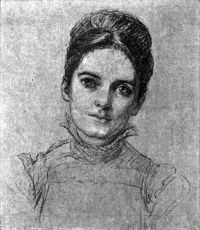
A. Mary F. Robinson

A. Mary F. Robinson

Summary

Portrait of A. Mary F. Robinson A. Mary F. Robinson Twentieth Century French Writers… (1920)

Asmus is a good young bear, a friendly and cordial young bore. It is his first contact with the Spirit of France—with ease, measure, liberty, and grace—qualities which the young German begins by admiring as French, but soon ends by loving as peculiar to Colette Baudoche.
Asmus is the most generous of conquerors, for his heart is filled by a tender admiration for the vanquished. He listens to, looks at, admires all that springs from the trampled soil. His love of Nature—which at first is vague and pantheistic—takes on the tone of France and becomes human, historical, and scientific.
Source: Gutenberg

Portrait of A. Mary F. Robinson A. Mary F. Robinson Twentieth Century French Writers… (1920)

Such natures need the liberty, the solitude, the rapt interminable progression, and ideal refuge of the inner life. A sort of disgust of reality seizes them at the very moment when the earthly paradise they dreamed of appears, at last, within their reach. Alissa has only to stretch out her hand in order to take her happiness. After all, is it worth while? The dread of disenchantment, the sense of mortal imperfection, paralyse her. The dawn of love is surely its most delicate, delicious moment; the high day of noon can never improve upon that exquisite suggestion.
Source: Gutenberg

Portrait of A. Mary F. Robinson A. Mary F. Robinson Twentieth Century French Writers… (1920)

It is the notebook of an observer who is a poet, of a poet who is a philosopher, of a philosopher who is a father; yet even here I distinguish that subtle, poignant note of suffering egotism, as inseparable from Barrès’ work as from that of Chateaubriand. There are moments (as in the anecdote called Le Trou) when this mournful undertone rises almost to the pitch of rancour—a rancour almost immediately caught up, it is true, in a passion of tenderness and gratitude. The child, Philippe, shall see the light of the sun so many years after the abyss shall have swallowed up the father!
Source: Gutenberg

Get perspective with Kwize: daily news enlightened by great literature