“ Dark lowers the night o'er the wide stormy main, Till mild rosy morning rise cheerful again Alas! morn returns to revisit the shore; But Connel returns to his Flora no more. For see o'er yon mountain the dark cloud of death, And Connel's lone cottage lies low on the heath, While bloody and pale, on a far distant shore, He lies to return to his Flora no more. Ye light-fleeting spirits that glide o'er yon steep! ”
Quotes about “Connel”
Various, Blackwood's Edinburgh Magazine…
“ Connel's companion was killed in a fight, but Connel greatly distinguished himself, and became head-chief, or king. Under his guidance and protection, we find Captain Trainer, four of his crew, and the indefatigable Coulter, wandering in the Horrafora territory, through [Pg 333] magnificent tropical scenery, where snakes abounded, rats were as big as ordinary cats, the mosquitos flew about in dense clouds, huge bats flapped their mirky wings beneath the branches of gigantic trees, and immense saucer-eyed owls glared from out the gloom. ”
Carey Rockwell, Sabotage in Space
“ The teleceiver screen glowed into life and Tom and [Pg 199] Connel stared in horror as they recognized the images of three men. The one in the foreground smiled mockingly and said, "Remember me, Connel?""Devers!" Connel roared."And the other two behind him—" stuttered Tom. "Cag and Monty!""Why, you dirty space crawler," cried Connel, "I'll get you if it's the last thing I do!""No, you won't, Major." Devers laughed. "The last thing you'll do is kiss a space torpedo. Then no more Major Blast-off Connel, no more whimpering Professor Hemmingwell, and most important, no more projectile ship!" ”
Carey Rockwell, Danger in Deep Space
“ I wouldn't have thought much of you if you hadn't come out in defense of Manning. And just for your own sake, Astro," said Connel, stepping back in front of the big cadet, "never ask to talk to a Solar Guard officer man to man again. As long as you're still a member of the Cadet Corps such disrespect will not be tolerated. Another man, who might not have understood your feelings, could have used your desire for fair play as a means of trapping you into one of the worst offenses in the Spaceman's Code—striking a Solar Guard officer!""Yes, sir," mumbled Astro. "Thank you, sir." ”
Carey Rockwell, The Revolt on Venus
“ Staring out the windshield, they saw a sudden blinding [Pg 32] flash of light appear over the stern section of the Polaris, a white-hot blaze of incandescence that made them flinch and crouch back."By the craters of Luna!" exclaimed Connel.Before their eyes they saw the stabilizer fin melt and curl under the intense heat of the bomb. There was no sound or shock wave in the vacuum of space, but they all shuddered as though an overwhelming force had swept over them. Within seconds the flash was gone and the Polaris was drifting in the cold blackness of space! ”
Carey Rockwell, Danger in Deep Space
“ Suddenly, as if a rocket cruiser were blasting off in the corridors, a roar, deafening and powerful, filled their ears. And beneath its ferocity there were four unmistakable words:"Polaris unit—staaaaaaaannnnnndddddd toooooo!" [24] Every muscle, every bone in their three bodies snapped to rigid attention simultaneously. Eyes straight, chins in, the cadets waited for whatever calamity had befallen them. From behind came quick, heavy footsteps. They drew closer until they passed alongside and then abruptly stopped. There, in front of them, stood the one and only Major "Blast-off" Connel! ”
Fürst von Hermann Pückler-Muskau, Tour in England, Ireland, and France…
“ O’Connell and the Association have organized us there, like regular troops: I belong to them, and I have a uniform at home: if you saw me in it, you’d hardly know me;—three weeks ago we all met there, above 40,000 men, to be reviewed. We had all green jackets, (for every man must get one as well as he can,) with an inscription on the arm—King George and O’Connell. We have chosen our own officers; they drill us, and we can march and wheel already like the redcoats. We had no arms to be sure, but they could be had too if O’Connell chose. ”
Charles King, Cadet Days: A Story of West Point
“ First Class men, said they, had always enjoyed certain privileges, as became gentlemen of their high standing, who were to become officers in less than a year, and one day it was decided they should sound Connell as to what his views might be, and the result was not at all to their liking. ”
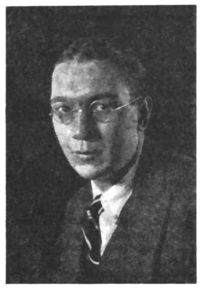 Richard Connell,
The Red Book Magazine, Volume 46…
(1925)
Richard Connell,
The Red Book Magazine, Volume 46…
(1925)
“ NO other young man of our immediate day has wrought more worthily in short fiction than Mr. Connell. Critical attention was first drawn to him by the engaging post-war tales of the French peasantry that a few years ago began to appear after his name. Latterly he has concerned himself with very brief and poignant tales in the French manner, of which the present story is an example. EVERY evening when his work was done, Francis Dawson entered the wide, hotel-like lobby of the Standish Club. ”
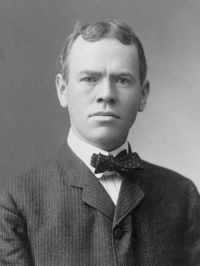 James B. Connolly,
The Seiners
James B. Connolly,
The Seiners
“ Scales flew. We found some next morning glued to the mast-head. I never can get some people to believe that it is so––mackerel scales to the mast-head.“He-yew!” called the skipper, “Oy-hoo!” hollered the halyards gang, “Hi-o!” sung out Clancy and Parsons cheerily at the rail. “Fine fat fish,” commented the men in the seine-boat, the only men who had time to draw an extra breath.Blazing torches were all around us. Arms worked up and down, big boots stamped, while inboard and out swung the dip-net, and onto the deck flopped the mackerel. “Drive her!” called the skipper, and “He-yew!” ”
James B. Connolly,
The Illimitable Senses
(1907)
“ We were in that gale, this same vessel, and no particular praise to me or the crew—and a fine crew, too—that ourselves and vessel came out of it safe. And how was that? I'll tell you. "A wicked night it was, and we trying to buck our way off the Bank. Wind? Lord knows, maybe ninety or a hundred miles an hour 'twas blowing. Frightful—yes. Under a two-reefed fores'l we were, and that was plenty. Black as hell, and seas to your masthead. All around us we could hear the calls of men in peril, with their voices, when sometimes they'd rise above the wind, like the cries of ghosts in the night. ”
Harry Collingwood, The Voyage of the Aurora
“ The leading portion of the fleet was hove-to, hull-down, at sea, before the last craft in the convoy had succeeded in getting her anchor and making a start; but by noon the whole of the fleet was fairly in the Channel, when the Tremendous made the signal to fill, and away they all went, bowling along to the southward and westward, the dull sailers under every rag they could spread to the wind—now settled into a fine steady royal-breeze from east-south-east, while the smarter craft were compelled to show only such a spread of canvas as would enable the dullards to keep pace with them. ”
James B. Connolly,
The Seiners
“ All this time we in the dory were coming on behind, Clancy and I having to beat their dory just as our boat had to beat their boat. And we were driving, too, you may be sure. Clancy was making his oars bend like whips. “Blast ’em! There’s no stiffness to ’em,” he was complaining. And then, “Sock it to her,” he would call out to our fellows in the seine-boat. “We’ve got the porgy crew licked––that’s the stuff,” came from the skipper. From on top of the seine he was watching the fish, watching the gang, watching the other boats, watching us in the dory––watching everything. ”
James B. Connolly,
Laying the Hose-pipe Ghost
(1911)
“ I might say that the captain’s yeoman, having by now come to understand his skipper, drew up that particular endorsement, and he thought it pretty hot stuff, and that it would end the whole matter. And so did the new commandant back in the yard when he got it, and he shipped it on to the Bureau of Heavy Jobs with a flourish. But did it? Not much. Down there the swivel-chairs revolved a few more hundred times and they discussed it over a few dozen lunches, and then back it came with a new touch. Why did the necessity no longer exist? they asked, and shipped it by mistake to the new commandant. ”
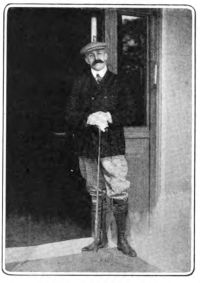 Max Pemberton,
Captain Black (Pemberton) — XIV. We Fight Below the Sea
(1911)
Max Pemberton,
Captain Black (Pemberton) — XIV. We Fight Below the Sea
(1911)
“ Say, that down there, upon the very bed of the Channel, that Channel over which you have looked so often from Dover or Folkestone or the southern ports, down there monstrous lamps were creating a fairy scene more beautiful than any of which man had dreamed through the ages. Do this and you will be able to stand with me in the conning-tower of the Zero and to witness that fearful encounter, when Death hovered about our ship and the lives of all hung upon a thread. ”
James B. Connolly,
The Deep Sea's Toll
“ Another private glance at the telegram revealed nothing new. “We’re altogether too near the shoals for Wiley,” muttered the captain of the Fuller, “and even if we weren’t, I guess he’s having all he wants to look after himself in this gale. I wonder is she drifting fast? The lead there, fellows—give her the lead, and see what’s under us.”One man had life enough to take a sounding. “Forty-five fathom,” he called.“Forty-five! God, but we’re going into it! Cut that drag adrift and let’s get out of here. Get together, men, and make sail of some kind till we’re by this place.” ”
Harry Collingwood, The Log of a Privateersman
“ There was a noise of ropes being thrown down upon planking, and a further outcry of voices, accompanied by a creaking sound and the flapping of canvas. And then it suddenly dawned upon me that I was lying in a bunk in a ship’s forecastle, and that the forbidding-looking stranger must be one of the crew. ”
James B. Connolly,
The Seiners
“ All the time they were driving the seine-boat to its limit, and the skipper was laying to the big steering oar, the longest of them all and taking a strong man to handle it properly––laying to it, swinging from the waist like a hammer-thrower, and the boat jumping to it. She came jumping right for us in the dory in a little while. It doesn’t take a good gang long to put a quarter mile of netting around a school of mackerel. ”
James B. Connolly,
Wide Courses
“ We were now heading about a point off the edge of the outer line of heavy breakers, and as the Bess had the least free-board of any ship of her size sailing the trades, she was soon carrying on her deck her full allowance of loose water. Amidships, when she lay quietly to anchor, a long-armed man could lean over her rail and all but touch his fingers in the sea. ”
James B. Connolly,
The Deep Sea's Toll
“ A mile and a half of trawl to be hauled, and don’t I know that as your dory-mate I ought to haul half of it? And will I? Could I, even if you’d allow me, Martin? Oh, yes—about as well as I could winch in the vessel’s anchor alone. Don’t I know what it means—a man that can’t do his share out here? It means that one of the crew is eating his share of grub and by and by will get his share of the stock, and yet who is no more use in a dory than the painter when the dory’s aboard, and no more use aboard the vessel itself than the spare anchor with the vessel in harbor. ”
Harry Collingwood, The Missing Merchantman
“ Why, you’re moored head and starn; and some ships don’t keep even so much as an anchor watch all the time they’re there. Don’t tell me! A civil engineer’s a man of eddication, boys; and that’s where he goes to wind’ard of chaps like us. Look at the skipper, again. Any one of us could take him up and toss him over the rail, so far as hard work’s concerned. But you give him his charts, and chronometers, and sextants, and things; put him aboard of a ship, and tell him to take her clear round the world and bring her back again to the same place, and he can do it. ”
James B. Connolly,
The Seiners
“ From the row of figures that were seen to be crowding gunnel and thwarts and hauling on the seine, one shadow straightened up beside the smoky torch and spoke. “Can’t be sure yet, Tommie, but things look all right so far. A fair-sized school if we don’t lose ’em.”“Lord, don’t lose ’em, skipper, though I think you’ve got ’em fast enough now. Sounds natural to hear ’em flipping inside the corks, don’t it? Ought to be hurrying ’em up, skipper––it’s getting along in the night.”Clancy, very well satisfied, stood away again and continued to sail triangles around boat and dory. ”
 Joseph Conrad,
The Mirror of the Sea
Joseph Conrad,
The Mirror of the Sea
“ As, rounding a dark, wooded point, bathed in fresh air and sunshine, we opened to view a crowd of shipping at anchor lying half a mile ahead of us perhaps, he called me aft from my station on the forecastle head, and, turning over and over his binoculars in his brown hands, said: “Do you see that big, heavy ship with white lower masts? I am going to take up a berth between her and the shore. Now do you see to it that the men jump smartly at the first order.” ”
Harry Collingwood, Under the Meteor Flag: Log of a Midshipman during the French Revolutionary War
“ We looked into Plymouth Sound on out way, assumed the convoy of a fleet of some seventeen sail, and proceeded.Oh! the misery of convoy-duty. To feel that you have a smart ship underfoot and a crew who will shrink from nothing their skipper may put them alongside, and to be doomed to drag along, day after day, under close-reefed topsails, in order to avoid running away from the sluggish, deep-laden merchantmen; with signalling and gun-firing going on day and night, restraining the swift and urging on the slow ”
James B. Connolly,
The Seiners
“ We’ll try it with the seine-boat. Who’ll go in the seine-boat and try to take them off? Think quick, but mind what it means.”Every man of the crew of the Johnnie Duncan said, “Here!” The cook even came out of the forec’s’le and put in his “And me, too, skipper.”302“You’re good men,” said Clancy,––“damn good men,” and looked us up and down. We felt proud, he said it in such a way. “But you’re taking your lives in your hands and some of you got wives and children––mothers or something. Who hasn’t anybody depending on him? ”
 Gilbert Parker,
No Defense, Volume 2
Gilbert Parker,
No Defense, Volume 2
“ I've done a piece of work of which I'm not ashamed. I've brought a mutinous ship out of mutiny, sailed her down the seas for many weeks, disciplined her, drilled her, trained her, fought her; helped to give the admiral of the West Indian squadron his victory. I enlisted; I was a quota man. I became a common sailor—I and my servant and friend, Michael Clones. I shared the feelings of the sailors who mutinied. ”
James B. Connolly,
The U-boat hunters
“ Every man in that plant is a marine, enlisted or commissioned. Every one has seen service somewhere outside his country.One was in a tropic country one time after an all-night march to a river where the ferry was a water-soaked bamboo raft. They had to wait until some native might happen along with a bull—or it might be a cow—to tow the raft across. After crossing the river twice in that day, the young marine commander halted on the bank and said: "That's sure not [213] crossing in a hurry if we had to. Might's well go to it and build a bridge right now." ”
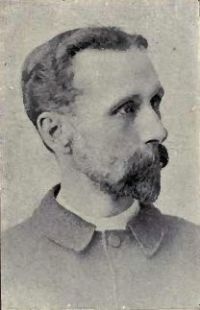 Ralph Connor,
The Man from Glengarry — Chapter XXV
(1901)
Ralph Connor,
The Man from Glengarry — Chapter XXV
(1901)
“ The colonel paused, and fastening his eye upon the impatient share-holder, he said, in tones cool and deliberate: "A gentleman says, 'Nonsense!' I confess that before my visit to the West I should have said the same, but I want to say right here and now, that I have come to the opinion that it pays to look after your men—soul, mind, and body. You'll cut more lumber, get better contracts, and increase your dividends. ”
Harry Collingwood, Across the Spanish Main: A Tale of the Sea in the Days of Queen Bess
“ All the officers of the ship, including Cavendish, Roger, and Harry, were now standing in the eyes of the vessel; some had mounted the bulwarks, and were supporting themselves thereon by holding on to the rigging, and one and all were shading their eyes with their hands against the powerful rays of an almost vertical sun, each anxious to catch the first sight of the man, or men, who had built that signal-fire on the beach. ”
James B. Connolly,
Wide Courses
“ Show yer?" The big man peered around the ship. Surely it was a mirage.At the very first whoop from the big man the pump-man had stopped dead, softly set down his suit-case, and waited. Now he stepped swiftly toward the big man. And to the passenger, looking and listening from the cabin mess-room, it looked like the finest kind of a battle; but just then the captain came up the gang-plank calling out, "Cast off those lines. And don't fall asleep over it, either." The deck force scattered to carry out his orders. The pump-man picked up his suit-case and went on to his quarters. ”
