Cornelius Agrippa

Definition and stakes

James Grant,  The Mysteries of All Nations

“ With hesitation, he called on a most beautiful woman near the chariot, and commanded her to return the ring to its owner, an order she reluctantly obeyed.
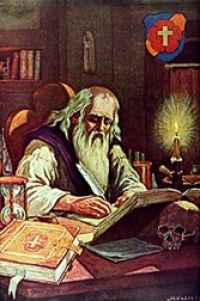
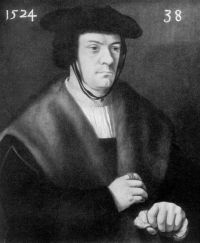
Henry Cornelius Agrippa, who was born at Cologne in 1486, was an astrologer and magician. When travelling, he paid his hotel bills with pieces of horn, which appeared as gold to those to whom they were presented. A foolish fellow entered Agrippa's study, and raised the devil therein during the magician's absence. The novice, being unable to subdue the fiend, lost his life.
”
Source: Gutenberg

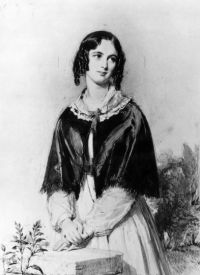
Portrait of Charlotte M. Yonge Charlotte M. Yonge,  History of Christian names (1884)

“ From him the Herods called themselves Agrippa; and his daughter was the first of those ladies named Agrippina, whose tragic stories mark the early years of the Roman empire. Cornelius Agrippa was probably assumed by the learned man of Cologne, who has connected it in the popular mind with alchemy and necromancy. St. Agrippina was martyred at Rome under Valerian, and her remains being transferred to Girgenti in Sicily, she became known to the Greeks. Her name is used in Russia in the softened form of Agrafina, and the rude contraction Gruscha or Grunja. ”
Source: Gutenberg

Henry Hallam,  Introduction to the Literature of Europe in the Fifteenth…

“ They are, compared with Aristotle, like the ephemeral demagogues who start up to a power they abuse as well as usurp on the overthrow of some ancient tyranny. One of these was Cornelius Agrippa, chiefly remembered by the legends of his magical skill. Agrippa had drunk deep at the turbid streams of cabbalistic philosophy, which had already intoxicated two men of far greater merit, and born for greater purposes, Picus of Mirandola and Reuchlin. The treatise of Agrippa on occult philosophy is a rhapsody of wild theory and juggling falsehood. ”
Source: Gutenberg

Get perspective with Kwize: daily news enlightened by great literature