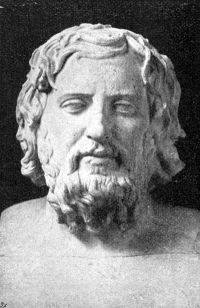
Xanthus

Definition and stakes

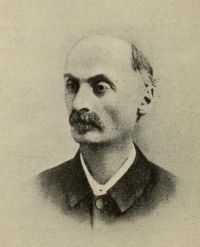
Portrait of Josephine Elizabeth Grey Butler Josephine Elizabeth Grey Butler,  Josephine E. Butler: An Autobiographical Memoir

“ He entered the place—more like a dog’s kennel than a human dwelling—where Xanthus lay. “Xanthus!” he cried, “the Lord Jesus Christ hath sent me to you to bring you glad tidings.”“How! to me—to me—your God has sent you to me! No, there is a mistake. I am the street-fiddler, Xanthus, the most miserable, God-forsaken of men—a man who has done nothing but ill all his life.” Then the good bishop recalled to the memory of Xanthus (this having been revealed to him) the day when he turned back a tempted fellow-creature from sin, and the weeks in which he sustained her, at the cost of his own life ”
Source: Gutenberg

Christian Brothers,  De La Salle Fifth Reader

“ The next day the guests assembled as before, and to their astonishment and the anger of Xanthus nothing but tongues was provided. "How, sir," said Xanthus, "should tongues be the best of meat one day and the worst another?" "What," replied Aesop, "can be worse than the tongue? What wickedness is there under the sun that it has not a part in? Treasons, violence, injustice, fraud, are debated and resolved upon, and communicated by the tongue. It is the ruin of empires, cities, and of private friendships." ”
Source: Gutenberg

Helen A. Clarke,  A Guide to Mythology (1908)

“ But even more marvellous was the time when Xanthus broke into speech and warned his master of his approaching doom. It is quite in the manner of an animal in a savage myth, but in the days of Homer’s “Iliad” thought had advanced so far among the Greeks that the speech of this horse was not regarded as a perfectly natural event as it would be in a savage myth. It was Juno, the goddess, who willed that Xanthus should break eternal silence and portentous speak. Achilles addresses his horses, and Xanthus answers:
“Xanthus and Balius!
”
Source: Gutenberg

Get perspective with Kwize: daily news enlightened by great literature