 Ralph Waldo Emerson,
Compensation
(1841)
Ralph Waldo Emerson,
Compensation
(1841)
“ Crime and punishment grow out of one stem. Punishment is a fruit that unsuspected ripens within the flower of the pleasure which concealed it. ”
Ralph Waldo Emerson,
Compensation
(1841)
“ Crime and punishment grow out of one stem. Punishment is a fruit that unsuspected ripens within the flower of the pleasure which concealed it. ”
James Anson Farrer, Crimes and Punishments
“ Only one thing as yet seems to stand out from the mist, which is, that closely associated as crime and punishment are both in thought and speech, they are but little associated in reality. The amount of crime in a country appears to be a given quantity, dependent on quite other causes than the penal laws directed to its repression. ”
 Thomas Hill Green,
Lectures on the Principles of Political Obligation
Thomas Hill Green,
Lectures on the Principles of Political Obligation
“ Why should not the 'greater crime' be understood to mean the crime implying most moral wickedness, or partly this, partly the crime which violates the more important kind of right? Why should a consideration of the amount of terror that needs to be associated with it in order to its prevention enter into the determination of the 'greater crime' at all? Why again should not the 'heavier punishment' mean simply that in which the person punished actually suffers most pain? ”
 Percy Bysshe Shelley,
The Prose Works of Percy Bysshe Shelley…
Percy Bysshe Shelley,
The Prose Works of Percy Bysshe Shelley…
“ Nothing is more clear than that the infliction of punishment in general, in a degree which the reformation and the restraint of those who transgress the law does not render indispensable, and none more than death, confirms all the inhuman and unsocial impulses of men. It is almost a proverbial remark, that those nations in which the penal code has been particularly mild, have been distinguished from all others by the rarity of crime. ”
 Cesare Beccaria,
An Essay on Crimes and Punishments…
(1764)
Cesare Beccaria,
An Essay on Crimes and Punishments…
(1764)
“ In general, as I have before observed, The degree of the punishment, and the consequences of a crime, ought to be so contrived, as to have the greatest possible effect on others, with the least possible pain to the delinquent. If there be any society in which this is not a fundamental principle, it is an unlawful society; for mankind, by their union, originally intended to subject themselves to the least evils possible. ”
James Anson Farrer, Crimes and Punishments
“ The close connection, therefore, of crime and punishment is of the utmost importance, if it be desirable that in rough and common minds there should, together with the seductive idea of an advantageous crime, immediately start up the associated idea of its punishment. ”
Cesare Beccaria,
An Essay on Crimes and Punishments…
(1764)
“ Men do not, in general, commit great crimes deliberately, but rather in a sudden gust of passion; and they commonly look on the punishment due to a great crime as remote and improbable. The public punishment, therefore, of small crimes will make a greater impression, and, by deterring men from the smaller, will effectually prevent the greater. ”
Cesare Beccaria,
An Essay on Crimes and Punishments…
(1764)
“ An immediate punishment is more useful; because the smaller the interval of time between the punishment and the crime, the stronger and more lasting will be the association of the two ideas of Crime and Punishment; so that they may be considered, one as the cause, and the other as the unavoidable and necessary effect. It is demonstrated, that the association of ideas is the cement which unites the fabric of the human intellect ”
Cesare Beccaria,
An Essay on Crimes and Punishments…
(1764)
“ It is, then, of the greatest importance, that the punishment should succeed the crime as immediately as possible, if we intend, that, in the rude minds of the multitude, the seducing picture of the advantage arising from the crime, should instantly awake the attendant idea of punishment. ”
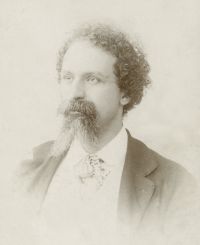 Enrico Ferri,
Criminal Sociology
Enrico Ferri,
Criminal Sociology
“ On the other hand we have the positive system of punishment, based on the principle of an unfixed segregation of the criminal, which is a logical consequence of the theory that punishment ought not to be the visitation of a crime by a retribution, but rather a defence of society adapted to the danger personified by the criminal. ”
 Theodore Parker,
Speeches, Addresses, and Occasional Sermons…
Theodore Parker,
Speeches, Addresses, and Occasional Sermons…
“ To aggravate the matter still more, we have made the punishment more infamous than the crime. A man may commit great crimes which indicate deep depravity; may escape the legal punishment thereof by gold, by flight, by further crimes, and yet hold up his head unblushing and unrepentant amongst mankind. ”
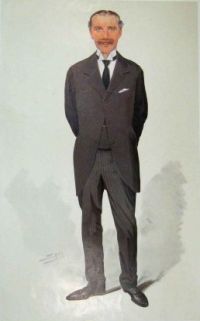 Sir Evelyn Ruggles-Brise,
The English Prison System
(1921)
Sir Evelyn Ruggles-Brise,
The English Prison System
(1921)
“ The first is the primary and more important object: for though society has, doubtless, a strong interest in the reformation of the criminal, and his consequent indisposition to crime, yet the result is here confined to the individual offender, while the effect of punishment, as deterring from crime, extends not only to the party suffering the punishment, but to all who may be in the habit of committing crime, or who may be tempted to fall into it. ”
Thames Williamson, Problems in American Democracy
“ CHANGING IDEALS IN PENOLOGY.—In the early stages of society the spirit of revenge seems to have been a chief motive in the punishment of criminals, although the desire to prevent crime must also have been a factor. With the progress of civilization revenge declined in importance, and the punishment of the criminal seems to have been undertaken chiefly for the purpose of preventing future crimes. Long periods of imprisonment, inhuman punishments, and the frequent use of the death penalty were characteristic of this attitude toward crime. ”
Cesare Beccaria,
An Essay on Crimes and Punishments…
(1764)
“ To every crime, which from its nature must frequently remain unpunished, the punishment is an incentive. Such is the nature of the human mind, that difficulties, if not insurmountable, nor too great for our natural indolence, embellish the object, and spur us on to the pursuit. ”
Cesare Beccaria,
An Essay on Crimes and Punishments…
(1764)
“ THE more immediately after the commission of a crime, a punishment is inflicted, the more just and useful it will be. It will be more just, because it spares the criminal the cruel and superfluous torment of uncertainty, which increases in proportion to the strength of his imagination and the sense of his weakness; and because the privation of liberty, being a punishment, ought to be inflicted before condemnation, but for as short a time as possible. ”
Cesare Beccaria,
An Essay on Crimes and Punishments…
(1764)
“ I shall only add, that in a nation willing to prove the utility of moderate punishment, laws, which, according to the nature of the crime, increase or diminish the time of inquiry and justification, considering the imprisonment or the voluntary exile of the criminal as a part of the punishment, will form an easy division of a small number of mild punishments for a great number of crimes. ”
Cesare Beccaria,
An Essay on Crimes and Punishments…
(1764)
“ LET us now inquire, whether it be advantageous to society, to set a price on the head of a criminal, and so to make of every citizen an executioner. If the offender hath taken refuge in another state, the sovereign encourages his subjects to commit a crime, and to expose themselves to a just punishment ”
 Benjamin Fiske Barrett,
The New View of Hell
(1872)
Benjamin Fiske Barrett,
The New View of Hell
(1872)
“ This may be illustrated in some measure by crimes and their punishments in the world, where also they are linked together; for the laws prescribe some punishment for every crime, so that whoever rushes into crime, rushes also into the punishment thereof. The only difference is, that in the world crime may be concealed ”
James Anson Farrer, Crimes and Punishments
“ The first is, that it is not so easy to preserve the essential proportion between crime and punishment, because, however much a studied cruelty may diversify its forms, none of them can go beyond the extreme limit of endurance which is a condition of the human organisation and sensibility. ”
Enrico Ferri,
Criminal Sociology
“ The tendency of the classical theories on crime and prison discipline is in sharp contrast, for their ideal is the ``uniformity of punishment'' which lies at the base of all the more recent penal codes. ”
 Ambrose Bierce,
The Shadow On The Dial, and Other Essays
Ambrose Bierce,
The Shadow On The Dial, and Other Essays
“ But the advocates of agreeable pains and penalties tell us that in the darker ages, when cruel and degrading punishment was the rule, and was freely inflicted for every light infraction of the law, crime was more common than it is now ”
James Leslie Allan Kayll, A Plea for the Criminal
“ We are generally informed that our penal systems exist for the purpose of repressing crime, and that punishment is thus inflicted upon the criminal in order that others may be deterred from following his example. ”
 Clarence Darrow,
Crime: Its Cause and Treatment
Clarence Darrow,
Crime: Its Cause and Treatment
“ Somehow, vaguely and dimly as most men see everything, the public realizes that instead of punishments preventing crime, punishments suggest crime. In the olden days when men admitted that vengeance and punishment went together, they were at least more logical, for executions were in the open light of day so all might see and be deterred. ”
The Oera Linda Book, from a Manuscript of the Thirteenth Century
“ If any one should be so wicked as to commit robbery, murder, arson, rape, or any other crime, upon a neighbouring state, and our people wish to inflict punishment, the culprit shall be put to death in the presence [41] of the offended, in order that no war may arise, and the innocent suffer for the guilty. If the offended will spare his life and forego their revenge, it may be permitted. If the culprit should be a king, Grevetman, or other person in authority, we must make good his fault, but he must be punished. ”
William Feilden Craies, 1911 Encyclopædia Britannica (1911)
“ Next comes the “délit,” which includes all offences punished by imprisonment over a week and under five years. Then, finally, we arrive at the “crime,” the highest form of offence in French criminal law. It includes all offences subject to a more severe sentence than the punishment assigned to a délit. All cases are held to be crimes where death, life-imprisonment with or without hard labour, deportation out of the kingdom, detention or seclusion in a fortress or other expressly assigned place, are the punishments mentioned by the law. ”
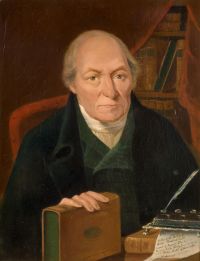 William Hutton,
An History of Birmingham (1783…
William Hutton,
An History of Birmingham (1783…
“ All wise legislators have endeavoured to proportion the punishment to the crime, but never to exceed it: a well conducted state holds forth a scale of punishments for transgressions of every dimension, beginning with the simple reprimand, and proceeding downwards even to death itself. ”
John Adams, Novanglus, and Massachusettensis
“ The punishment inflicted upon rebels and traitors, in all states, bears some proportion to the aggravated crime. By our law, the punishment is, "That the offender be drawn to the gallows, and not be carried, or walk; that he be hanged by the neck, and then cut down alive; that his entrails be taken out and burned while he is yet alive ”
 Frances Milton Trollope,
Paris and the Parisians in 1835…
Frances Milton Trollope,
Paris and the Parisians in 1835…
“ The peculiarly horrid manner in which the crime was committed, and the audacious style in which the criminal appears to brave justice, will, it is thought, prevent any extenuating circumstances being pleaded, as is usually done, for the purpose of commuting the punishment of death into imprisonment with enforced labour. ”
 G. K. Chesterton,
Fancies versus fads
(1923)
G. K. Chesterton,
Fancies versus fads
(1923)
“ We refrain from such fantastic punishments, largely because we do have some notion of making the punishment fit the crime, and not merely fit the community. If the State were the sole consideration, it may be inferred a priori that people might be much more cruel. ”
Thurgood Marshall, Boyde v. California — Dissenting Opinion
“ Rather, an offender's background and character unrelated to his crime should be considered by the sentencer because of society's deeply felt view that punishment should reflect both the seriousness of a crime and the nature of the offender. ”
Alvarado M. Fuller, A. D. 2000
“ But to avoid that greatest of evils—the giving of different sentences for exactly the same crimes, and committed under almost similar conditions—the universal code was established. Now every man knows exactly the punishment fixed for those guilty of any particular crime. ”
comte de Emmanuel-Auguste-Dieudonné Las Cases, Memoirs of the life, exile, and conversations of the Emperor Napoleon…
“ The punishment is his business; and humanity discovers many hidden modes of relieving his physical suffering. His ideas previously to the commission of the crime, the feelings which his punishment creates in the minds of the spectators, and the effect it produces on society in general:—these are the points which must claim the attention of the legislator in deciding the question of the equalization of punishments. ”
 Oscar Wilde,
Miscellaneous Aphorisms; The Soul of Man
Oscar Wilde,
Miscellaneous Aphorisms; The Soul of Man
“ It obviously follows that the more punishment is inflicted the more crime is produced, and most modern legislation has clearly recognised this, and has made it its task to diminish punishment as far as it thinks it can. Wherever it has really diminished it, the results have always been extremely good. ”
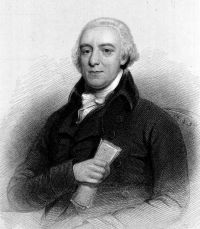 Patrick Colquhoun,
A Treatise on the Police of the Metropolis
Patrick Colquhoun,
A Treatise on the Police of the Metropolis
“ When we are taught, for instance, by the measure-35- of punishment that it is considered by the Law as a greater crime to coin a sixpence than to kill our father or mother, nature and reason revolt against the proposition. ”
 William Graham Sumner,
Folkways
William Graham Sumner,
Folkways
“ Other punishments contained originally a large element of vengeance, vengeance being a primary impulse of great force to satisfy those whom the crimes injured and to deter others from the same crime. The administration of justice, therefore, bore witness to the judgment of the society as to what conduct and character should be selected for preservation or caused to cease. In all modern states the power to make acts crimes has been abused, and the motive of punishment has been so lost that we wrangle as to what it is. ”
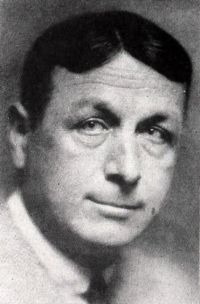 Arthur Cheney Train,
The Prisoner at the Bar: Sidelights on the Administration of Criminal Justice
Arthur Cheney Train,
The Prisoner at the Bar: Sidelights on the Administration of Criminal Justice
“ The criminal law which had its origin when violence was rife is admirably adapted to the prevention, prosecuting and punishment of crude crimes, such as arson, rape, robbery, burglary, mayhem, assault, homicide, and "common-law" larceny,—theft accompanied by a trespass. In old times everything was against the man charged with crime—at least that was the attitude of the court and jury. "Aha!" exclaims the judge as the evidence goes in. ”
Oscar Wilde,
The Soul of Man under Socialism
(1891 | edition)
“ As one reads history, not in the expurgated editions written for schoolboys and passmen, but in the original authorities of each time, one is absolutely sickened, not by the crimes that the wicked have committed, but by the punishments that the good have inflicted; and a community is infinitely more brutalised by the habitual employment of punishment than it is by the occasional occurrence of crime. ”
 Fyodor Dostoyevsky,
Crime and Punishment
(1867)
Fyodor Dostoyevsky,
Crime and Punishment
(1867)
“ “Why does my action strike them as so horrible?” he said to himself. “Is it because it was a crime? What is meant by crime? My conscience is at rest. Of course, it was a legal crime, of course, the letter of the law was broken and blood was shed. Well, punish me for the letter of the law... ”
Enrico Ferri,
Criminal Sociology
“ We may pass by the foundation of primitive vengeance, which from the age of private combats passed into the spirit and form of the earliest penal laws, and still subsists as a more or less unconscious and enfeebled residuum in modern society. We may also pass by the hereditary effect of the traditions of medival severity, which excite an instinctive sympathy for stern punishment in connection with every crime. ”
 George Birkbeck Norman Hill,
Dictionary of National Biography…
(1891)
George Birkbeck Norman Hill,
Dictionary of National Biography…
(1891)
“ The object of criminal jurisprudence should be the repression of crime to the lowest possible amount, the treatment of the criminal being a means to that end, not an end itself; (2) with retribution for sin, man, in regard to his fellow-man, has nothing to do; (3) punishment used solely as a deterrent being often futile, at the best insufficient, and always uncertain in effect, two methods alone exist of preventing crime by penal means, namely, incapacitation or reformation. Under incapacitation come capital punishment and imprisonment. ”
Sir John W. Salmond, Jurisprudence (1913)
“ This is the first object of punishment—to make satisfaction to outraged law.” This conception, like the preceding, marks a stage in the transformation of revenge into criminal justice. Until this transformation is complete, the remedy of punishment is more or less assimilated to that of redress. Revenge is the right of the injured person. The penalty of wrongdoing is a debt which the offender owes to his victim, and when the punishment has 84been endured the debt is paid, the liability is extinguished, innocence is substituted for guilt, and the vinculum juris forged by crime is dissolved. ”
 W. S. Gilbert,
Songs of a Savoyard
(1890)
W. S. Gilbert,
Songs of a Savoyard
(1890)
“ My object all sublime I shall achieve in time— To let the punishment fit the crime— The punishment fit the crime; ”
Cesare BeccariaJames Anson FarrerEnrico FerriClarence DarrowPatrick ColquhounJames Leslie Allan KayllSir Evelyn Ruggles-BriseArthur Griffiths Wilhelm von HumboldtJames DevonThomas Hill GreenWilliam F. RussellArthur Cheney Train
 Jeremy Bentham
 Robert Green IngersollWilliam Feilden CraiesAmbrose BierceThurgood MarshallSir John W. SalmondLouis Ginzberg