Decretals

Definition and stakes

Portrait of Philip Schaff Philip Schaff,  Ante-Nicene Fathers Vol. VIII, The Decretals… (1885)

“ Who could ever imagine that the decisions of these Decretals should be never so much as quoted in any council or in any canon? He that will seriously consider with himself, that, since these Decretals have been imposed upon the world, they have been cited in an infinite number of places by Popes, by councils, and as often by canonists, will be readily convinced that they would have acquired immense credit, and been very often quoted by antiquity, if they had been genuine and true. ”
Source: Wikisource

| override_editor,  Encyclopædia Britannica, Ninth Edition (1878)

“ From the 4th century onwards they formed the most prolific source of canon law. Decretals (decreta constituta decretalia, epistolæ decretales, or shortly decretalia, or decretales) ought, properly speaking, to be distinguished, on the one hand from constitutions (constitutiones pontificæ) , or general laws enacted by the Pope sua sponte without reference to any particular case, and on the other hand from rescripts (rescripta) , which apply only to special circumstances or individuals, and constitute no general precedent. ”
Source: Wikisource

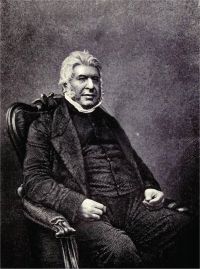
Portrait of Walter Farquhar Hook Walter Farquhar Hook,  A church dictionary

“ It may be as well, for the convenience of students, to insert here, from Bishop Halifax’s Analysis of the Civil Law, a few explanations of the method of quoting the Jus Canonicum. The Decretum of Gratian (which must not be confounded with the Decretals) is divided into, 1. Distinctions. 2. Causes. 3. Treatise concerning consecration. The Decretals are divided into, 1. Gregory IX. Decretals in 5 books. 2. The sixth Decretal. (Boniface, 1298.) 3. The Clementine Constitutions (of Pope Clement V.) . Now in the Decretum, 1st part, e. g. “1 dist. c. ”
Source: Gutenberg

Get perspective with Kwize: daily news enlightened by great literature