“ Beyond the sheeny ribbon of the Jumna, north, south, east, west, into the blurred horizon, you can see only land and land and land—a million acres with nothing on them to see—except the wealth of India and the secret of the greatness of Delhi.Then look down past your toes and you will see the evidence of some of Delhi’s falls. From the ground you will have noticed ruins about you; but there the Kutb Minar dwarfs everything. Now you see that you stand above a field of broken arches, solitary pillars, stumps of towers, and in the middle of what must once have been a town of mosques and tombs. ”
Delhi Sultanate
Definition and stakes
Quotes about “Delhi Sultanate”
J. E. Muddock, The Great White Hand; Or, the Tiger of Cawnpore… (1896)
“ I should counsel you to speed at once to Meerut, for is it not to Meerut that Harper has gone? But even if you were to go there, what force that you could raise would be powerful enough to enter the walled city of the Mogul? Delhi is the great stronghold. It is to that place that the tide of revolution flows. And it will need all the power of your mighty nation to wrest it from the grasp of the insurgents. What we have to do, we must accomplish by stratagem and stealth. ”
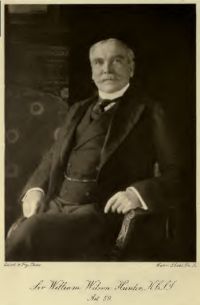
William Wilson Hunter,
Encyclopædia Britannica, Ninth Edition
(1878)
“ From this date a new era in the history of Delhi began. A pension of 120,000 per annum was allowed to the king, with ex clusive jurisdiction over the palace, and the titular sove reignty as before; but the city, together with the Delhi territory, passed under British administration. Fifty-three years of quiet prosperity for Delhi were brought to a close by the mutiny of 1857. Its capture by the mutineers, its siege, and its subsequent recapture by the British have been often told, and nothing beyond a short notice is called for here. ”
Archibald Forbes,
Colin Campbell, Lord Clyde
“ The revolt of the native troops at that great station was consummated in rapine and slaughter. Delhi, with its vast munitions of war unprotected save by a handful of devoted European soldiers, fell into the hands of the insurgents. The pensioned King of Delhi was drawn from his senile obscurity and proclaimed Emperor of India, and the great city became the capital of a rival power and the centre of attraction to the revolted army. ”
Charles John Griffiths, A Narrative of the Siege of Delhi
“ Truly the capture of Delhi was a feat of arms without a parallel in our Indian annals. The bravery of the men, their indomitable pluck and resolution, the siege carried on with dogged pertinacity and without a murmur, proclaimed to the world that British soldiers, in those stormy times when the fate of an Empire was at issue, had fully maintained the reputation of their ancestors and earned the gratitude of their country. ”
“ For full 400 years the Mohammedans knocked at the door of India before they could establish a kingdom there. The first Mohammedan King of Delhi was Kutb-ud-din Aibak, who established a dynasty in 1206 A. D. The Mohammedans were in possession of some parts of Sindh and the Punjab between the eighth and the twelfth centuries, but India was not conquered nor the Hindus beaten until Prithvi Raj, the last Rajput King of Delhi, was defeated by the treachery of a brother Rajput chief in the year 1193 A. D.India Practically Independent up to the Twelfth Century. ”
William Gordon Stables,
On to the Rescue: A tale of the Indian Mutiny…
(1895)
“ Delhi was even then a large and well-fortified city, high up on the banks of the Jumna, with its walls and ramparts, its gates and fosses, its king's palace, its public buildings, and its maze of bazaars and narrow streets. It stands about forty miles from Meerut, but never- Fighting and Massacre at Delhi. ”
Various, Encyclopaedia Britannica, 11th Edition…
“ His dynasty is known as that of the slave kings, and it is to them that old Delhi owes its grandest remains, among them Kutb Mosque and the Kutb Minar. The slave dynasty retained the throne till 1290, when it was subverted by Jalal-ud-din Khilji. The most remarkable monarch of this dynasty was Ala-ud-din, during whose reign Delhi was twice exposed to attack from invading hordes of Moguls. On the first occasion Ala-ud-din defeated them under the walls of his capital; on the second, after encamping for two months in the neighbourhood of the city, they retired without a battle. ”
Various, The Atlantic Monthly (1858)
“ The masters of Delhi are the masters not only of a city, but of a deeply rooted tradition of supremacy. The delay had told. Almost every day in the latter half of May was marked by a new mutiny in different military stations, widely separated from each other, throughout the North-Western Provinces and Bengal. The tidings of the possession of Delhi by the mutineers stimulated the daring madness of regiments that had been touched by disaffection. ”
J. G. Bartholomew, A Literary and Historical Atlas of Asia
“ Sultans of Delhi.—When Mohammad bin Sam (1193-1205 A.D.) defeated the allied Hindu forces on the plain of Thaneswar in 1193 he became master of India and founded the dynasty known as the Sultans of Delhi, which survived till the Moghul conquest. In addition to striking coins of the usual Mohammadan type he copied the coins of his Hindu predecessors (e.g. Plate VI. 10, copper, cf. 2 and 3; VI. 11, gold, cf. 4) . The coins of his successors are the tanka (about 175 grains) in gold and in silver, in addition to smaller coins of copper and billon. ”
James Talboys Wheeler, India Under British Rule from the Foundation of the East India Company
“ Agra and Allahabad in the North-West Provinces; Lucknow in Oudh; Benares, Patna, and Calcutta in Bengal; Bombay in the Deccan; Madras in the remote south. From Calcutta and Bombay the [216] revolt of Delhi sent a thrill through the whole British empire. Men familiar with India, her history, and her people, could not believe the news. It was the heaviest blow to British prestige in India since the tragedy of the Black Hole in Calcutta. A century of European civilisation had been swamped by a mutiny of Asiatic sepoys against greased cartridges. Delhi was lost; the Mogul régime was restored ”
Archibald K. Murray, History of the Scottish Regiments in the British Army
“ Delhi, the great central tower of rebellious strength, was the scene of months of hard fighting and sore privation; but over all these British valour triumphing, was rewarded in the reduction of that important stronghold, and the utter discomfiture of its daring defenders. But Lucknow reversed the picture. There we find the British besieged by a countless host of the enemy; there we regard a handful of brave men resolved to sell their lives as dearly as possible, rather than yield to the ruthless rebels who in multitudes encompassed the Residency. ”
Earl Frederick Sleigh Roberts Roberts, Forty-one years in India: from subaltern to commander-in-chief
“ The fall of Delhi was loudly proclaimed, and the glad tidings spread like wildfire throughout the length and breadth of India, bringing intense relief to Europeans everywhere, but more especially to those in the Punjab, who felt that far too great a strain was being put upon the loyalty of the people, and that failure at Delhi would probably mean a rising of the Sikhs and Punjabis. ”
William Eleroy Curtis,
Modern India
“ Wherever the viceroy may hold court, wherever the government may sit, Delhi always has been and always will be the capital of India, for have not the prophets foretold that the gilded marble palaces of the Moguls will stand forever? Although Benares and Lucknow have a larger population, Delhi is regarded as the metropolis of Northern India, and in commerce and manufactures stands fourth in the list of cities, Bombay, Calcutta and Madras only surpassing it in wealth, industry and trade. ”
“ The old saying, 'Who holds Delhi, holds India,' has its dark counterpart in the unwritten belief that no alien ruler, enthroned at Delhi, shall endure. Hence the dismay of many loyal Indians when the British Government deserted Calcutta for the Queen of the North. And here, already, were her endless, secretive byways rivalling Calcutta suburbs as hornet-nests of sedition and intrigue. ”
James Talboys Wheeler, India Under British Rule from the Foundation of the East India Company
“ The ruins in the neighbourhood of Delhi are monuments of the triumphs of Islam and the Koran, raised by warriors from Cabul and Bokhara, who were reverenced as Ghazis—as destroyers of idols and idolaters. Indeed, the pilgrim who still wanders amongst the palaces, mosques, mausoleums, towers, domes, archways, terraces, and gardens of Delhi, and the country round, may yet recall the days when the Hindus were a conquered people, and the Mohammedans were their oppressors and persecutors. ”
H. B. George, Battles of English History
“ The British army, though invariably successful in their encounters, and slowly gaining more and more ground, could not in any sense be said to besiege the city: they were not far from being themselves beleaguered. Moreover no help could come except from one quarter. The whole mass of the revolted territory lay between Delhi and Calcutta. The means of conquering Delhi must be furnished, if at all, from the Punjab.England has never been better served than by the men who at the crisis of the mutiny governed the Punjab and adjoining provinces. ”
George Dodd,
The History of the Indian Revolt and of the Expeditions to Persia…
“ A pensioned prince with no responsibilities, he was a true Oriental sensualist, and had become an almost imbecile old man between eighty and ninety years of age. Nevertheless, for the reasons already more than once stated, he was invested with a certain greatness in the eyes of the natives of Hindostan; and Delhi was still their great city. Hindoos, Afghans, Patans, Seljuks, Rajpoots, Tatars, Moguls, Persians, Rohillas, Mahrattas, Sikhs—all had left their impress upon the capital; and with one or other of these, the millions of India had sympathies either of race or of creed. ”
William Jennings Bryan,
The Old World and Its Ways
“ Within a century after the death of Mohammed the Moslems made an attack upon India, but it was five hundred years later before they became masters of the great peninsula. Then for five hundred more it was the scene of conflict between rival Moslems until Timur (Tamerlan, the Tartar) plundered it and drenched it with blood. In all these wars Delhi was the strategic point, the natural capital of the north. ”
1911 Encyclopædia Britannica (1911)
“ At the time of the Delhi Durbar held in January 1903 to celebrate the proclamation of Edward VII. as emperor of India these two halls were used as a dancing-room and supper-room, and their full beauty was brought out by the electric light shining through their marble grille-work. The native city of Delhi is like most other cities in India, a huddle of mean houses in mean streets, diversified with splendid mosques. ”
Thomas Wolseley Haig, Historic Landmarks of the Deccan (1907)
“ It was his intention that all that made Delhi what it was, save only its stones, bricks, and mortar, should be bodily transferred to Daulatabad. The emperor made all possible arrangements for the comfort of travellers on the road between the two cities, but no arrangements that could be made were sufficient to prevent unspeakable suffering The inhabitants of Delhi evinced a natural disinclination to leave their homes, and Muhammad bin Tughlaq expelled them by armed force, and drove the wretched and homeless citizens across India to make new homes for themselves in the capital of his choice. ”
Louis Tracy, The Red Year: A Story of the Indian Mutiny
“ Delhi was the center of Mohammedan hopes; its palace held the lineal descendant of Aurangzebe, with his children and grandchildren; it was stored to repletion with munitions of war; yet, such was the inconceivable folly of the rulers of India at that time, the nearest British regiments were stationed in Meerut, while the place swarmed with native troops, horse, foot and artillery!A May morning in the Punjab must not be confused with its prototype in Britain. Undimmed by cloud, unchecked by cooling breeze, the sun scorches the earth from the moment his glowing rays first peep over the horizon. ”
Charles John Griffiths, A Narrative of the Siege of Delhi
“ For 100 years they had dominated the land of the Five Rivers. Ever eager for war, their turbulent spirits gave them no rest. It had been a belief that they would in the future acquire the sovereignty of Hindostan, and I know for certain that among the soldiers for many years there had been a tradition that one day they would sack the imperial city of Delhi.The latter expectation was in a manner fulfilled; but not as an independent nation or under their own leaders did they capture and plunder the Mohammedan capital: they accomplished that feat as loyal subjects of the British Crown. ”
George Dodd,
The History of the Indian Revolt and of the Expeditions to Persia…
“ It was pointed out, among other things—that Delhi is admirably placed, geographically and politically; that its site was selected by men who looked primarily to the maintenance of power in the northwestern regions of India; that, as a commercial entrepôt, it is the point at which the two great streams of Central Asian trade diverge to Calcutta and Bombay; that, as a military cantonment, the city commands the Jumna at the best point for crossing the river; that it is the most central point from which the marauding Goojurs and Meewatties could be controlled ”
Thomas Wolseley Haig, Historic Landmarks of the Deccan (1907)
“ In 1337 the new emperor came to the conclusion that since the Deccan had been added to his dominions, Delhi was no longer sufficiently central to be a suitable capital for the whole empire, and orders were issued declaring that Daulatabad would henceforth be the capital This order did not signify only a transfer of the imperial residence, which would naturally have been followed by a transfer of trade and population A moderate measure of this nature would have accorded ill with Muhammad bin Tughlaq's fiery and impetuous disposition. ”
Flora Annie Webster Steel,
India Through the Ages: A Popular and Picturesque History of Hindustan
“ Delhi was laid waste; the horrors of Nâdir-Shâh being repeated and excelled, for the Durrâni had not the Persian's hold upon his troops. He also penetrated further down-country than did Nâdir, and harried the Gangetic plain as far as Muttra. The news of his raid, indeed, was one of the many factors in the problem of action or inaction which Clive had had to decide. But the heat drove the hardy northmen back to their hills, and Upper India reverted once more to its old peaceful life, Delhi to dreams. ”
Thomas Wolseley Haig, Historic Landmarks of the Deccan (1907)
“ Here, we may imagine, the successors of the resourceful and accomplished Turk were wont to sit in the cool of the evening, enjoying the fresh breeze and surveying the fair landscape spread out around them, and from this point of vantage Abul Hasan, the last of that kingly line, doubtless watched, with mingled apprehension and amusement, the efforts of the great host of the emperor of Delhi to wrest from him his fortress capital, the last possession that remained to him of all his dominions. ”
H. B. George, Battles of English History
“ More important in its moral effect, more remarkable as an instance both of political and military audacity, was the reconquest of Delhi. The imperial city had but a small force of sepoys stationed in it, when the mutiny broke out at Meerut, forty miles off. Many of the mutineers hastened to Delhi, flying, it would seem, from the expected vengeance of the English troops at Meerut, who however were detained inactive by the hopeless incapacity of their general. The Delhi sepoys rose at the news, and slaughtered all the English in the city: those who lived outside fled as best they could. ”
George Dodd,
The History of the Indian Revolt and of the Expeditions to Persia…
“ Everywhere the demeanour of the native population is more than respectful to the Europeans—it is cringing. Fear possesses every soul. Never was a conquest more thorough than is for the present that of Delhi and its neighbourhood by the British. The present disposition of the native mind in Delhi towards us, of terror and trembling obedience, is one which no wise man can wish permanently to continue. ”
George Dodd,
The History of the Indian Revolt and of the Expeditions to Persia…
“ What occurred within Delhi on the subsequent days is imperfectly known; the few Europeans who could not or did not escape were in hiding; and scanty notices only have ever come to light from those or other sources. A Lahore newspaper, three or four months afterwards, gave a narrative prepared by a native, who was within Delhi from the 21st of May to the 23d of June. Arriving ten days after the mutiny, he found the six regiments occupying the Selimgurh and Mohtabagh, but free to roam over the city ”