“ He is an exponent of the Dhamma, an exponent of the Vinaya. He acts with our consent and approval. He knows, he speaks for us, and that is pleasing to us," other bhikkhus are to admonish them thus: "Do not say that, Ven. sirs. That bhikkhu is not an exponent of the Dhamma and he is not an exponent of the Vinaya. Do not, Ven. sirs, approve of a schism in the Community. Let the venerable ones' (minds) be reconciled with the Community, for a Community in concord, on complimentary terms, without dispute, with a common recitation, dwells in peace." ”
Dhamma
Definition and stakes
The theme of “Dhamma” has been addressed by authors such as Thomas William Rhys Davids, Unknown, Vincent Arthur Smith and Charles Eliot. It is often associated with terms like Buddha, dharma, Buddhism, Nirvana and Brahmin.
Quotes about “Dhamma”
Unknown, The Diamond Sutra (Chin-Kang-Ching…
“ Spence Hardy.5 “Faith is in the world the best property for a man; Dhamma (the Law) , well observed, conveys happiness; truth, indeed, is the sweetest of things; and the life they call the best which is lived with understanding.”—Sutta-Nipata. Fausböll.6 “What then, Subhuti? All the Buddhas, and all the perfect laws of the Buddhas, have sprung from (the principles of) this one Sutra; but, Subhuti, that which is spoken of as the Law of Buddha, is after all not such a Law (or, is a Law of no Buddha) .”—Kin-Kong-King. Beal. ”
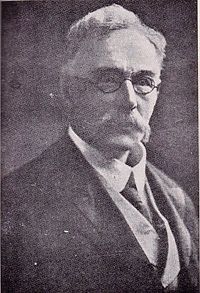 Thomas William Rhys Davids,
1911 Encyclopædia Britannica, Volume 16…
(1911)
Thomas William Rhys Davids,
1911 Encyclopædia Britannica, Volume 16…
(1911)
“ The leaders of the Great Vehicle urged their followers to seek to attain, not so much to Arahatship, which would involve only their own salvation, but to Bodhisatship, by the attainment of which they would be conferring the blessings of the Dhamma upon countless multitudes in the long ages of the future. ”
 Vincent Arthur Smith,
Asoka - the Buddhist Emperor of India
(1920)
Vincent Arthur Smith,
Asoka - the Buddhist Emperor of India
(1920)
“ We must also consider how he managed to reconcile the apparently inconsistent positions of monk and monarch. Dharma, or Dhaṁma, means to a Hindu the rule of life for each man as determined by his caste and station, or, in other words, the whole duty, religious, moral, and social, of a man born to occupy a certain position in the world. For many ages past this conception of dharma has been inseparably associated with the notions of caste. Each caste has its own dharma, and conduct most proper for the member of one caste is reprehensible in the highest degree for a member of another. ”
Thomas William Rhys Davids,
1911 Encyclopædia Britannica, Volume 16…
(1911)
“ Now the older school also held, in the first place, that, when a man had, in this life, attained to Arahatship, his karma would not pass on to any other individual in another life—or in other words, that after Arahatship there would be no rebirth; and, secondly, that four thousand years after the Buddha had proclaimed the Dhamma or doctrine of Arahatship, his teaching would have died away, and another Buddha would be required to bring mankind once more to a knowledge of the truth. ”
“ I will not teach Dhamma to a person who sits holding up his knees and who is not ill: a training to be observed.66. I will not teach Dhamma to a person wearing headgear who is not ill: a training to be observed.67. I will not teach Dhamma to a person whose head is covered (with a robe or scarf) and who is not ill: a training to be observed.68. Sitting on the ground, I will not teach Dhamma to a person sitting on a seat who is not ill: a training to be observed.69. Sitting on a low seat, I will not teach Dhamma to a person sitting on a high seat who is not ill: a training to be observed. ”
The Buddha's Path of Virtue: A Translation of the Dhammapada
“ It is these ideals of self-control, self-culture and heroic endeavour, the graces of wisdom, purity and love, the eternal law of Karma, or causality and moral retribution—under which every deed, good or bad, comes back most to the doer and yields fruit, helping or marring his progress—that are enshrined in the Dhammapada in luminous, pithy verse which lingers in the memory as a fountain of noble inspiration. They are almost too ethereal for human nature's daily food, and it is granted to few to realise in actual life these counsels of perfection unaided. ”
The Buddha's Path of Virtue: A Translation of the Dhammapada
“ The Dhammapada is a part of the Khuddaka Nikāya of the Buddhistic Canon and consists of about 420 stanzas in the sloka metre. Every fully ordained bhikkhu [1] is expected to know the book by heart, and its verses are often on the lips of pious laymen. The beginner of Buddhist studies can have no better introduction to Buddhism and must go back to it again and again to enter into the spirit of Buddha and his apostles. ”
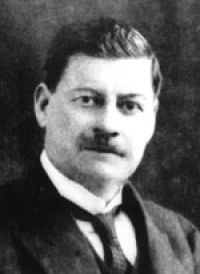 Charles Eliot,
Hinduism and Buddhism, An Historical Sketch…
Charles Eliot,
Hinduism and Buddhism, An Historical Sketch…
“ Happy is the woman who has such a husband. In the Anguttara Nikâya, III. 55 the Brahman Jâṇussoṇi asks Buddha what is meant by Sanditthikam nibbâṇam, that is nirvâṇa which is visible or belongs to this world. The reply is that it is effected by the destruction of lust, hatred and stupidity and it is described as akâlikam, ehipassikam opanayikam, paccattam veditabbam viññûhi--difficult words which occur elsewhere as epithets of Dhamma and apparently mean immediate, inviting (it says "come and see") , leading to salvation, to be known by all who can understand. ”
 Daisetz Teitaro Suzuki,
Essays in Zen Buddhism
(1927)
Daisetz Teitaro Suzuki,
Essays in Zen Buddhism
(1927)
“ In this respect the Buddha was simply following the practise of all other Indian sages and philosophers. This however was not all with him, he saw some deeper meaning in the discipline which was to awaken the highest spiritual sense for comprehending the Dharma. Indeed, without this ultimate awakening, dhyana however exalting, was of no import to the perfection of Buddhist life. So we have in the Dhammapada, v. 372: “Without knowledge (paññā, prajñā) there is no meditation (jhāna, dhyāna) , without meditation there is no knowledge: he who has knowledge and meditation is near unto Nirvana.” ”
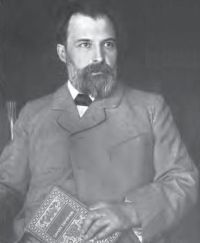 Paul Carus,
The Gospel of Buddha, Compiled from Ancient Records
Paul Carus,
The Gospel of Buddha, Compiled from Ancient Records
“ THE TEACHER. XLVIII. THE DHAMMAPADA. This is the Dhammapada, the path of religion pursued by those who are followers of the Buddha: 1Creatures from mind their character derive; mind-marshalled are they, mind-made. Mind is the source either of bliss or of corruption. 2By oneself evil is done; by oneself one suffers; by oneself evil is left undone; by oneself one is purified. Purity and impurity belong to oneself, no one can purify another. 3 You yourself must make an effort. The Tathāgatas are only preachers. The thoughtful who enter the way are freed from the bondage of Māra. ”
Buddhist birth stories; or, Jataka tales…
“ But none the less also is the story-teller thoroughly in earnest; he really means that justice is noble, that to conquer evil by good is the right thing, and that goodness is the true measure of greatness. The object is edification also, and not amusement only. The lesson itself is quite Buddhistic. The first four lines of the Second Moral are indeed included, as verse 223, in the Dhammapada or ‘Scripture Verses,’ perhaps the most sacred and most widely-read book of the Buddhist Bible; and the distinction between the two ideals of virtue is in harmony with all Buddhist ethics. ”
 Surendranath Dasgupta,
A History of Indian Philosophy…
Surendranath Dasgupta,
A History of Indian Philosophy…
“ This doctrine, which was taken up and elaborated by Nagârjuna, Âryyadeva, Kumârajîva and Candrakîrtti, is more or less a corollary from the older doctrine of Buddhism. If one could not say whether the world was eternal or non-eternal, or whether a Tathâgata existed or did not exist after death, and if there was no permanent soul and all the dhammas were changing, the only legitimate way of thinking about all things appeared to be to think of them as mere void and non-essential appearances. ”
 L. Adams Beck,
The splendour of Asia: The story and teaching of the Buddha
(1926)
L. Adams Beck,
The splendour of Asia: The story and teaching of the Buddha
(1926)
“ How has the Exalted One taught?”“Even by the complete annihilation, rejection, and driving forth of the lust of life—this is what was taught by the Exalted One.” So answered the nun Dhammadhina. “Even through the breaking of any attachment to the Transient.”But of how Attachment began to be in the beginning of things the Lord would not answer. The Way out, he taught; the way in concerns not at all the man who is fleeing for his life to peace and safety from attachment to the Transient and its illusion.And again:“But what follows after death? What follows after the extinction of illusion?” ”
Thomas William Rhys Davids,
1911 Encyclopædia Britannica, Volume 8…
(1911)
“ These works show great learning, exegetical skill and sound judgment. But as Dhammapāla confines himself rigidly either to questions of the meaning of words, or to discussions of the ethical import of his texts, very little can be gathered from his writings of value for the social history of his time. For the right interpretation of the difficult texts on which he comments, they are indispensable. ”
The Buddha's Path of Virtue: A Translation of the Dhammapada
“ It seems to be an Anthology, prepared for the use of the faithful, of verses believed to be the real words of Buddha, short improvisations in which he expressed striking thoughts and embellished his preaching. They were current among the early Buddhists, and have been culled from the other scriptures as of high ethical and spiritual value. The importance of the Dhammapada for a critical study of Buddhism is thus considerable. ”
Surendranath Dasgupta,
A History of Indian Philosophy…
“ If we are to define its characteristics we must say that it knows (vijânana) , goes in advance (pubba@ngama) , connects (sandhâna) , and stands on nâmarûpa (nâmarûpapada@t@thânam) . When the consciousness gets a door, at a place the objects of sense are discerned (ârammana-vibhâvana@t@thâne) and it goes first as the precursor. When a visual object is seen by the eye it is known only by the consciousness, and when the dhammas are made the objects of (mind) mano, it is known only by the consciousness [Footnote ref 2] . ”
Charles Eliot,
Hinduism and Buddhism, An Historical Sketch…
“ In the commentary on the Dhammapada [431] the doctrine of salvation by devotion is affirmed in its extreme form, namely that a dying man who has faith in the Buddha will be reborn in heaven. But this commentary is not of early date and the doctrine quoted is probably an instance of the Hinayana borrowing the attractive features of the Mahayana. The sutras about Amitâbha's paradise, which were composed about the time of the Christian era and owe something to Persian though not to Christian [182] influence, preach faith in Amitâbha as the whole of religion. ”
Surendranath Dasgupta,
A History of Indian Philosophy…
“ Great emphasis was laid on sîla, samâdhi and paññâ and the doctrine that there was no soul. The Abhidhammas hardly give us any new philosophy which was not contained in the Suttas. They only elaborated the materials of the suttas with enumerations and definitions. With the evolution of Mahâyâna scriptures from some time about 200 B.C. the doctrine of the non-essentialness and voidness of all dhammas began to be preached. ”
Gautama Buddha, Dhammapada — Chapter 4: The flowers
“ It is assumed that the verse existed before it was collected into the Dhammapada; therefore the word is here rendered to "the path to Enlightenment" instead of being left untranslated.↑ The Pali term refers to a student who has undergone the first level of training, but still has far to go before attaining perfection.↑ or "beyond sight of the King of Death". In other words, the fear of death has no meaning for one who has attained nibbana.↑ Temptation and illusion here are personified as Mara. ”
Arthur Lillie, The Influence of Buddhism on Primitive Christianity
“ But perhaps the Jewish writer did [Pg 64] not like the universalism inculcated in the Buddhist narrative."HE BEGAN TO WASH THE DISCIPLES' FEET." (John xiii. 5.) In a vihâra at Gandhâra was a monk so loathsome and stinking, on account of his maladies, that none of his brother disciples dare go near him. The great Teacher came and tended him lovingly and washed his feet. ("Chinese Dhammapada," p. 94.) THE GREAT BANQUET OF BUDDHA.In the "Lalita Vistara" (p. 51) it is stated that those who have faith will become "sons of Buddha," and partake of the "food of the kingdom." ”
 Rabindranath Tagore,
Creative Unity — An Indian Folk Religion
(1922)
Rabindranath Tagore,
Creative Unity — An Indian Folk Religion
(1922)
“ Thus originated the doctrine of the Dharma-kâya, the Infinite Wisdom and Love manifested in the Buddha. It was the first instance, as I have said, when men felt that the Universal and the Eternal Spirit was revealed in a human individual whom they had known and touched. The joy was too great for them, since the very idea itself came to them as a freedom--a freedom from the sense of their measureless insignificance. It was the first time, I repeat, when the individual, as a man, felt in himself the Infinite made concrete. ”
Daisetz Teitaro Suzuki,
Essays in Zen Buddhism
(1927)
“ In the Dharma there are no sentient beings, because it is free from the stains of being; in the Dharma there is no Self because it is free from the stain of selfhood. When the wise understand this truth and believe in it, their conduct will be ‘in accordance with the Dharma.’“As the Dharma in essence has no desire to possess, the wise are ever ready to practise charity with their body, life, property, and they never begrudge, they never know what an ill grace means. As they have a perfect understanding of the threefold nature of emptiness, they are above partiality and attachment. ”
H. Fielding, The Soul of a People
“ And the monk lived there all his life, and taught the children, and preached the marvellous teaching of the great Buddha, till at length his time came again and he returned; for of monks it is not said that they die, but that they return.This is the common belief of the people. Into this has the mystery of Dharma turned, in the thoughts of the Burmese Buddhists, for no one can believe the incomprehensible. A man has a soul, and it passes from life to life, as a traveller from inn to inn, till at length it is ended in heaven. ”
Paul Carus,
Gospel of Buddha
(1917)
“ But, Ānanda, the Tathāgata knows for certain that in this whole assembly of the brethren there is not one brother who has any doubt or misgiving as to the Buddha, or the truth, or the path! For even the most backward, Ānanda, of all these brethren has become converted, and is assured of final salvation."18 Then the Blessed One addressed the brethren and said: "If ye now know the Dharma, the cause of all suffering, and the path of salvation, O disciples, will ye then say: We respect the Master, and out of reverence foi ”
“ And from each gem-lotus there proceed thirty-six hundred thousand kotis of rays of light. And from each ray of light there proceed thirty-six hundred thousand kotis of Buddhas, with bodies of golden color, possessed of the thirty-two marks of great men, who go and teach the Dharma to beings in the immeasurable and innumerable worlds in the eastern quarter. Thus also in the southern, western, and northern quarters, above and below, in the cardinal and intermediate points, they go their way to the immeasurable and innumerable worlds and teach the Dharma to beings in the whole world. ”
 T. K. Cheyne,
The Reconciliation of Races and Religions
T. K. Cheyne,
The Reconciliation of Races and Religions
“ If any one attacks our Buddhist friends for atheism, they have only to refer (if they can admit a synthesis of northern and southern doctrines) to the conception of Dharmakâya, of Him who is 'for ever Divine and Eternal,' who is 'the One, devoid of all determinations.' 'This Body of Dharma,' we are told, 'has no boundary, no quarters, but is embodied in all bodies.... All forms of corporeality are involved therein; it is able to create all things. Assuming any concrete material form, as required by the nature and condition of karma, it illuminates all creations.... ”
Lewis Hodous, Buddhism and Buddhists in China
“ Underlying this universe of phenomena and change there is a unity. It is the basis of all being. It is within all being and all being rests in it. It is because of this common background that men are able to apprehend it. This universal basis we call dharma, or law. Its characteristics are that everything born grows old, is subject to disease and death; that the teachings of Buddha purify the mind and enable it to obtain supreme enlightenment ”
Vajracchedikā Prajñāpāramitā Sūtra
“ When the Tathāgata was with Dīpaṃkara Buddha there was truly no dharma obtained.” “Subhūti, what do you think? Do bodhisattvas adorn buddha-lands?” “No, Bhagavān. Why? The adornments of buddha-lands are not adornments, and are thus called adornments.” “Therefore, Subhūti, bodhisattva-mahāsattvas should thusly give rise to a clear and pure mind — a mind not associated with abiding in form; a mind not associated with abiding in sounds, scents, tastes, sensations, or dharmas; a mind not abiding in life. Subhūti, suppose a person had a body like Mount Sumeru, King of Mountains. ”
