Dyaus

Definition and stakes

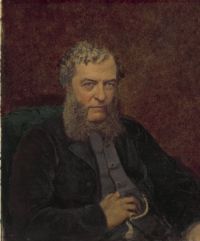
Portrait of F. Max Müller F. Max Müller,  India: What can it teach us?

“ The principal deity is here no doubt the bright sky itself, the old Dyaus, worshipped as we know by the Aryans before they broke up into separate people and languages, and surviving in Greece as Zeus, in Italy as Jupiter, Heaven-father, and among the Teutonic tribes as Tŷr and Tiu. In the Veda we saw him chiefly invoked in connection with the earth, as Dyâvâ-prithivî, Heaven and Earth. He is invoked by himself also, but he is a vanishing god, and his place is taken in most of the Vedic poems by the younger and more active god, Indra. ”
Source: Gutenberg

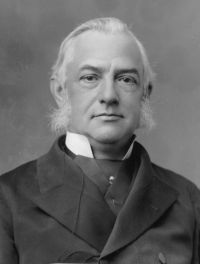
Portrait of John Rhŷs John Rhŷs,  Lectures on the Origin and Growth of Religion As Illustrated by Celtic Heathendom (1888)

“ The Welsh duw means any god, except when used in the monotheistic Christian sense, and there is every reason to believe that it and its earlier forms, unlike Týr, Zeus or Dyaus, never acquired the force of a proper name, even to the same extent as the Norse equivalent; and this is just as if Greek Christians had consecrated the word Ζεύς to Christian uses instead of θεός. ”
Source: Wikisource

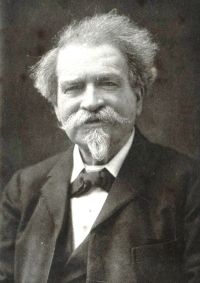
Portrait of John Rhŷs John Rhŷs,  Lectures on the Origin and Growth of Religion As Illustrated by Celtic Heathendom (1888)

“ For if the Aryans in question had attained to the idea of so transcendent a god as this would suggest, there would be a difficulty in understanding how, as the Dyaus of Sanskrit literature, he should have become comparatively a lay figure, that as Tiu he should have been superseded by Woden and Thor among the Teutons, and that among the Gauls his pre-eminence should at any time have been threatened by a Mercury. This would look somewhat like a reversion of the great law of evolution, a serious argument against any theory of religion or mythology. ”
Source: Wikisource

Get perspective with Kwize: daily news enlightened by great literature