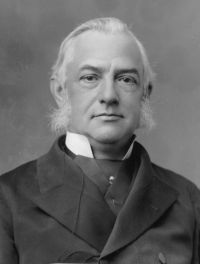
F. Max Müller

F. Max Müller

Summary

Portrait of F. Max Müller F. Max Müller Auld lang syne. Second series (1899)

I was quite satisfied with that ideal India which I had built up for myself, whether from their books or from those who had come to see me at Oxford. If my India, as I am often told, is an ideal India, is it more so than Greece as seen through the poems of Homer, or Italy as seen through the verses of Virgil? What is ideal is not necessarily unreal, it is only like a landscape seen in sunshine. Look at a landscape on a brilliant summer’s day bathed in light and verdure, and again on a bleak day of March with its bitter winds and cloudy sky.
Source: Gutenberg

Portrait of F. Max Müller F. Max Müller Auld lang syne. Second series (1899)

It is everywhere a more severe trial for a woman than for a man to lose caste, and to lose caste means more in India than it does with us. When now and then we catch a glimpse of what is going on in the sanctuary of an Indian home, we learn that human nature is the same everywhere. Thus we read of the old mother of Keshub Chunder Sen, who must have felt her son’s discarding of his old religion very keenly, standing by his deathbed and lamenting that she, poor sinner, should be left behind, while the dearest jewel of her heart was being plucked away from her!
Source: Gutenberg

Portrait of F. Max Müller F. Max Müller Auld lang syne. Second series (1899)

My India was not on the surface, but lay many centuries beneath it; and as to paying a globe-trotter’s visit to Calcutta and Bombay, I might as well walk through Oxford 5Street and Bond Street But, though I never stood on the ghats of Benares, and never saw the men, women, and children step down from them into the sacred waters of the Ganges, I have had the good fortune of knowing a number of Indians in Europe, and no doubt some of the best and most distinguished of the sons and daughters of India.
Source: Gutenberg

Get perspective with Kwize: daily news enlightened by great literature