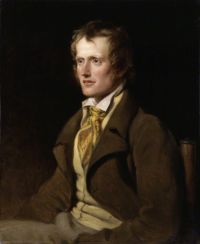
Earl of Clare

Definition and stakes

1911 Encyclopædia Britannica, Volume 6… (1911)

Lord Clare was in private life an estimable and even an amiable man; many acts of generosity are related of him; the determination of his character swayed other wills to his purpose, and his courage was such as no danger, no obloquy, no public hatred or violence could disturb. Though not a great orator like Flood or Grattan, he was a skilful and ready debater, and he was by far the ablest Irish supporter of the union. He was, however, arrogant, overbearing and intolerant to the last degree. He was the first Irishman since the Revolution to hold the office of lord chancellor of Ireland.
Source: Wikisource

Frederick Martin The Life of John Clare

Fitzwilliam, Earl, becomes a patron of Clare; presents him with £100; gives him a cottage; maintains him at the asylum; advises to bury him as a pauper.
'Gentleman's Magazine,' the, on Clare's Poems.
Gilford, William, interview with Clare.
Gilchrist, Octavius, first meeting with Clare; becomes his patron; accompanies him to London; gives his opinion on Sir Walter Scott; disputes with the Rev. Mr. Bowles; engaged in 'Battle of the Windmills;' falls seriously ill; meets Clare at London; last interview with Clare; death.
Glinton, the home of 'Mary;' Memorial of Clare's first love.
Source: Gutenberg

Thomas Andrew Archer Dictionary of National Biography… (1887)

According to Dugdale his father died in 1206; but this is evidently a mistake, as both 'Richard, earl of Clare, and his son Gilbert' appear in the patent rolls of 14 John (ed. Hardy, p. 192) ; while the Earl of Clare and Gilbert de Clare are to be found among the twenty-five barons appointed to carry out the great charter in June 1215, and were both excommunicated by Innocent III in the beginning of 1216 (Matt. Paris, ii. 605, 643) .
Source: Wikisource

Get perspective with Kwize: daily news enlightened by great literature