East Saxons

Definition and stakes

John Lord,  Beacon Lights of History, Volume 3 part 1…

“ They became ultimately the best people in Europe,—earnest, honest, and brave. They formed great kingdoms and states, and became new barriers against fresh inundations from the North and East. The Saxons formed the nucleus of the great German Empire (or were incorporated with it) which arose in the Middle Ages, and which to-day is the most powerful in Europe, and the least corrupted by the vices of a luxurious life. The descendants of those Saxons are among the most industrious and useful settlers in the New World. ”
Source: Gutenberg

R. G. Latham,  The English Language

“ Saxon area.—From the preceding investigations we determine the area occupied by the Saxons of Germany to be nearly as follows:
a.—Ethnologically considered.—Tract bounded on the north by the North Frisian Germans and Jute Danes of Sleswick; on the north and north-east by the Slavonians of the Elbe, sometimes Trans-Albian like the Wagrians and Obotrites; sometimes Cis-Albian, like the Linones and the Slaves of Altmark; on the south by the Thuringians, Catti, and Franks; on the west by the Franks, Batavians, and Frisians.
”
Source: Gutenberg

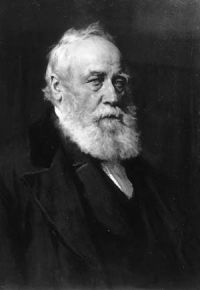
Portrait of W. F. Skene W. F. Skene,  Celtic Scotland (1886)

“ Procopius was probably right in saying that they consisted of Frisians and Angles. [229] The tribes who arrived much later, and founded the petty kingdoms of the East, West, and South Saxons, probably alone belonged to the Saxons proper. The bulk of the natives consisted of the Angli, and their national name soon superseded the general appellation of Saxons, though the geographical term ‘Saxonia’ still remained attached to the most northern part of their territory. ”
Source: Gutenberg

Get perspective with Kwize: daily news enlightened by great literature