Elector of Cologne

Definition and stakes

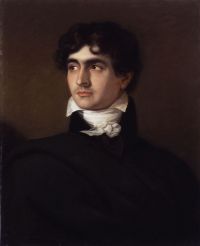
Portrait of Sir John Carr Sir John Carr,  A tour through Holland (1807)

“ The Town House is a very ancient edifice, and contains the only specimen of Grecian architecture in the city. There were three ecclesiastical electorates in Germany, viz. Cologne, Mayence, and Treves, which have been abolished by Napoleon. The revenues of the elector of Cologne amounted to upwards of two hundred thousand pounds. Cologne must have been declining for some centuries, for in the year 1200 it was capable of furnishing thirty thousand men for the field, a number which its present population is said not to exceed. ”
Source: Gutenberg

1911 Encyclopædia Britannica, Volume 6… (1911)

“ With Cologne itself, a free imperial city, the archbishop-electors were at perpetual feud; in 1262 the archiepiscopal see was transferred to Brühl, and in 1273 to Bonn; it was not till 1671 that the quarrel was finally adjusted. The archbishopric was secularized in 1801, all its territories on the left bank of the Rhine being annexed to France; in 1803 those on the right bank were divided up among various German states; and in 1815 by the congress of Vienna, the whole was assigned to Prussia. The last archbishop-elector, Maximilian of Austria, died in 1801. ”
Source: Wikisource

The Great Events by Famous Historians…

“ The Elector of Cologne is to perform the coronation. At all feasts the Margrave of Brandenburg, as grand chamberlain, is to present the Emperor with water to wash; the King of Bohemia, as cup-bearer, is to offer the goblet of wine; the Count Palatine, as grand steward, is to set the first dish on the table; and the Duke of Saxony is to officiate as grand marshal.
The Count Palatine and the Duke of Saxony are declared vicars of the empire during the vacancy of the throne. An exclusive jurisdiction is guaranteed to the electors; and their precedence over all other princes of Germany is enforced.
”
Source: Gutenberg

Get perspective with Kwize: daily news enlightened by great literature