“ The Empress has been accused of contributing to the downfall of Russia through her association with Rasputin. The finger of scorn and hatred has pointed at her, and an almost universal voice has cried, “Thou art the Woman.” But history, if not always just, is at least generous, and it may be that Alexandra{130} Feodorovna will one day be given the benefit of the doubt, and allowed to appeal against the sentence which has been passed on her. ”
Empress Alexandra Feodorovna of Russia
Definition and stakes
The theme of “Empress Alexandra Feodorovna of Russia” has been addressed by authors such as Anna Aleksandrovna Vyrubova, Princess Catherine Radziwill, Lili Den, G. P. Danilevskii and L. Mühlbach. It is often associated with terms like Catherine, Russian, Nicholas, emperor and family.
Quotes about “Empress Alexandra Feodorovna of Russia”
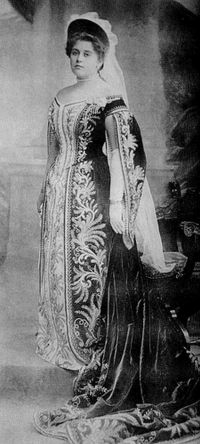 Anna Aleksandrovna Vyrubova,
Memories of the Russian Court
Anna Aleksandrovna Vyrubova,
Memories of the Russian Court
“ I would that I could paint a picture of the Empress Alexandra Feodorovna as I knew her before the first shadow of doom and disaster fell upon unhappy Russia. No photograph ever did her justice because it could reproduce neither her lovely color nor her graceful movements. ”
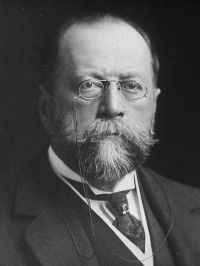 Paul Vinogradoff,
1922 Encyclopædia Britannica — Nicholas II.
Paul Vinogradoff,
1922 Encyclopædia Britannica — Nicholas II.
“ The suspicion that Alexandra Feodorovna was secretly favouring the cause of Germany and revealing military secrets to the Kaiser a suspicion often expressed abroad and popularly accepted in Russia is, according to most competent witnesses, devoid of any basis in fact. The Empress was intensely patriotic in her own way, opposed to the aggressive policy of the Hohenzollerns, and never advocated a treacherous compromise with the Central Powers. ”
Paul Vinogradoff,
1922 Encyclopædia Britannica — Nicholas II.
“ The Empress considered him as the God-sent representative of the Russian nation, of that mass of peasants which, as she was convinced, was the firm mainstay of autocracy in Russia. And in the later years of Nicholas II.'s reign, the years of great trial and danger, Alexandra Feodorovna stepped in more and more often to direct the Tsar's choice of his ministers and to prevent him from making concessions to the spirit of the time. ”
 William Le Queux,
The Minister of Evil: The Secret History of Rasputin's Betrayal of Russia
William Le Queux,
The Minister of Evil: The Secret History of Rasputin's Betrayal of Russia
“ Excuses were made for Alexandra Feodorovna's non-appearance. The truth was that the Empress, full of spiritualistic beliefs, had suddenly developed a religious mania, centred around the amazing personality of the mock monk.Thrice had Her Majesty sent him commands through her pro-German puppet Fredericks, and thrice he, at Stürmer's suggestion, refused to comply. This illiterate Siberian monk, ex-horse-thief and betrayer of women, actually disregarded the Imperial order! ”
Paul Vinogradoff,
1922 Encyclopædia Britannica — Nicholas II.
“ Nevertheless, Alexandra Feodorovna proved to be the evil genius of the Russian dynasty, by her blind and obstinate support of reactionary tendencies and of worthless adventurers, at a time when a wise and firm policy of reform was more needed than ever. All the better representatives of the dynasty the Dowager Empress Maria Feodorovna, the Grand Duke Nicholas Mikhailovitch, the Grand Duchess Victoria, warned the Empress Alexandra Feodorovna of the imminent danger of that regime of fleeting ministerial shadows which set in after the catastrophe of the War Office in 1915. ”
Princess Catherine Radziwill, Rasputin and the Russian Revolution
“ The only brother of Nicholas II., the Grand Duke Michael Alexandrovitsch, saw the influence of the Empress exercised against him in a manner which was even more odious, because she contrived to deprive him of the control not only of his fortune, but also of his personal liberty to manage his estates. With her mother-in-law, the Dowager Empress Marie, Alexandra Feodorovna showed herself absolutely abominable in her disdain, haughtiness and pride. ”
Princess Catherine Radziwill, Confessions of the Czarina
“ The Czar, weak as usual, yielded. Alexandra Feodorowna declared that she did not care for the “hateful things,” and proceeded to buy out of her allowance the most gorgeous ornaments she could lay her hands upon, getting heavily into debt in consequence, a fact which did not help to make her popular with her subjects.She had an unpleasant manner that told against her. Not affable by nature, timid to a certain extent, she imagined that her position as Empress of Russia required her to show herself haughty and disdainful with the people who were introduced to her. ”
Princess Catherine Radziwill, Confessions of the Czarina
“ The fact that for the present Alexandra Feodorowna was still considered a nonentity at the Russian Court was not of much importance because it was thought that if she were once to become the mother of a son she would immediately be raised to the position of an important personage in her husband’s house and country. And it must not be forgotten that in the course of the summer of 1895 the Empress was known to be about to give birth to her first child, who of course had to be a boy and an Heir to the Russian Throne. ”
Anna Aleksandrovna Vyrubova,
Memories of the Russian Court
“ It seems to me impossible that anyone, reading these letters, intended only for my own eyes, can continue to misjudge the lives and the characters of Nicholas II and the Empress Alexandra Feodorovna. What they reveal is their secret selves, unknown except to those who knew them best and knowing them loved them as they deserved to be loved. ”
Princess Catherine Radziwill, Confessions of the Czarina
“ It did not take a long while before the general public, which, at that time, looked very much for its inspirations toward the Imperial Family, had come to the conclusion that the young Empress was a capricious, rude, and most disagreeable kind of person to whom it was preferable to give a wide berth. Once this legend had been transferred into the domain of history, every action, every word, every gesture of Alexandra{74} Feodorowna was watched with attentive and critical eyes, always ready to make capital out of all her mistakes and to amplify all her errors into crimes. ”
Anna Aleksandrovna Vyrubova,
Memories of the Russian Court
“ Only too well for her own happiness and peace of mind did the Empress Alexandra Feodorovna understand her husband. She knew his kind heart, his love for his country and his people, but she knew also how easily influenced he could be by men in whom he reposed confidence. She knew that too often his acts were governed by the last person he happened to con{66}sult. But for all this I wish to say that the Emperor never appeared to his friends as a weak man. He had qualities of leadership with very limited opportunities to exercise those qualities. In his own domain he was “every inch an Emperor.” ”
Princess Catherine Radziwill, Rasputin and the Russian Revolution
“ Alexandra Feodorovna used to go every afternoon to pray on the grave of the man whose influence had proved her bane, until at last the Revolution imprisoned her, and threw to the winds the ashes of the greatest enemy that the dynasty of the Romanoff’s had ever known. When the body was exhumed by the angry populace, one found on its breast a sacred image, bearing the names of the Empress, and of her three daughters, last memento of an affection which had proved so fatal to those who had nursed it. ”
The Diplomatic Correspondence of the American Revolution…
“ The situation of the Empress of Russia is not more favorable; she is under a constant alarm for the internal quiet of her kingdom, in which there are every where the seeds of great and dangerous discontent. ”
Paul Vinogradoff,
1922 Encyclopædia Britannica — Nicholas II.
“ The courtiers and bureaucrats in the immediate surroundings of the Tsar, men like Sipiaguin, Nicolas Maklakov, and Sabler, took advantage of these prepossessions in order to keep up a constant hostility against progressive reformers and western adaptations. But the most dangerous representative of mystic reaction was the Tsar's consort, the Empress Alexandra Feodorovna. ”
“ When she wore the Red Cross, the sign of a universal Brotherhood of Pity, the average soldier only saw in the Red Cross an emblem of her lost dignity as Empress of Russia. He was shocked and embarrassed when she attended to his wounds and performed almost menial duties. His idea of an Empress was never as a woman, but only as an imposing and resplendent Sovereign. ”
Empress of Russia Catherine II, Memoirs of the Empress Catherine II
“ He had been in the service of the Empress, when she was princess, on her estate at Zarskoe-Selo, whence he had been removed to Oranienbaum. He was fond of predictions, and, among others, his prediction relative to the Empress had been fulfilled. He had prophesied that she would ascend the throne. He told me, and repeated it as often as I was willing to listen to him, that I should become the Sovereign Empress of Russia; that I should see sons, grandsons, and great-grandsons; and that I should die at the advanced age of more than fourscore years. ”
Empress of Russia Catherine II, Memoirs of the Empress Catherine II
“ He agreed that I had been treated very cruelly; that the Empress, having chosen me at a very tender age, had abandoned me to the mercy of my enemies; and that she would do far better to banish my rivals, and especially Elizabeth Voronzoff, and keep a check upon her favourites, who had become the blood-suckers of the people, by means of the new monopolies which the Schouvaloffs were every day devising, besides which, they were daily giving the people cause to complain of their injustice, as witness the affair of Count Bestoujeff, of whose innocence the public were persuaded. ”
Empress of Russia Catherine II, Memoirs of the Empress Catherine II
“ When the Empress Elizabeth ascended the throne of Russia, she sent the Chamberlain Korf into Holstein to demand her nephew. In consequence, the Prince Administrator immediately sent him off, accompanied by the Grand Marshal Brummer, the Chamberlain Berkholz, and the Chamberlain Decken, nephew of the former. The Empress received the Prince with great joy, and soon after his arrival set out for Moscow to be crowned. She had determined to declare him her heir ”
Princess Catherine Radziwill, Confessions of the Czarina
“ But the supreme misfortune of the last Empress of Russia, a misfortune for which she was not responsible, was the fact of her having been married to a being who was too weak to lead her, too selfish to understand her, too cruelly inclined to sympathize with her; who at the same time did not acquire sufficient authority over her to inspire her with respect for his individuality as a man and for his position as a Sovereign. Had she been the wife of Alexander III., it is likely that she would have turned out entirely another woman from the one which she ultimately became ”
Princess Catherine Radziwill, Rasputin and the Russian Revolution
“ A lot of exaggerated tales have been put into circulation concerning the Empress Alexandra, the part she has played in the perturbations that have shaken Russia from one end to another and the extraordinary influence which, thanks to her and to her efforts in his behalf, the sinister personage called Rasputin came to acquire over public affairs in the vast empire reigned over by Nicholas II. for twenty-two years. ”
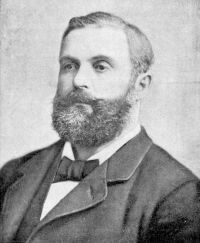 Thomas Wallace Knox,
The Boy Travellers in the Russian Empire
Thomas Wallace Knox,
The Boy Travellers in the Russian Empire
“ Before becoming the wives of the men of the Imperial family, all foreign princesses must be baptized and taken into the Russian Church. The ceremony is a very elaborate one, and is made a state affair. The members of the Imperial family are present, together with many high officials, who appear as witnesses, and there can be no exceptions to the rule that requires the Emperor's bride to be of his religion. Family, home, religion, everything must be given up by the woman who is to become an Empress of Russia. ”
Empress of Russia Catherine II, Memoirs of the Empress Catherine II
“ The weak state of the Empress’ health, and the convulsive fits to which she was subject, very naturally made all eyes turn to the future. Count Bestoujeff, both from his position and abilities, was certainly not one of the last to do so. He knew well the antipathy that had long been excited against him in the mind of the Grand Duke. He was also well aware of the feeble capacity of this Prince, born heir to so many crowns. It was only natural that this statesman, like every one else, should wish to maintain himself in his position. ”
Princess Catherine Radziwill, Confessions of the Czarina
“ Petersburg and in Tsarskoye Selo who was not aware of the high favor in which she stood with the Empress. His duties generally kept him far from his home most of the year, and when he was there he rarely troubled Anna with his presence. But he was known to be of a violent disposition, and as a fellow who would not suffer any stain to rest upon his honor. It was of this man that the enemies of Alexandra Feodorowna determined to make use in order to ruin her. ”
Empress of Russia Catherine II, Memoirs of the Empress Catherine II
“ We dined in the saloon. The Empress walked three or four verstes, then rested some days. This journey lasted nearly the whole summer. We hunted every day after dinner.When her Majesty reached Taïninskoe, which is nearly opposite Rajova, on the other side of the high road leading to the convent of Troïtza, the Hetman, Count Razoumowsky, younger brother of the favourite—who was residing at his country seat of Pokrovskoe, on the road to St. Petersburg, on the other side of Moscow—took it into his head to come and see us every day at Rajova. He was very gay, and nearly of our own age. ”
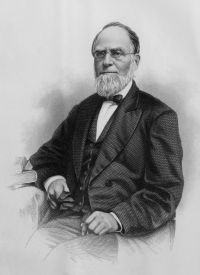 John S. C. Abbott,
The Empire of Russia: From the Remotest Periods to the Present Time
John S. C. Abbott,
The Empire of Russia: From the Remotest Periods to the Present Time
“ This revolution was accepted by the people with the loudest demonstrations of joy. The memory of Peter the Great was enshrined in every heart, and all exulted in placing the crown upon his daughter's brow. The next morning, at the head of the royal guards and all the other troops of the metropolis, Elizabeth was proclaimed Empress of Russia. In one week from this time, the deposed infant emperor, Ivan, who was then thirteen months old, was sent, with his parents, from Petersburg to Riga, where they were for a long time detained in a castle as prisoners. ”
Empress of Russia Catherine II, Memoirs of the Empress Catherine II
“ This lady was altogether in the interest of Count Bestoujeff, extremely silly, spiteful, capricious, and very selfish. Her husband, Chamberlain to the Empress, was then gone on some sort of mission from her Majesty to Vienna. I wept a great deal on seeing her arrive, and all the rest of the day. I was to be bled on the following day. In the morning the Empress came to my room, and seeing my eyes red, said to me that young women who did not love their husbands were always crying; that my mother, however, had assured her I had no repugnance to marrying the Grand Duke ”
John S. C. Abbott,
The Empire of Russia: From the Remotest Periods to the Present Time
“ The empress never wears rich clothes except on solemn festivals, when her head and corset are entirely set with brilliants, and she wears a crown of diamonds and precious stones. Her gait is majestic; and, in the whole of her form and manner there is something so dignified and noble, that if she were to be seen without ornament or any outward marks of distinction, among a great number of ladies of rank, she would be immediately esteemed the chief. She seems born to command, though in her character there is more of liveliness than of gravity. ”
Empress of Russia Catherine II, Memoirs of the Empress Catherine II
“ One Thursday, towards the end of the Carnival, there being a ball in our apartments, I was sitting between the sister-in-law of Leon Narichkine and his sister, Madame Siniavine, and we were looking at Marine Ossipovna Sakrefskaïa, Maid of Honour to the Empress and niece of the Count Rasoumowsky, who was dancing a minuet. ”
Empress of Russia Catherine II, Memoirs of the Empress Catherine II
“ I laboured more earnestly than before to gain the affection of every one. Great or small, I neglected no one, but laid it down to myself as a rule to believe that I stood in need of every one, and so to act in consequence as to obtain the good will of all; and I succeeded in doing so.After some days’ stay in the Summer Palace, where people began to speak of the preparations for my marriage, the court removed to Peterhoff, where it was more concentrated than in the city. The Empress and the Grand Duke occupied the upper portion of the house built by Peter I ”
Empress of Russia Catherine II, Memoirs of the Empress Catherine II
“ To dream of the crown, however, was quite natural in the atmosphere of that court; natural not only for the betrothed of the Heir Presumptive, but for every one. The groom Biren, the singer Rasoumowsky, the Prince Dolgorouky, the plebeian Menchikoff, the oligarch Volynski—every one was anxious for a shred of the imperial mantle. The crown of Russia, after Peter I, was a res nullius. ”
Empress of Russia Catherine II, Memoirs of the Empress Catherine II
“ Petersburg. The Princess Dashkoff, the youngest sister of Elizabeth Voronzoff, although she wishes to arrogate to herself all the honour of this revolution, was in very bad odour on account of her connections, while her age, which is only nineteen, was not calculated to inspire confidence. She pretends that everything passed through her to reach me, yet I was in communication with all the chiefs for six months before she even knew one of their names. It is quite true that she has great talent, but it is spoilt by her excessive ostentation and her naturally quarrelsome disposition. ”
Related terms
Authors who wrote about “Empress Alexandra Feodorovna of Russia”
Anna Aleksandrovna VyrubovaPrincess Catherine RadziwillLili DenG. P. DanilevskiiL. MühlbachRenée Gaudin de Villaine MaudThomas Wallace Knox Emma GoldmanJohn S. C. Abbott
 Eugène-Melchior de VogüéEmpress of Russia Catherine II
 Eugenia SmithWilliam Le Queux
 Joseph McCabe
 Maurice Francis EganInfanta of Spain Eulalia
 Fyodor DostoyevskyQueen of Great Britain VictoriaPaul Vinogradoff
 William Shakespeare