Episcopalianism

Definition and stakes

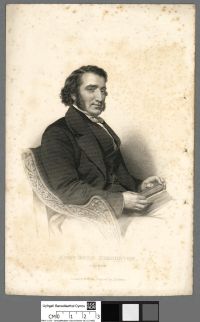
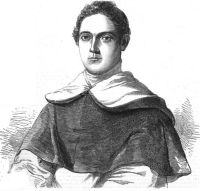
Portrait of John Henry Newman John Henry Newman,  Tracts for the Times (1834)

“ Now in the first place, let us suppose, for the sake of argument, that Episcopacy is in fact not at all mentioned in Scripture: even then it would be our duty to receive it. Why? because the first Christians received it. If we wish to get at the truth, no matter how we get at it, if we get at it. If it be a fact, that the earliest Christian communities were universally episcopal, it is a reason for our maintaining Episcopacy; and in proportion to our conviction, is it incumbent on us to maintain it. ”
Source: Wikisource

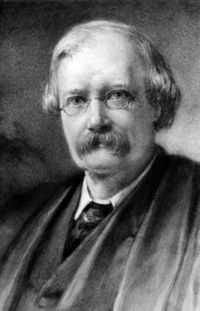
Walter Alison Phillips,  1911 Encyclopædia Britannica, Volume 9… (1911)

“ The pope still addresses his fellow-bishops as “venerable brothers”; but from the Roman Catholic Church the fraternal union of coequal authorities, which is of the essence of episcopacy, has vanished; and in its place is set the autocracy of one. The modern Roman Catholic Church is episcopal, for it preserves the bishops, whose potestas ordinis not even the pope can exercise until he has been duly consecrated; but the bishops as such are now but subordinate elements in a system for which “Episcopacy” is certainly no longer an appropriate term. ”
Source: Wikisource

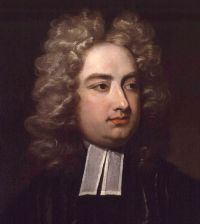
William James Miller,  The American Church Dictionary and Cyclopedia

“ If we take the whole Christian world of to-day, we find that the number of Christians is in round numbers five hundred millions. Of this number only one hundred million are non-Episcopal, so that we may conclude from the universal acceptance of Episcopacy before the Reformation and from the large preponderance of adherents to this form of Church government at this present time,—from these facts we may safely conclude that Episcopacy is in accordance with the mind of the Master. ”
Source: Gutenberg

Get perspective with Kwize: daily news enlightened by great literature