Esopus

Definition and stakes

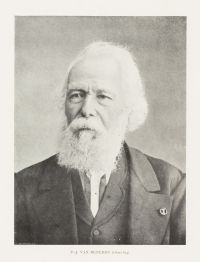
Portrait of Aesop Aesop,  The Fables of Æsop (1922)

“ An epigram of Sophocles against Euripides contains an allusion to this fable (Athen. xiii. 82) . The fable is applied to the behaviour of wives by Plutarch: Conj. Praec. chap. xii. It is given by La Fontaine vi. 3, Lôqman (the Arabic Æsop) xxxiv., and Waldis' Esopus i. 89.
LXI.—HERCULES AND THE WAGGONER.
Avian 32. Babrius 20. Greek Æsop, ed. Halm, 81. Not included by Caxton in his Selections. "Put your shoulder to the wheel" obviously comes from this fable, and thus ultimately from Avian's line:
"Et manibus pigras disce juvare rotas."
”
Source: Wikisource

Daniel Van Winkle,  History of Hudson County and of the Old Village of Bergen (1921)

“ Therefore we know only that "sometime between 1617 and 1620 settlements were made at Bergen, in the vicinity of the Esopus Indians and at Schenectady." We cannot even be sure that these first settlers in New Jersey were Dutch. "It is believed," says another historian, "that the first European settlement within the limits of New Jersey was made at Bergen about 1618 by a number of Danes and Norwegians who accompanied the Dutch to the New Netherland." ”
Source: Wikisource

C. S. Rafinesque,  The American Nations, Vol. I

“ Animalization pervades the whole of the fabulous periods of history. It is to this mode of speech that we owe the fables of Pilpay and Esopus, where animals are made to speak. Whenever we meet in history or fables, animals acting like men and conversing, they are surely men, and often tribes individualized by an animal appellation: such as might be emblematic or patronymic, adopted honorable names, as lion, tyger, eagle; or else nicknames given in derision by foes, such as snake, dog, ape &c. Even the Hebrew had their Cherubim, who were beings like a man, a lion, ox, and eagle ”
Source: Gutenberg

Get perspective with Kwize: daily news enlightened by great literature