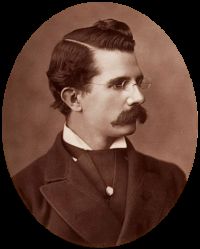
Ferdinand Kalkbrenner

Definition and stakes

Oskar Bie,  History of the pianoforte and pianoforte players (1899)

“ In Kalkbrenner we see the lowest type of the time. Externally a fine gentleman and artistic man of the world, he is inwardly hollow and vapid. It is hard even to give an idea of this extreme emptiness; but it is well illustrated in such a piece as the “Charmes de Berlin.” This great virtuoso won his triumphs in the worst kinds of salon-music as well as with all sorts of Études, Concertos, and Sonatas. Le Rêve, Le Fou, La Solitude, Dernières Pensées Musicales, La Mélancolie et La Gaité, La Brigantine, are some of these detestable compositions. But his opera fantasias touch the very nadir. ”
Source: Gutenberg

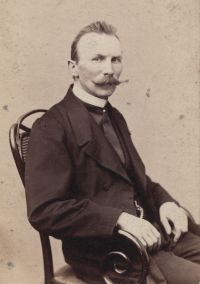
Portrait of Maurycy Karasowski Maurycy Karasowski,  Frederic Chopin: His Life, Letters…

“ Through the bandmaster Päer, I have become acquainted with Rossini, Cherubini, Baillot, and Kalkbrenner.
PLAYS BEFORE KALKBRENNER. You can imagine how eager I was to hear Herz and Hiller play; but they are nothing to Kalkbrenner. To tell the truth, I can play as well as Herz; I wish I could say as well as Kalkbrenner, who is perfection in quite another style to Paganini. Kalkbrennerʼs fascinating touch, the quietness and equality of his playing, are indescribable; every note proclaims the master. He is truly a giant, who dwarfs all other artists.
”
Source: Gutenberg

A Dictionary of Music and Musicians (1900)

“ He once said regretfully to Kalkbrenner, 'I have only just learned in my old age how to use the wind-instruments, and now that I do understand them I must leave the world.' And to Griesinger he said that he had by no means come to the end of his powers; that ideas were often floating in his mind, by which he could have carried the art far beyond anything it had yet attained, had his physical powers been equal to the task. ”
Source: Wikisource

Get perspective with Kwize: daily news enlightened by great literature