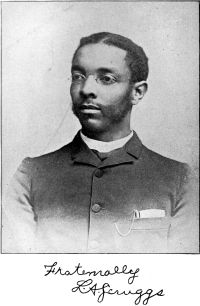
Fisk University, a historically Black private liberal arts college in Nashville, Tennessee, was established in 1866 as a beacon of learning for freedmen during Reconstruction. Its legacy is marked by significant achievements, such as becoming the first historically Black college or university accredited by the Southern Association of Colleges and Schools in 1930, as well as its crucial role in civil rights activism. Authors like Lawson Andrew Scruggs emphasized its commitment to empowering students through higher education, pointing out that more than 190 graduates have gone on to become educators, ministers, and professionals.
The American Missionary frequently praised Fisk as a "great light in a dark land," highlighting its transformation from a small institution to a respected academic entity. Statements from various writers underscore its dual function as a hub of scholarly excellence and a driver of social transformation, with its Jubilee Singers and Institute of Race Relations serving as prime examples of its cultural and intellectual impact. The convergence of these viewpoints portrays Fisk University not only as a foundational pillar of Black education but also as a vibrant force in advancing societal progress.