“ Most of the troops were accordingly withdrawn from Forts Montgomery and Clinton, when Sir Henry Clinton, taking advantage of a morning fog, crossed with 2,000 men at King's Ferry. Guided by a sympathizer of the British cause, who knew the district, he crossed the Dunderberg Mountain by the road just indicated. One division of 900 moving on Fort Montgomery, and another of 1,100 on Fort Clinton. Governor Clinton in the meantime ordered 400 soldiers to Fort Montgomery, and his reconnoitering party, met by the Hessians, fell back upon the fort, fighting as it retreated. ”
Fort Montgomery
Definition and stakes
Quotes about “Fort Montgomery”
John Martin Hammond, Quaint and Historic Forts of North America
“ By November he had 2,000 volunteers and early in that month marched from Fort Montgomery (Montgomery, Alabama) upon Pensacola. November 6 he was two miles from that city. To ascertain the Spaniard’s intentions he sent Major Pierre to wait upon the commandant of the city and was rewarded for his pains by having his envoy fired upon. By midnight Jackson had his men in motion against the city, and in the hot engagement which followed the Spanish and British were badly worsted. ”
Agnes C. Laut, Canada: the Empire of the North
“ Inside the fort, Major Preston, the English commander, has almost seven hundred men, with ample powder. It is plain to Montgomery that he can win the fort in only one of two ways,—shut off provisions and starve the garrison out, or get possession of heavy artillery to batter down the walls. It is said that fortune favors the dauntless. So it was with Montgomery, for he was enabled to besiege the fort in both ways. Carleton had rushed a Colonel McLean to the relief of St. John's with a force of French volunteers, but the French deserted en masse. ”
Charles Morris, A New History of the United States
“ With its capture, the Americans secured six tons of powder and seventeen cannon. The fort of St. John was captured November 3d. By that time, Carleton, the British commander, was so alarmed that he abandoned Montreal, which surrendered on the 20th. Taking possession, Montgomery issued a proclamation, urging the Canadians to unite with the colonies in the war for independence, and to elect representatives to the Continental Congress.Benedict Arnold, at the head of eleven hundred men, had withdrawn from the camp before Boston, September 13th, and was pressing forward to join Montgomery. ”
David H. Montgomery, The Beginner's American History… (1904)
“ He was to “make prisoners, kill or destroy,” all Frenchmen who should try to get possession of land on the Ohio River. He built a small log fort, which he named Fort Necessity. Here the French attacked him. They had five men to his one. Colonel Washington fought like a man who liked to hear the bullets whistle past his ears,—as he said he did,—but in the end he had to give up the fort.Then General Braddock, a noted English soldier, was sent over to Virginia, by the king, to drive the French out of the country. He started with a fine army, and Washington went with him. ”
James Riker,
"Evacuation Day", 1783, Its Many Stirring Events
“ Tidings have just reached them that the enemy's vessels are ascending the Hudson with the obvious design of attacking Fort Montgomery and the neighboring posts. The orders are for every man able to shoulder a musket to hasten to their assistance! This was grave intelligence for the inmates at the Van Arsdale home (and which may serve to represent many others) , but the call of duty could not be disregarded. ”
James Riker,
"Evacuation Day", 1783, Its Many Stirring Events
“ The two fortresses required a thousand men for their proper defense, but till early in 1777, had usually been in charge of a very small force under Gen. James Clinton. The time of these soldiers expiring on the last day of March, Col. Lewis Dubois, with the Fifth New York Regiment was sent to garrison Fort Montgomery. ”
Charles Egbert Craddock,
The Story of Old Fort Loudon
“ The choice of these two men was evidently specially judicious, and after the mysterious disappearance of each, being smuggled out of the fort in dead silence and the darkest hour of the deep night, the garrison settled down to a regular routine, to wear away the time till they might wake some morning to hear the crack of Montgomery's musketry on the horizon, or the hissing of his grenades burning out their fuses and bursting among the dense jungles, where the Cherokees lay in ambush and blockaded Fort Loudon. ”
J. P. MacLean, An Historical Account of the Settlements of Scotch Highlanders in America
“ From this place he dispatched two friendly chiefs to the middle settlements, to offer terms of peace, and orders were sent to Fort London to bring about accommodations for the upper towns. The Indians would not listen to any overtures, so Montgomery was constrained to march against them. The most difficult part of the service was now to be performed; for the country to be passed through was covered by dark thickets, numerous deep ravines, and high river banks; where a small number of men might distress and even wear out the best appointed army. ”
Benson John Lossing,
The Pictorial Field-Book of the Revolution…
“ Athenaise on the opposite shore, where the steep roof and lofty glittering spire of the French church towered above the trees.3 After visiting the remains of Montgomery's block-house, we recrossed the river and rambled among the high mounds which compose the ruins of old Fort St. John's. They occupy a broad area in the open fields behind the present military works. The embankments, covered with a rich green sward, averaged about twelve feet in height, and the whole were surrounded by a ditch with considerable water in it. ”
“ The interior of the fort was thus as vulnerable as the exterior.Governor Pickens at once sent to Montgomery a telegram reporting the visit of the President’s messenger. A lengthy discussion ensued in the Confederate Cabinet. Toombs, the Secretary of State, said: “The firing upon that fort will inaugurate a civil war greater than any the world has yet seen ”
D. H. Montgomery, The Beginner's American History
“ The British in the west; their forts; hiring Indians to fight the settlers.—While Washington was fighting the battles of the Revolution in the east, the British in the west were not sitting still. They had a number of forts in the Wilderness, [1] as that part of the country was then called. One of these forts was at Detroit, [2] in what is now Michigan; another was at Vincennes, [3] in what is now Indiana; a third fort was at Kaskaskia, [4] in what is now Illinois.Colonel Hamilton, the British commander at Detroit, was determined to drive the American settlers out of the west. ”
Benson John Lossing,
The Pictorial Field-Book of the Revolution…
“ Disorder continually reigned in the American camp. Irregular firing occurred almost daily, and the enemy threw some bombs, but it was a waste of ammunition by both parties. At length the proposed plan of Montgomery was adopted, and the camp was moved October 7, 1775 to the higher ground northwest of the fort, where breast-works were thrown up. While the main army was thus circumvallating St. John's, but, for want of ammunition and heavy guns, unable to breach the walls, small detachments of Americans, who were joined by many friendly Canadians, were active in the vicinity. ”
William Gilmore Simms,
The Life of Francis Marion
“ They fled rather than fought, and while they lost everything in the shape of property, but few of them were slain. They sought for shelter among their more numerous and better protected brethren of the mountains; a people neither so easily approached, nor so easily overcome. Montgomery, having finished this part of his work so successfully, hurried on to the relief of Fort Prince George, which, from the time when their Chiefs were so cruelly butchered within its walls, had been closely invested by a formidable force of Cherokees. The fort was relieved. The Indians fled at his approach ”
Thomas McAdory Owen,
History of Alabama and Dictionary of Alabama Biography…
(1921)
“ More than a century passed before there is any record of the site of Montgomery being again seen or visited by European travelers or adventurers. In 1697 three adventurous and hardy Englishmen from Carolina went down the Alabama river in boats to the Mobilian Indians, on Mobile Bay, and it may safely be conjectured that they spent a brief season at the Indian village Ikanatchati. In 1714 Bienville came up the Alabama river, and founded Fort Toulouse, near the confluence of the Coosa and Tallapoosa Rivers, as a remote French outpost against the British on the east. ”
Benson John Lossing,
The Pictorial Field-Book of the Revolution…
“ All the way to the populous settlements, he was annoyed by the Indians, who hung upon his rear, and the purpose of the campaign was only half accomplished. Montgomery and his regulars soon afterward returned to New York. While this retreat was in progress, the distant post of Fort Loudon, on the Tennessee, was invested by the Cherokees. The garrison of two hundred men was daily melting away by famine. The Virginia Rangers attempted its relief, but without success. The garrison finally surrendered. Safe guidance to the frontier settlements, with ammunition and other baggage was promised them ”
Charles Egbert Craddock,
The Story of Old Fort Loudon
“ We are so closely beleaguered that it has proved impossible to get an express through that cordon of savages to the country beyond. To communicate with Colonel Montgomery as early as practicable is the only hope of saving our lives. Mrs. MacLeod's sorties from the fort are a part of our scheme—the essential part. You may yet come to think the dearest boon that fate could have given her would have been a ball through her brain as she stood on the escarp—so little her chances are worth! ”
Benson John Lossing,
The Pictorial Field-Book of the Revolution…
“ Forts Clinton and Montgomery, commanded by the brothers James and George Clinton, were feebly garrisoned; in both fortresses there were not more than six hundred men, chiefly militia from Dutchess and Ulster. There was a fortification near Peekskill, called Fort Independence, which was also feebly garrisoned; in fact, the Highland posts were almost defenseless against a respectable demonstration on the part of the enemy. ”
Herbert Eugene Bolton,
The Colonization of North America…
“ The garrison then massacred [Pg 379] Indian hostages within the fort, and immediately the southern frontier was ablaze with war. Hostilities assumed such proportions that it was necessary, early in 1760, for Amherst to send twelve hundred men to assist the colony. An expedition under Colonel Montgomery destroyed many Cherokee villages, but Montgomery's orders did not allow him to remain long in the colony, and in August he departed for New York. The Cherokees then captured Fort Loudoun. ”
Edwin L. Sabin,
Boys' Book of Indian Warriors and Heroic Indian Women
“ Major Lemuel P. Montgomery, a Virginian of Tennessee, commanded one battalion of the regulars. He was six feet two inches, aged twenty-eight, and "the finest looking man in the army." Young Sam Houston, who became the hero of Texas independence, was a third lieutenant. Head Chief William Macintosh, Menewa's rival, led the Creeks. Chief Richard Brown led the Cherokees. In the evening of March 26 bold General Jackson viewed the Red Sticks' fort, and found it very strong. He was amazed by the skill with which it had been laid out. No trained military engineers could have done better. ”
United States. National Park Service, Fort Sumter: Anvil of War
“ Still reluctant to initiate conflict, the Montgomery government telegraphed Beauregard:Do not desire needlessly to bombard Fort Sumter. If Major Anderson will state the time at which ... he will evacuate, and agree that in the meantime he will not use his guns against us unless ours should be employed against Fort Sumter, you are authorized thus to avoid the effusion of blood. If this or its equivalent be refused, reduce the fort....The atmosphere in Charleston was tense. In at least one household, dinner was the “merriest, maddest ... yet. Men were more audaciously wise and witty. ”
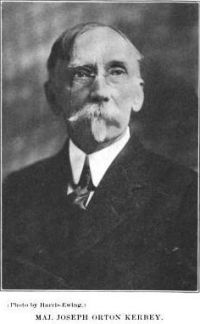
Joseph Orton Kerbey,
The Boy Spy
“ While in Montgomery it did not seem necessary to hang about the telegraph offices to obtain information. I availed myself however of this "facility" to learn something more definite about the programme they had laid out for Fort Pickens, in Pensacola Harbor, to which, after the fall of Fort Sumter, the attention of both the North and the South was being directed. ”
Charles Egbert Craddock,
The Story of Old Fort Loudon
“ The overtures to the Cherokees for peace having proved fruitless, Colonel Montgomery had sought to make peace by force. In pursuance of this further effort he pushed forward with great energy and spirit, but encountered throughout disasters so serious as to cripple his enterprise, culminating finally in a result equivalent to a repulse. The Indians, in the skulking methods peculiar to their warfare, harassed his march, hanging upon the flanks of the main body, and firing in detail from behind trees and rocks, from the depths of ravines and the summits of hills of the broken, rugged wilderness. ”
D. H. Montgomery, The Beginner's American History
“ Many of them had their hands and feet badly frozen. One of the chief men in leading the attack was Captain Benjamin Church of Plymouth; he was a very brave soldier, and knew all about Indian life and Indian fighting. In the battle, he was struck by two bullets, and so badly wounded that he could not move a step further; but he made one of his men hold him up, and he shouted to his soldiers to go ahead. The fight was a desperate one, but at length the fort was taken. The attacking party lost more than two hundred and fifty men in killed and wounded; the Indians lost as many as a thousand. ”
Robert Montgomery Bird, Nick of the Woods; Or, Adventures of Prairie Life
“ It was while he was balancing this thought in his mind, and watching with a gladdened eye the first flash of sunshine, breaking through the parted clouds, that a shout, louder than that which had proclaimed the recovery of his steed, but of a wild and mournful character, arose from the outer village, and a horseman, covered with mud, reeking with rain, and reeling in the saddle with fatigue and exhaustion, rode into the fort, followed by a crowd of men, women, and children, all testifying, by their looks and exclamations, that he was the bearer of alarming news. ”
The Great Events by Famous Historians…
“ John, which post was gallantly defended by Major Preston of the Twenty-sixth regiment. His conduct was not imitated by Major Stopford, of the Seventh, who commanded at Chambly, and who surrendered, in a cowardly manner, on two hundred Americans appearing before the works with two six-pounders. This was a fortunate event for Montgomery, whose powder was nearly exhausted, and who now procured a most seasonable supply from the captured fort. His fire was again renewed, but [Pg 32] was bravely replied to by the garrison, who hoped that General Carleton would advance and raise the siege. ”
Harriet Parks Miller, Pioneer Colored Christians
“ The news was quickly conveyed to the kind old master, who sent his son, the late Sugg Fort, to the scene of excitement. Young Mr. Fort approached the patrolers in a very dignified manner, and informed them that his father had sent him to tell them that their services were not needed on his premises. It was before the county line had been changed, Mr. Fort’s residence was then in Montgomery county, instead of Robertson, its present location, and the patrolers were from Port Royal. ”
D. H. Montgomery, The Beginner's American History
“ After the battle was over, Captain Church begged the men not to burn the wigwams inside the fort, for there were a great number of old men and women and little Indian children in the wigwams. But the men were very mad against the savages, and would not listen to him. They set the wigwams on fire, and burned many of these poor creatures to death.Canonchet, the chief of the tribe, was taken prisoner. The settlers told him they would spare his life if he would try to make peace. "No," said he, "we will all fight to the last man rather than become slaves to the white men." ”
Charles Egbert Craddock,
The Story of Old Fort Loudon
“ The express was turned loose among them to rehearse the exploits of Montgomery's troops,—the splendid forced marches they made; the execution of their marksmanship; the terror that the Cherokees manifested of their sputtering grenades, hurled exploding into the ambuscades by the stalwart grenadiers at the word,—"Fall on"; the interest of the Indians in the sound of the bagpipes and in the national dress, the plaid and philibeg, of the Highlanders, which, although now generally proscribed by law, was continued as a privilege granted to those enlisted in regiments in the British army. ”