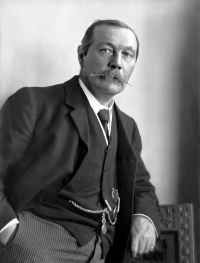
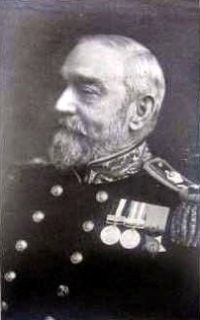
“ Indeed, the French Navy is so undemonstrative one might imagine it recruited entirely from the Englishmen of modern fiction. There is no doubt that the nature of their profession has left its mark upon them. For them is no vision of conquest or gigantic death-grapple with a modern foe, but rather the careful guarding of a remote and insalubrious colonial empire. It has made them attentive to fussy details, faithful to fantastic conceptions of honour, partial to pensioned ease and married life if one escapes the fevers of Cochin China and Algeria. ”
French Navy
Definition and stakes
The French Navy, or Marine nationale, is the maritime branch of the French Armed Forces, recognized as a blue-water navy capable of conducting global operations and expeditionary tasks. Founded in the 17th century, it has played a significant role in shaping French history through colonial ventures, conflicts, and technological advancements, such as the first steam-powered warship and nuclear-powered carrier Charles de Gaulle.
Scholars like William McFee emphasized its colonial orientation, while David Hannay pointed out its historical neglect and enduring strength. From its medieval beginnings to its current capabilities, the French Navy represents a fusion of tradition and flexibility, illustrating both its strategic importance and cultural heritage.
Quotes about “French Navy”
Archibald Hurd, The German Fleet
“ Preparation for war was never thought of. Why should it be? The French Navy had no aggressive designs, and was much below our own, both in material strength and in personnel, while the Russian Navy was partly confined in the Black Sea, the other part being in the Baltic. And so we, both officers and men, set out to have a good time. Our ships were kept up to yacht-like perfection as regards their paintwork, while their bright work shone like gold, and the road to promotion lay not through professional efficiency, but the state of cleanliness and splendour of one's ship. ”
Arthur Joseph Hungerford Pollen, The British Navy in Battle
“ The Revolution robbed the French Navy of nearly all its trained officers—and, though possessed of better ships and courageous crews, that navy never fought with real effect in the Great War of from 1792 to 1815. Again, however excellent your ships, weapons, and methods, your moral and your courage, unskilful command at sea and ignorance of the true principles of tactics may rob you of victory. ”
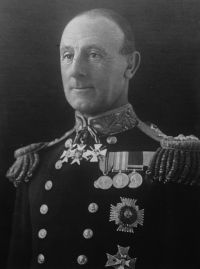
David Hannay, A Short History of the Royal Navy…
“ The French navy, the creation of Louis XIV., has been valiant, ingenious, not seldom successful, but it was neglected, starved, misused by the monarchy, and so torn to pieces by the Revolution that it could never recover. The sound national instinct, the healthy social order, the innate love of good work which have shaped our Navy, are just subjects for pride. But they are also a lesson and a warning. Great navies are forming now, which have thoroughly learned all we have taught. We must not rely on possessing the same superiority we had in the eighteenth century without strenuous effort. ”
The New International Encyclopædia…
“ Since the fall of the Empire the navy has greatly improved, and seems to be at present highly efficient; certainly, the ships, armaments, and equipments are of the best, and the personnel of apparently equal excellence. At present the French navy is second to that of Great Britain only, but for financial reasons the number of new ships now in hand and proposed is insufficient to enable France to maintain her present relative lead, and it is likely that within the next decade her navy will be surpassed by those of both Germany and the United States. ”
Ellis Cornelia Knight, Autobiography of Miss Cornelia Knight…
“ Fortunately, we happened to be acquainted with two French naval officers who were stationed there, and who showed us every attention. The command of ships in the French navy did not depend on rank in the service as with us. An “enseigne de vaisseau” might command a sloop, but they had many more steps, and were longer in getting on than our officers at that time. In general, the French navy was composed of men of fashion, belonging to the highest families, and great interest was required to support them in the service. ”
Francis A. March, History of the World War, Volume 2…
“ At the outbreak of the war the fleet comprised sixteen battleships, two armored and twelve light cruisers, eighteen destroyers, eighty-five torpedo boats and eleven submarines. The Allies were much more powerful. The French navy had in the matter of invention given the lead to the world, but its size had not kept pace with its quality. At the beginning of the war France had thirty-one battleships, twenty-four armored cruisers, eight light cruisers, eighty-seven destroyers, one hundred and fifty-three torpedo boats and seventy-six submarines. ”
William Wood, Flag and Fleet: How the British Navy Won the Freedom of the Seas
“ It was a glorious moment in world-history when British, French, and Americans at last stood side by side. The American Navy led the way, joining the hunt for German submarines with a keenness whetted by having been held back so long. The Army followed, bit by bit, until two million men had gone to Europe, thanks chiefly to the British ships that took them there. The Nation backed both Army and Navy with vast sums of money, which it could so easily afford, and with patriotic work of every splendid kind. ”
W. Laird Clowes, The Royal Navy, a History from the Earliest Times to the Present (1897)
“ The vessels which we find represented on the bases of candelabras, on the beaks of rostral columns, on shields, and on the pedestals of certain statues emblematic of towns, faithfully figure the French vessels of the early years of the nineteenth century. This is beyond all doubt. A plan of Paris for 1839 shows us the Ministry of Marine close to the place which was thus ornamented with so many ships, probably on account of the vicinity of that Ministry, and in order to commemorate the transport to France, by the French navy, of the obelisk of Luxor. Here is one proof. ”
Various, The Atlantic Monthly, Volume 08…
“ The French navy, great and powerful as it now is, can be regarded only as the result of a skilful and most costly forcing process, carried on by Bourbons, Orleanists, Republicans, and Imperialists, during forty-six years of maritime peace. ”
David Hannay, A Short History of the Royal Navy…
“ Even under the emperor, orders on such vital things as the gunnery drill of the crews were constantly met with outward and visible signs of neglect and disobedience. Perhaps because the best of the French nation does not naturally tend to the sea, it is also an undeniable fact that the French Navy produced no equivalent for the multitude of capable men from the ranks, and the non-commissioned officers, who replaced the emigrant aristocratic officers in the army. ”
Alfred H. Miles, Fifty-two Stories of the British Navy…
“ Here the French squadron joined them, their admiral bearing the white flag; the united fleet consisting of one hundred and one sail of men-of-war, besides fire-ships and tenders. Of these the English had sixty-five ships of war, carrying four thousand and ninety-two pieces of cannon, and twenty-three thousand five hundred and thirty men. ”
Alfred H. Miles, Fifty-two Stories of the British Navy…
“ Shall we give them battle?" Being answered in the affirmative, he bore down on the French fleet, and between three and four in the afternoon came to action. The French attacked with great impetuosity, and displayed uncommon spirit in the sight of their own coast. But, after an engagement of more than two hours, their commodore found his ship so much shattered that he was obliged to make a signal for his frigates to tow him out of the line. ”
Lawrence Perry, Our Navy in the War
“ The transportation of 2,000,000 American troops 3,000 miles overseas, with the loss of only a few hundred lives, and without the loss of a single American troopship on the way to France, was an unparalleled achievement. From a small beginning this fleet expanded to 24 cruisers and 42 transports, manned by 3,000 officers and 41,000 men, these being augmented by 4 French men-of-war and 13 foreign merchant vessels, a grand total of 83 ships. ”
Alfred H. Miles, Fifty-two Stories of the British Navy…
“ On August the 19th, in the evening, he discovered ten sail of tall ships to the westward. Standing towards them he found the best part of them to be French men-of-war; upon which he made the usual signal for a line of battle, going away with an easy sail, that his sternmost ships might come up and join him, the French steering along-shore under their top sails. Their squadron consisted of four ships, from sixty to seventy guns, with one great Dutch-built ship of about thirty or forty, and there was another full of soldiers; the rest small ones, and a sloop. ”
Sir H. H. Bashford, The Heroic Record of the British Navy…
“ Dealing first with naval matters, Sir Edward Grey pointed out that, the French Fleet being in the Mediterranean, her northern and western coasts—a tribute to her confidence in ourselves—were left absolutely unprotected; while, in the Mediterranean, should the French Fleet have to be withdrawn for vital purposes elsewhere, we ourselves had not then a fleet strong enough to meet all possible hostile combinations. ”
Alfred H. Miles, Fifty-two Stories of the British Navy…
“ The advantage of numbers, both in ships, guns, and men, was in favour of the French. They had thirteen ships of the line and four frigates, carrying 1196 guns, and 11,230 men. The English had the same number of ships of the line, and one fifty-gun ship, carrying 1012 guns and 8068 men. ”
Arthur Joseph Hungerford Pollen, The British Navy in Battle
“ The armoured variety represents, roughly speaking, the value of three cruisers of ordinary type, and is manned by a crew almost proportionately larger. When first designed, it was possible to build these large cruisers of a speed superior to that of the smaller vessels, and having this monopoly, the French invented the type in pursuance of the idea that a sea war that consisted chiefly of attacks on commerce, promised brighter prospects than one which could not succeed unless based on battle-fleet supremacy. ”
David Hannay, A Short History of the Royal Navy…
“ It is a proof of the superiority of our officers and men in seamanship, the art by which the utmost is made of a ship, that although the French vessels were as a rule better built for speed than ours, and although those with La Clue were swift and their crews had every motive to make haste, yet the van of the British fleet forced on action early in the afternoon. The French would only make a running fight, as their pursuers overtook them, one by one, and ranged themselves on either side. ”
M. Oppenheim, A history of the administration of the Royal Navy and of merchant shipping in relation to the Navy… (1896)
“ In favour of this plan it was perhaps argued that it was cheaper than any other, and that it should prove sufficiently effective as the coast of France was either in English occupation or belonged to a neutral or ally in the Duke of Brittany, and that an expensive Royal Navy was unnecessary when a French navy was impossible and only the ordinary rovers of the sea had to be met and destroyed. ”
David Hannay, A Short History of the Royal Navy…
“ Squadrons must be employed to watch them. The bulk of our navy was necessarily employed in that work. While our squadrons were watching hostile ports, our commerce was subject to a double form of attack. Light squadrons and single ships sailed from French ports on commerce destroying cruises. Privateers sailed not only from French ports, but from colonial harbours, Martinique and Guadaloupe, Bourbon and Mauritius, and the Dutch islands of Java and Sumatra. ”
Edward W. Very, Navies of the world (1880)
“ French Barbette Fixed Turret and Revolving Gun Carriage. [Pg 361] Unarmored Fleets. ARCHITECTURAL DEVELOPMENTS.Ever since the introduction of steam propulsion in ships of war, England, France, and the United States have taken the lead in the development of types of naval vessels, and in examining the various methods followed it is necessary to at first fully understand the conditions under which each nation acted and the obstacles against which each had to contend.In Great Britain the navy has always been considered the main defence. ”
Alfred H. Miles, Fifty-two Stories of the British Navy…
“ The French no sooner discovered Sir George Rooke than they stood away with their boats ahead, setting fire to some, and sinking [209] others of their small craft, to save them from falling into his hands. The crew of a fire-ship which fell in with our fleet in the night, being carried on board the flag ship and examined by the admiral, told him that the French squadron consisted of only fifteen ships of the line, notwithstanding there were three flags, and had with them forty-six merchantmen and store-ships, bound either for Toulon or to join M. d'Estrees. ”
Alfred H. Miles, Fifty-two Stories of the British Navy…
“ In the beginning of the next April the admiral put to sea again with a fleet of forty-two men-of-war, besides small vessels, and forced the French into the harbour of Brest, where they fortified themselves, in order to wait the arrival of a squadron of six galleys from the Mediterranean. ”
Alfred H. Miles, Fifty-two Stories of the British Navy…
“ The admiral upon this caused the signal for the rear to tack to be taken in, and bore away with his ship to leeward, that each ship in the fleet might fetch his wake and then be brought to and lay by, with his foretop sail to the mast; that so others might have the better opportunity of placing themselves according to the manner formerly directed for such an occasion.The confederate fleet was in good order by eight, having the Dutch squadron in the van, the red in the centre, and the blue in the rear. About ten the French fleet bore down upon them with great resolution. ”
David Hannay, A Short History of the Royal Navy…
“ Yet its underlying belief, that if it could only find a man to rule it had the strength to assert its maritime and colonial supremacy, was well founded. In point of mere material force the navy was far superior to the French. At the beginning of 1756 we had, including the 50-gun ships which were still counted as fit to lie in a line of battle, 142 liners. The smaller vessels were 125, taking frigates and sloops together. ”
David Hannay, A Short History of the Royal Navy…
“ In the main, however, the second list differs from the first by the addition of the Western Squadron—that is, the great force of battleships collected under Keppel to meet the French at Brest.It will be seen that there is an increase in the vessels employed on “Convoy and Cruising.” We tell only half the service of a navy in war when we confine ourselves to the movements of the squadrons and the battles. The other half consists in the patrol duty done to protect trade and keep down the enemy’s attacks on commerce. ”
Lawrence Perry, Our Navy in the War
“ According to figures issued from the office of Admiral Gleaves, in charge of oversea transport for our navy, of the 2,079,880 American troops transported overseas, 46-1⁄2 per cent were carried in American ships, manned by Americans; 48-1⁄2 per cent in British vessels, and the small balance in French and Italian craft. Of the total strength of the naval escort guarding these convoys the United States furnished 82-3/4 per cent, Great Britain 14-1⁄2 per cent, and France 2-1/8 per cent. ”
David Hannay, A Short History of the Royal Navy…
“ The French naval officers of the end of the seventeenth and the whole of the eighteenth century were more book-learned than ours, more cultivated men, much more addicted to the scientific side of their profession and to writing books, but they were far less efficient as practical seamen. ”
David Hannay, A Short History of the Royal Navy…
“ The old monarchy had left the Revolution the materials of a noble fleet. The calculation of James in his Naval History is allowed to be sound. He puts the relative strength of the French and English navies in line-of-battle ships atThe proportion in frigates was nearly two to one in our favour. ”
John Rushworth Jellicoe,
The Crisis of the Naval War
“ A modern fleet consists of many units of different types—battleships, battle-cruisers, light cruisers, destroyers and submarines. Before I relinquished the command of the Grand Fleet, large sea-going submarines of high speed, vessels of the "K" class, had been built to accompany the surface vessels to sea. It is very essential that senior officers should have every opportunity of studying tactical schemes in which various classes of ships and kinds of weapons are employed. In considering the future of the Navy it is impossible to ignore aircraft. ”
Arthur Conan Doyle,
A Visit to Three Fronts
(1916)
“ Even in peace time we have shown it in that vast, well-oiled, swift-running, noiseless machine called the British Navy. But now our powers have risen with the need of them. The expansion of the Navy has been a miracle, the management of the transport a greater one, the formation of the new Army the greatest of all time. To get the men was the least of the difficulties. ”
William Wood, Flag and Fleet: How the British Navy Won the Freedom of the Seas
“ First, the Auxiliary Cruisers, which are swift merchant liners quickly armed and manned by trained Reservists, who are mostly merchant seamen and fishermen in time of peace. These cruisers do scouting and escort duty, and sometimes have a hard fight with the enemy; though they are not strong enough for regular battles between great men-of-war. Secondly, the Supply Vessels of every size and every kind, which keep the Fleet supplied with food and fuel, munitions and repairs, and everything else a great fleet needs. ”