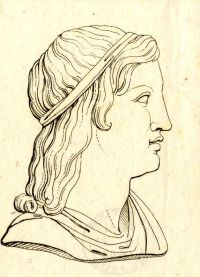
Gaius Gracchus

Definition and stakes

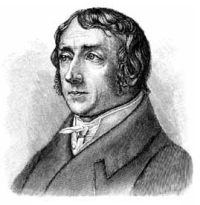
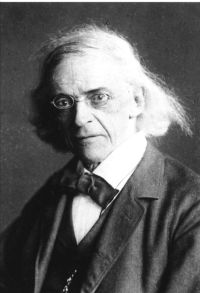
Portrait of Theodor Mommsen Theodor Mommsen,  The History of Rome, Book IV

“ He was a political incendiary. Not only was the hundred years' revolution which dates from him, so far as it was one man's work, the work of Gaius Gracchus, but he was above all the true founder of that terrible urban proletariate flattered and paid by the classes above it, which through its aggregation in the capital—the natural consequence of the largesses of corn—became at once utterly demoralized and aware of its power, and which—with its demands, sometimes stupid, sometimes knavish, and its talk of the sovereignty of the people—lay like an incubus for five hundred years upon the Roman commonwealth and only perished along with it And yet—this greatest of political transgressors was in turn the regenerator of his country. There is scarce a structural idea in Roman monarchy, which is not traceable to Gaius Gracchus. ”
Source: Gutenberg

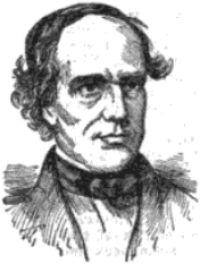
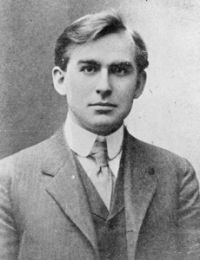
Portrait of Tenney Frank Tenney Frank,  Life and literature in the Roman republic (1930)

“ Gaius Gracchus did as much as any one man to increase the range of Latin forensic prose. Reared [147] in the center of the dominant aristocracy where he imbibed the purest and most copious diction, trained by a mother whose urbane language delighted even Cicero, he nevertheless espoused the cause of democracy, and in the defense of this principle he acquired a lucid directness that Cicero never tires of praising. Gracchus had Greek teachers, who taught him to read and to speak Greek as well as not a little about Greek political ethics, and doubtless also the textbook rules of Greek style. ”
Source: Gutenberg

John Henry Freese,  1911 Encyclopædia Britannica, Volume 12… (1911)

“ Plutarch, Tiberius Gracchus; Vell. Pat. ii. 2, 3.
5. Gaius Sempronius Gracchus (153–121 B.C.) , younger brother of (4) , was a man of greater abilities, bolder and more passionate, although possessed of considerable powers of self-control, and a vigorous and impressive orator. When twenty years of age he was appointed one of the commissioners to carry out the distribution of land under the provisions of his brother’s agrarian law. At the time of Tiberius’s death, Gaius was serving under his brother-in-law Scipio in Spain, but probably returned to Rome in the following year (132) .
”
Source: Wikisource

Get perspective with Kwize: daily news enlightened by great literature