“ The Ganges is more than the great river of India: it is one of the great rivers of the world. To vast numbers of mankind it is a sacred stream, and to bathe in its holy waters is a privilege for which pilgrims will travel on foot from distant lands. But the mighty flood is put to other uses than that of worship. A network of canals gathers up the waters of itself and of its many tributaries, and spreads them abroad upon the fields of the husbandman, and makes the plain blossom into fertility. ”
Ganges River
Definition and stakes
The theme of “Ganges River” has been addressed by authors such as W. W. W. Humbley, Hermann Hesse, Charles Sturt, Robert Ferguson and Thomas Hungerford Holdich. It is often associated with terms like India, Himalayas, Varanasi, Patna and Hinduism.
Quotes about “Ganges River”
Charles Augustus Kincaid, Tales from the Indian Epics — The Descent of the Ganges (1918)
“ Let the Lord Vishnu send down the River Ganges from heaven to earth so that I may fitly perform the obsequies of King Sagar's sons and thus give rest to their spirits." "I grant you the boon, King Bhagirath," said the god Brahmadeva. But the Ganges River will break through the earth's surface in its descent and will vanish beneath it. Pray, therefore, to the Lord Shiva that he may break its fall, so that it may flow gently upon the earth's surface". ”
 Eliza Ripley,
Social life in old New Orleans
(1912)
“ Women walked toward the Ganges river, smilingly tripping along with huge water jars on their shoulders, in full view of another woman descending the steps of a temple, with a naked baby, poised aloft, to be thrown into the sacred Ganges. ”
Fanny Parkes Parlby, Wanderings of a pilgrim in search of the picturesque… (1850)
“ A man who appeared to be a mendicant fakīr, came down to the river-side, carrying in one hand a long pole, and in the other one joint of a thick bamboo, which formed a vessel for holding water, and from this he poured some of the holy stream of the Ganges on the little shrub goddess the tulsī.In the midst of hundreds and hundreds of temples and ghāts, piled one above another on the high cliff, or rising out of the Ganges, the mind is perfectly bewildered; it turns from beauty to beauty, anxious to preserve the memory of each, and the amateur throws down the pencil in despair. ”
The Commerce and Navigation of the Erythræan Sea
“ The river of this region called the Ganges is the largest in India; it has an annual increase and decrease like the Nile, and there is on it a mart called after it, Gangê, through which passes a considerable traffic consisting of betel, the Gangetic spikenard, pearl, and the finest of all muslins—those called the Gangetic. In this locality also there is said to be a gold mine and a gold coin called Kaltis. Near this river there is an island of the ocean called Khrusê (or the Golden) , which lies directly under the rising sun and at the extremity of the world towards the east. ”
 Harry Alverson Franck,
A Vagabond Journey Around the World…
“ From time to time bands of natives, covered with the dust of travel, tumbled down the stairways and plunged eagerly into the purging river. There is no sin so vile, says the Hindu, that it cannot be washed away in the Ganges at the foot of Benares. Let us hope so, for its waters certainly have no other virtues. Gladly would I, for one, bear away any portable burden of peccadillos in preference to descending into that fever-infected flow of mud. A ray of sunlight will not pass through a wineglassful of Ganges water. ”
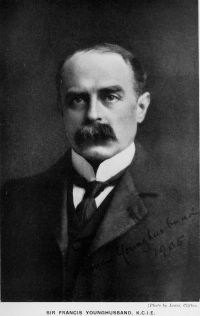 Sir Francis Edward Younghusband,
The Heart of Nature; or, The Quest for Natural Beauty
“ But the Ganges is not always in this gracious mood, and does not always wear this kindly aspect. In the rainy season it is a thing of terror. Overhead black, thundery clouds sweep on for days and weeks together towards the mountains. There is not a glimpse of sun. The rain descends as a deluge. The river is still further swollen by the melting of the snow on the Himalaya, and now comes swirling along in dark and angry mood, rising higher and higher in its banks, eating into them, and threatening to overtop them and carry death and destruction far and wide. Men no longer go down to meet it. ”
Various, Encyclopaedia Britannica, 11th Edition…
“ The Ganges is essentially a river of great cities: Calcutta, Monghyr, Patna, Benares and Allahabad all lie on its course below its junction with the Jumna; and the ancient capitals, Agra and Delhi, are on the Jumna, higher up. The catchment basin of the Ganges is bounded on the N. by a length of about 700 m. of the Himalayan range, on the S. by the Vindhya mountains, and on the E. by the ranges which separate Bengal from Burma. The vast river basin thus enclosed embraces 432,480 sq. ”
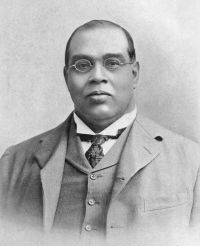 Romesh Chunder Dutt,
History of India
(1906)
“ From early ages the Ganges has been the sacred river of India, and its waters are as hallowed as those of the Jordan or the well of Zemsem. Such miraculous powers are ascribed to this stream, that, according to Hindu tradition, those who die immersed in its waters attain heavenly bliss. ”
T. L. Pennell, Among the Wild Tribes of the Afghan Frontier
“ One of the most interesting places we visited was Hardwar, the holy bathing-place on the Ganges, which is visited by tens of thousands of Hindu pilgrims from every part of India every year, and the neighbouring Sadhu colony of Rishikes. The latter is a village inhabited only by the Sanzasis and other Sadhus, who have built themselves grass huts in a very picturesque spot, where the Ganges River emerges from the Himalaya Mountains, and commences its long course through the densely-populated plains of India. ”
 H. P. Blavatsky,
From the Caves and Jungles of Hindostan
“ This sorrowful, poetical allegory made us feel very keenly for the poor old man; but, however great our sympathy, we could not but suppose that probably the woes of the maiden Ganga do not affect her sources. In Hardwar the color of Ganges is crystal aqua marina, and the waters run gaily murmuring to the shore-reeds about the wonders they saw on their way from the Himalayas. The beautiful river is the greatest and the purest of goddesses, in the eyes of the Hindus; and many are the honors given to her in Hardwar. ”
James Wood, The Nuttall Encyclopædia — G
“ Ganges, the great sacred river of India, which, though somewhat shorter than the Indus, drains a larger area and traverses a more fertile basin; it has its source in an ice-cave on the southern side of the Himalayas, 8 m. above Gangotri, at an elevation of 13,800 ft. above the sea-level ”
Anonymous, Gesta Romanorum Vol. II (1871)
“ In the utmost marshes of India, eastward, about the source and head of the river Ganges, there is a nation called the Astomes, for they have no mouths: all hairie over the whole bodie, yet clothed with the soft cotton and downe that come from the leaves of trees; they live only by the aire, and smelling to sweet odours, which they draw in at their nose thrills. No meat nor drink they take, onely pleasant savours from divers and sundrie roots, flowers, and wild fruits, growing in the woods they entertaine ”
1911 Encyclopædia Britannica (1911)
“ The division south of the Ganges comprises portions of Allahabad, Benares and Ghazipur, together with the whole of Mirzapur, and in general features somewhat resembles Bundelkhand, but the lowlands along the river bank are more fertile. The triangular tract between the Ganges and the Gogra and the boundary of Oudh is the most fertile corner of the Gangetic plain, and contains the densest population. ”
Sir Francis Edward Younghusband,
The Heart of Nature; or, The Quest for Natural Beauty
“ And as the region comes within the sweep of the monsoon from the Bay of Bengal, there is not only great heat in the plains and lower valleys, but great moisture as well. The mountain-sides are in consequence clothed with a luxuriant vegetation.To enter this wonderful region the traveller has first to cross the Ganges—the sacred river of the Hindus. Great rivers have about them a fascination all their own. They produce in us a sense of everlastingness and irresistibility. ”
W. W. W. Humbley, Journal of a Cavalry Officer; Including the Memorable Sikh Campaign of 1845-1846
“ Ganges, on which it stands. The appearance from the river is very imposing. Close to the main ghât stand two temples, the top of one of which is most elaborately and beautifully carved. On the other side of the river, which is here not very broad, stands the elegant residence of the Rajah of Benares.As the steamers stop here to take in coal, as well as to land and receive passengers and goods, I took a stroll on shore. A traveller intending to visit Bombay and the west of India, should take the steamer as far as Mirzapore; this is better than going to Allahabad, which lies too far north ”
Joguth Chunder Gangooly, Life and religion of the Hindoos… (1860)
“ The school-teachers form concerts of their pupils, who sing the praise of the sacred river Ganges, through the streets and before the temple. Men, women, and children crowd in the Ghats,—bathing-places. As they go in they throw some fruits, such as mangoes, bananas, cocoa-nuts, into the water as an offering to the sacred river. Some continue their morning bath through the whole month, others only three days, while a few religious persons continue it through the year. ”
 Letitia Elizabeth Landon,
Letitia Elizabeth Landon
(1837)
“ The Ganges (called by the natives Ganga, the river,) takes its rise among the loftiest of the Himalayan peaks, and, after winding for a hundred and fifty miles through a stupendous labyrinth of mountains, enters the plains of Hindostan through an opening in the mountains of Hurdwar. ”
Various, Encyclopaedia Britannica, 11th Edition…
“ GANGES (Ganga) , a great river of northern India, formed by the drainage of the southern ranges of the Himalayas. This mighty stream, which in its lower course supplies the river system of Bengal, rises in the Garhwal state, and falls into the Bay of Bengal after a course of 1500 m. It issues, under the name of the Bhagirathi, from an ice cave at the foot of a Himalayan snow-bed near Gangotri, 10,300 ft. above the level of the sea. ”
James Kennedy, Life and Work in Benares and Kumaon…
“ On the three Sabbaths I was on the river I had the pleasure of preaching to the Europeans on board.A voyage on the Ganges does not enable one to see much of the country. The banks are often very high; in many places there is a great extent of sand; the country, with the exception of the district where the main stream is entered, is very level, and the country is therefore very imperfectly seen. ”
Robert Ferguson, The River-Names of Europe
“ From the Sansc. gam, to go, is derived, according to Bopp and Monier Williams, the name of the Ganges, in Sanscrit Gangâ. The word is in fact the same as the Scotch "gang," which seems to be derived more immediately from the Old Norse ganga. In the sense of "that which goes," the Hindostanee has formed gung, a river, found in the names of the Ramgunga, the Kishengunga, the Chittagong, and other rivers of India. The same ending is found by Förstemann in the old names of one or two German rivers, as the Leo near Salzburg, which in the 10th cent. ”
T. L. Pennell, Among the Wild Tribes of the Afghan Frontier
“ It is at Hardwar that the great Ganges Canal, one of the great engineering feats of the British rule, has been taken from the river to vivify thousands of acres of good land in the United Provinces to the south, and supply their teeming populations with bread. ”
 John S. C. Abbott,
The Wonders of the World
(1856)
“ The water of the Nile is here, for the most part, thick and muddy, more particularly when the river is swollen by the heavy rains which constantly fall within the tropics in the beginning of the summer season, and which are doubtless the principal cause of its overflowing the low lands of Egypt. A similar phenomenon is found in the Ganges; and it is the same with all the rivers which have either their rise or course within the tropics: they annually break their bounds, and cover the lands for many miles on each side, before they reach the sea. ”
“ Nay, the same River, when much agitated, and in commotion, must bear up more of it, than when it moves with less rapidity and violence. That there is a great Quantity of this Matter in Rivers; and that it contributes vastly to the ordinary Fertility of the Earth, we have an illustrious Instance in the Nile, the Ganges, and other Rivers that yearly overflow the neighbouring Plains. Their Banks shew the fairest and largest Crops of any in the whole World. They are even loaded with the multitude of their Productions ”
Thomas Williamson, The East India Vade-Mecum, Volume 2…
“ The natives of India rarely venture beyond Hurdwar. They have, however, an opinion that the true Ganga, as they term the Ganges, originates at that spot; and, considering the cow as the greatest blessing given to mankind, (for the Hindus venerate it with even more fervor than a Catholic does a supposed relic of our Saviour,) emphatically term it ‘the Cow’s Mouth;’ implying thereby the purity, as well as the value, of the waters.But those mountains which give birth to the Ganges, are likewise the sources of the Barampooter; a river exceeding even the Ganges in capacity! ”
John Scudder, Dr. Scudder's Tales for Little Readers…
“ It is called the Ganges, after the goddess Gunga. The Hindoos say that the goddess Gungu—who was produced from the sweat of Vrishnoo's foot, which Brumha caught and preserved in his alms-dish—came down from heaven, and divided herself into one hundred streams, which are the mouths of the river Ganges. All classes and castes worship her. The sight, the name, or the touch of the river Ganges is said to take away all sin. To die on the edge of the river, or to die partly buried in the stream, drinking its waters, while their bodies are besmeared with mud, is supposed to render them very holy. ”
 Edward B. Tylor,
Primitive culture, vol. 2 (of 2…
(1871)
“ As for the water-worship prevailing among non-Aryan indigenes of British India, it 212seems to reach its climax among the Bodo and Dhimal of the North-East, tribes to whom the local rivers are the local deities, [475] so that men worship according to their water-sheds, and the map is a pantheon.Nor is such reverence strange to Aryan nations. To the modern Hindu, looking as he still does on a river as a living personal being to be adored and sworn by, the Ganges is no solitary water deity, but only the first and most familiar of the long list of sacred streams. ”
Jules Joubert, Shavings & Scrapes from many parts
“ A single one of its many tributaries—the Jumna—has an independent existence of 860 miles, with a catchment basin of 118,000 square miles, and starts from an elevation at its source of 10,849 feet above sea-level.As a factor in the commercial welfare of India the Ganges plays an important part. Until the opening of the railways its waters formed the almost sole channel of traffic between Upper India and the sea-board. The products not only of the river plains, but even those of the central provinces, were all brought by this route into Calcutta. ”
George P. Marsh, The Earth as Modified by Human Action
“ The mere accumulation of deposits in the beds of rivers which transport much sediment compels them continually to seek new outlets, and it is only by great effort that art can keep their points of discharge pproximately constant. The common delta of the Ganges and the Brahmapootra is in a state of incessant change, and the latter river is said to have shifted its main channel 200 miles to the west since 1785, the revolution having been principally accomplished between 1810 and 1830. ”
1911 Encyclopædia Britannica (1911)
“ So much of the river is thus diverted that only a small portion of its water ever reaches the Ganges at Fatwa. The chief crops are rice, wheat, barley, maize and pulse; poppy and potatoes are also of importance. Apart from the Sone canal, irrigation is largely practised from private channels and also from wells. The district is traversed by the main line of the East Indian railway, with two branches south to Gaya and Bihar. The Division of Patna extended across both sides of the Ganges. It comprised the seven districts of Patna, Gaya, Shahabad, Saran, Champaran, Muzaffarpur and Darbhanga. ”
W. W. W. Humbley, Journal of a Cavalry Officer; Including the Memorable Sikh Campaign of 1845-1846
“ The natives never thought of such schemes in days of yore. Being a sacred river, the Ganges could do no wrong: if a man lost his boat, it was his destiny (nuseeb) : the will of God in anger for his sins! Æsop's fables have been translated by a Brahmin; and an Englishman having read, to a Hindoo, the fable of the waggoner's complaint to Jupiter, the man shook his head and laughed.It would seem possible, that by carefully examining this river during the dry season, from October to April, the channels might be found out. In the Bhauguretty, and smaller Indian rivers, dredging machines are used. ”
“ They move upon the world-old ways which their fathers followed. In many of them, far from the main river and the railway, a white face is scarcely ever seen. There are great towns in the Ganges basin, but these are only specks on the face of the mighty plain. ”
Related terms
Authors who wrote about “Ganges River”
W. W. W. Humbley Hermann Hesse
 Charles SturtRobert Ferguson
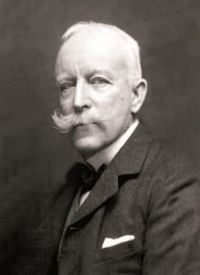 Thomas Hungerford HoldichJoseph David Freedone Melik BeglarJ. Stephen Jeans
 Carl RitterMegasthenesFanny Parkes ParlbyVariousSir Francis Edward Younghusband
 Rabindranath TagoreT. L. PennellH. P. Blavatsky
 Joseph ConradJohn Edward MercerJules Joubert
 George Dodd
 Oliver Optic
Hermann HesseCharles SturtRobert FergusonThomas Hungerford HoldichJoseph David Freedone Melik BeglarJ. Stephen JeansCarl RitterMegasthenesFanny Parkes ParlbyVariousSir Francis Edward YounghusbandRabindranath TagoreT. L. PennellH. P. BlavatskyJoseph ConradJohn Edward MercerJules JoubertGeorge DoddOliver Optic