George Wishart

Definition and stakes

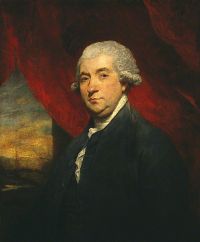
Thomas M'Crie,  Life of John Knox, Fifth Edition…

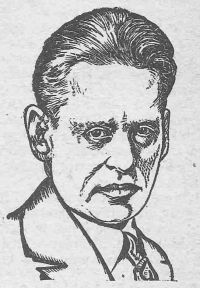
“ But the person to whom our Reformer was most indebted, was George Wishart, a brother of the laird of Pittarow in Mearns. Being driven into banishment by the bishop of Brechin, for teaching the Greek Testament in Montrose, he had resided for some years at the university of Cambridge. In the year 1544, he returned to his native country, in the company of the commissioners who had been sent to negotiate a treaty with Henry VIII. of England. Seldom do we meet, in ecclesiastical history, with a character so amiable and interesting as that of George Wishart. ”
Source: Gutenberg

Alexander F. Mitchell,  The Scottish Reformation

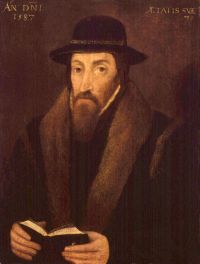
“ It was about this time that a new evangelist arrived in the country, singularly fitted to impress on the hearts of men the lessons of the Holy Book to which they had now access in their native tongue. This was George Wishart, a younger son or nephew of Sir James Wishart, laird of Pittarrow in the Mearns. He appears to have been born about 1512-13, and to have received his university training in King's College, Aberdeen, then presided over by a distinguished humanist skilled both in Latin and Greek. ”
Source: Gutenberg

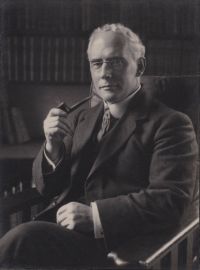
Portrait of Albert Frederick Pollard Albert Frederick Pollard,  1911 Encyclopædia Britannica, Volume 28… (1911)

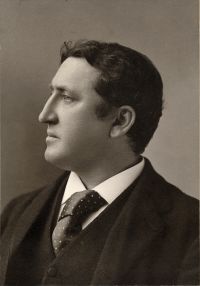
“ There was another George Wishart, bailie of Dundee, who allied himself with Beaton’s murderers; and Sir John Wishart (d. 1576) , afterwards a Scottish judge, has also claims to the doubtful distinction. Sir John was certainly a friend of Creighton, laird of Branston, who was deeply implicated in the plot, but Creighton also befriended the reformer during his evangelical labours in Midlothian. The case against the reformer is not proven and is not probable. ”
Source: Wikisource

Get perspective with Kwize: daily news enlightened by great literature