 Charles Dickens,
Great Expectations
(1861)
Charles Dickens,
Great Expectations
(1861)
“ “Now, I return to this young fellow. And the communication I have got to make is, that he has great expectations.” ”
"Great Expectations," Charles Dickens' 1861 bildungsroman, follows the moral and social development of orphaned Pip as he journeys from impoverished child to disillusioned gentleman. Dickens examines themes of wealth and poverty, love and rejection, and the conflict between ambition and virtue, brought to life through compelling characters such as the vengeful Magwitch and the embittered Miss Havisham.
John Forster observes Dickens’ personal engagement with the narrative’s structure, while John Cowper Powys emphasizes its artistic richness in portraying human aspiration. Agnes Maule Machar connects the novel’s resonance to universal struggles with expectation and selfhood, highlighting its lasting significance as a critique of societal illusions.
Charles Dickens,
Great Expectations
(1861)
“ “Now, I return to this young fellow. And the communication I have got to make is, that he has great expectations.” ”
Charles Dickens,
Great Expectations
(1861)
“ He comes here at the peril of his life, for the realization of his fixed idea. In the moment of realization, after all his toil and waiting, you cut the ground from under his feet, destroy his idea, and make his gains worthless to him. Do you see nothing that he might do, under the disappointment?” ”
 John Cowper Powys,
One Hundred Best Books
John Cowper Powys,
One Hundred Best Books
“ Those who still are not prohibited, by temperamental difficulty or by some modern fashion, from enjoying the peculiar atmosphere of this astonishing person's work, will be found reverting to him constantly and indiscriminately. "Great Expectations" is perhaps, as a more "artistic" book than the rest, the most fitted of them all to entice towards a more sympathetic understanding of his mood, those who are held from reading him by some more or less accidental reason. ”
John Forster, The Life of Charles Dickens, Vol…
“ The sacrifice of Great Expectations is really and truly made for myself. The property of All the Year Round is far too valuable, in every way, to be much endangered. Our fall is not large, but we have a considerable advance in hand of the story we are now publishing, and there is no vitality in it, and no chance whatever of stopping the fall; which on the contrary would be certain to increase. Now, if I went into a twenty-number serial, I should cut off my power of doing anything serial here for two good years—and that would be a most perilous thing. ”
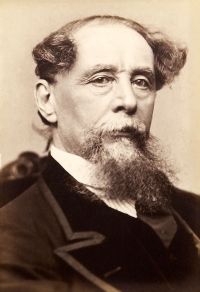 Charles John Huffam Dickens,
Great Expectations
(1861)
Charles John Huffam Dickens,
Great Expectations
(1861)
“ At such times the more exuberant among them called out in an excited manner on our emergence round some corner of expectancy, "Here they come!" "Here they are!" and we were all but cheered. In this progress I was much annoyed by the abject Pumblechook, who, being behind me, persisted all the way as a delicate attention in arranging my streaming hatband, and smoothing my cloak. ”
Charles Dickens,
Great Expectations
(1861)
“ All the truth of my position came flashing on me; and its disappointments, dangers, disgraces, consequences of all kinds, rushed in in such a multitude that I was borne down by them and had to struggle for every breath I drew. ”
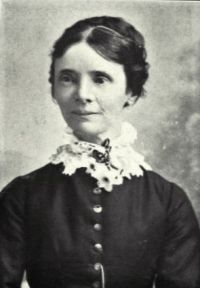 Agnes Maule Machar,
Roland Graeme: Knight. A Novel of Our Time
Agnes Maule Machar,
Roland Graeme: Knight. A Novel of Our Time
“ Many of us are apt to think at twenty-five, that if 'the world is out of joint,' we, in particular, were 'born to set it right.' I know I did, and though I have not done a hundredth part of what I hoped to do, I probably shouldn't have done that percentage, if I had not started with great expectations. ”
Charles Dickens,
Great Expectations
(1861)
“ “I must be taken as I have been made. The success is not mine, the failure is not mine, but the two together make me.” ”
Charles John Huffam Dickens,
Great Expectations
(1861)
“ Thus far my sense of sight; while dry rot and wet rot and all the silent rots that rot in neglected roof and cellar—rot of rat and mouse and bug and coaching-stables near at hand besides—addressed themselves faintly to my sense of smell, and moaned, "Try Barnard's Mixture." So imperfect was this realisation of the first of my great expectations, that I looked in dismay at Mr. Wemmick. "Ah!" said he, mistaking me; "the retirement reminds you of the country. So it does me." ”
Charles Dickens,
Great Expectations
(1890)
“ Pocket being justly celebrated for giving most excellent practical advice, and for having a clear and sound perception of things and a highly judicious mind, I had some notion in my heart-ache of begging him to accept my confidence. ”
Charles John Huffam Dickens,
Great Expectations
(1861)
“ No," said he, with a glance of surprise: "who else should there be? And, dear boy, how good-looking you have growed! There's bright eyes somewheres—eh? Isn't there bright eyes somewheres, wot you love the thoughts on?" ”
Charles John Huffam Dickens,
Great Expectations
(1861)
“ Many pleasant pictures of the life that I would lead there, and of the change for the better that would come over my character when I had a guiding spirit at my side whose simple faith and clear home-wisdom I had proved, beguiled my way. ”
 P. G. Wodehouse,
The Pothunters
P. G. Wodehouse,
The Pothunters
“ Shall we, by the way?' 'Not for me, thanks. I'm in the middle of a rather special book. Ever read Great Expectations? Dickens, you know.' 'I know. Haven't read it, though. Always rather funk starting on a classic, somehow. ”
Charles Dickens,
Great Expectations
“ And as to the condition on which you hold your advancement in life,—namely, that you are not to inquire or discuss to whom you owe it,—you may be very sure that it will never be encroached upon, or even approached, by me, or by any one belonging to me. ”
Charles John Huffam Dickens,
Great Expectations
(1861)
“ They had been there ever since I could remember, and had grown more than I had. But there was a quantity of chalk about our country, and perhaps the people neglected no opportunity of turning it to account. ”
Charles John Huffam Dickens,
Great Expectations
(1861)
“ He had worked himself into a state of great excitement, but he checked it, took two or three short breaths, swallowed as often, and stretching out his hand towards me said, in a reassuring manner, "I ain't a going to be low, dear boy!" ”
Charles Dickens,
Great Expectations
(1890)
“ Her reverting to this tone as if our association were forced upon us and we were mere puppets, gave me pain; but everything in our intercourse did give me pain. Whatever her tone with me happened to be, I could put no trust in it, and build no hope on it; and yet I went on against trust and against hope. Why repeat it a thousand times? So it always was. I rang for the tea, and the waiter, reappearing with his magic clue, brought in by degrees some fifty adjuncts to that refreshment, but of tea not a glimpse. ”
T. Baron Russell, A Hundred Years Hence: The Expectations of an Optimist
“ And the development and circumstances of very elaborate civilisation do not wholly favour the spiritual. But to conclude from this that great poetry will never again be written would be to overlook one of the disturbing, the cataclysmal factors of human life. This factor is one of the greatest pitfalls of the would-be prophet. By examining the past, one could predict almost unfailingly the future, if there were not always, and in every department of life, the strange, incalculable thing which, for want of a better name, we call genius, to be reckoned with, to be almost alarmed by. ”
Charles John Huffam Dickens,
Great Expectations
(1861)
“ Once, it had seemed to me that when I should at last roll up my shirt-sleeves and go into the forge, Joe's 'prentice, I should be distinguished and happy. Now the reality was in my hold, I only felt that I was dusty with the dust of small-coal, and that I had a weight upon my daily remembrance to which the anvil was a feather. There have been occasions in my later life (I suppose as in most lives) when I have felt for a time as if a thick curtain had fallen on all its interest and romance, to shut me out from anything save dull endurance any more. ”
Charles John Huffam Dickens,
Great Expectations
(1861)
“ Dear Joe, I hope you will have children to love, and that some little fellow will sit in this chimney corner of a winter night, who may remind you of another little fellow gone out of it for ever. Don't tell him, Joe, that I was thankless; don't tell him, Biddy, that I was ungenerous and unjust; only tell him that I honoured you both, because you were both so good and true, and that, as your child, I said it would be natural to him to grow up a much better man than I did. ”
T. Baron Russell, A Hundred Years Hence: The Expectations of an Optimist
“ Consequently, there is a great premium upon intelligence, and only a much smaller premium upon bodily strength; and this condition of affairs is likely to become accentuated as the present century develops. With increase of intellectual agility we obtain increase of subtlety and intuition, and of those finer perceptive and [193] critical faculties which make expression of the emotions important and interesting. ”
Charles John Huffam Dickens,
Great Expectations
(1861)
“ The stones of which the strongest London buildings are made, are not more real, or more impossible to be displaced by your hands, than your presence and influence have been to me, there and everywhere, and will be. Estella, to the last hour of my life, you cannot choose but remain part of my character, part of the little good in me, part of the evil. ”
Charles John Huffam Dickens,
Great Expectations
(1861)
“ Oh, those people with Miss Havisham, and the tortures they undergo!" She laughed again, and even now when she had told me why, her laughter was very singular to me, for I could not doubt its being genuine, and yet it seemed too much for the occasion. I thought there must really be something more here than I knew; she saw the thought in my mind, and answered it. "It is not easy for even you," said Estella, "to know what satisfaction it gives me to see those people thwarted, or what an enjoyable sense of the ridiculous I have when they are made ridiculous. ”
Charles John Huffam Dickens,
Great Expectations
(1861)
“ It was no laughing matter with Estella now, nor was she summoning these remembrances from any shallow place. I would not have been the cause of that look of hers, for all my expectations in a heap. "Two things I can tell you," said Estella. "First, notwithstanding the proverb that constant dropping will wear away a stone, you may set your mind at rest that these people never will—never would, in a hundred years—impair your ground with Miss Havisham, in any particular, great or small. ”
Charles John Huffam Dickens,
Great Expectations
(1861)
“ After another silent turn in the garden, I fell back on the main position. "Biddy," said I, "I made a remark respecting my coming down here often, to see Joe, which you received with a marked silence. Have the goodness, Biddy, to tell me why." "Are you quite sure, then, that you Will come to see him often?" asked Biddy, stopping in the narrow garden walk, and looking at me under the stars with a clear and honest eye. "Oh dear me!" said I, as if I found myself compelled to give up Biddy in despair. "This really is a very bad side of human nature! Don't say any more, if you please, Biddy. ”
Charles John Huffam Dickens,
Great Expectations
(1861)
“ The moon began to rise, and I thought of the placid look at the white ceiling, which had passed away. The moon began to rise, and I thought of the pressure on my hand when I had spoken the last words he had heard on earth. Estella was the next to break the silence that ensued between us. "I have very often hoped and intended to come back, but have been prevented by many circumstances. Poor, poor old place!" The silvery mist was touched with the first rays of the moonlight, and the same rays touched the tears that dropped from her eyes. ”
Charles John Huffam Dickens,
Great Expectations
(1861)
“ I was exceedingly careful what I said, "and I thought you would kindly not mind my taking leave of you." "This is a gay figure, Pip," said she, making her crutch stick play round me, as if she, the fairy godmother who had changed me, were bestowing the finishing gift. "I have come into such good fortune since I saw you last, Miss Havisham," I murmured. "And I am so grateful for it, Miss Havisham!" "Ay, ay!" said she, looking at the discomfited and envious Sarah, with delight. "I have seen Mr. Jaggers. I have heard about it, Pip. ”
T. Baron Russell, A Hundred Years Hence: The Expectations of an Optimist
“ But as the work took shape it was seen to involve a certain amount of what may be called moral conjecture, since the material progress of the new age could not very well be imagined without taking into account its mental characteristics. In these expectations of an optimist, a great ethical improvement of the civilised human race has been anticipated, and a rate of progress foreseen which perhaps no previous writers have looked for. ”
Charles John Huffam Dickens,
Great Expectations
(1861)
“ She stared, and said in a low voice, "Is it real!" "It is I, Pip. Mr. Jaggers gave me your note yesterday, and I have lost no time." "Thank you. Thank you." As I brought another of the ragged chairs to the hearth and sat down, I remarked a new expression on her face, as if she were afraid of me. "I want," she said, "to pursue that subject you mentioned to me when you were last here, and to show you that I am not all stone. But perhaps you can never believe, now, that there is anything human in my heart?" ”
Charles John Huffam Dickens,
Great Expectations
(1861)
“ It is my own act." "Your own act, Estella, to fling yourself away upon a brute?" "On whom should I fling myself away?" she retorted, with a smile. "Should I fling myself away upon the man who would the soonest feel (if people do feel such things) that I took nothing to him? There! It is done. I shall do well enough, and so will my husband. As to leading me into what you call this fatal step, Miss Havisham would have had me wait, and not marry yet; but I am tired of the life I have led, which has very few charms for me, and I am willing enough to change it. ”
Charles John Huffam Dickens,
Great Expectations
(1861)
“ The mournfulness of the place and time, and the great terror of this illusion, though it was but momentary, caused me to feel an indescribable awe as I came out between the open wooden gates where I had once wrung my hair after Estella had wrung my heart. Passing on into the front court-yard, I hesitated whether to call the woman to let me out at the locked gate of which she had the key, or first to go upstairs and assure myself that Miss Havisham was as safe and well as I had left her. ”
Charles John Huffam Dickens,
Great Expectations
(1861)
“ When I woke up in the night—like Camilla—I used to think, with a weariness on my spirits, that I should have been happier and better if I had never seen Miss Havisham's face, and had risen to manhood content to be partners with Joe in the honest old forge. Many a time of an evening, when I sat alone looking at the fire, I thought, after all there was no fire like the forge fire and the kitchen fire at home. ”
Charles John Huffam Dickens,
Great Expectations
(1861)
“ And if you ask me to give you what you never gave me, my gratitude and duty cannot do impossibilities." "Did I never give her, love!" cried Miss Havisham, turning wildly to me. "Did I never give her a burning love, inseparable from jealousy at all times, and from sharp pain, while she speaks thus to me! Let her call me mad, let her call me mad!" "Why should I call you mad," returned Estella, "I, of all people? Does any one live, who knows what set purposes you have, half as well as I do? Does any one live, who knows what a steady memory you have, half as well as I do? ”
Charles John Huffam Dickens,
Great Expectations
(1861)
“ You are part of my existence, part of myself. You have been in every line I have ever read, since I first came here, the rough common boy whose poor heart you wounded even then. You have been in every prospect I have ever seen since—on the river, on the sails of the ships, on the marshes, in the clouds, in the light, in the darkness, in the wind, in the woods, in the sea, in the streets. You have been the embodiment of every graceful fancy that my mind has ever become acquainted with. ”
Charles John Huffam Dickens,
Great Expectations
(1861)
“ For the rest, he was a young gentleman in a grey suit (when not denuded for battle) , with his elbows, knees, wrists, and heels, considerably in advance of the rest of him as to development. My heart failed me when I saw him squaring at me with every demonstration of mechanical nicety, and eyeing my anatomy as if he were minutely choosing his bone. I never have been so surprised in my life, as I was when I let out the first blow, and saw him lying on his back, looking up at me with a bloody nose and his face exceedingly foreshortened. ”
Charles John Huffam Dickens,
Great Expectations
(1861)
“ The Hall was a queer place, I thought, with higher pews in it than a church—and with people hanging over the pews looking on—and with mighty Justices (one with a powdered head) leaning back in chairs, with folded arms, or taking snuff, or going to sleep, or writing, or reading the newspapers—and with some shining black portraits on the walls, which my unartistic eye regarded as a composition of hardbake and sticking-plaister. ”
Charles John Huffam Dickens,
Great Expectations
(1861)
“ And my terror was of all, when I found no figure there. Nothing less than than the frosty light of the cheerful sky, the sight of people passing beyond the bars of the court-yard gate, and the reviving influence of the rest of the bread and meat and beer, would have brought me round. Even with those aids, I might not have come to myself as soon as I did, but that I saw Estella approaching with the keys, to let me out. She would have some fair reason for looking down upon me, I thought, if she saw me frightened; and she should have no fair reason. ”
