Hexateuch

Definition and stakes

Cuthbert H. Turner, Francis C. Burkitt , George B. Gray, John F. Stenning, Kirsopp Lake, Samuel R. Driver & William Sanday,  1911 Encyclopædia Britannica (1910)

“ Sayce, who frequently takes the field against the “higher criticism,” and denies, without, however, disproving, the validity of the literary analysis of the Hexateuch, nevertheless himself asserts that “no one can study the Pentateuch . . . without perceiving that it is a compilation, and that its author, or authors, has made use of a large variety of older materials,” and that “it has probably received its final shape at the hands of Ezra” (Early History of the Hebrews, 129 and 134) . ”
Source: Wikisource

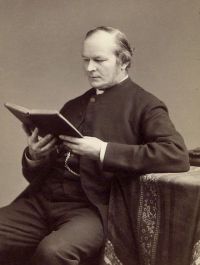
Portrait of F. W. Farrar F. W. Farrar,  The Expositor's Bible: The First Book of Kings

“ There is scarcely a single competent scholar who does not now admit that the Hexateuch is a composite structure; that much of the Levitical legislation, which was once called Mosaic, is in reality an aftergrowth which in its present form is not earlier than the days of the prophet Ezekiel; that the Book of Deuteronomy belongs, in its present form, whatever older elements it may contain, to the era of Hezekiah's or Josiah's reformation; that the Books of Zechariah and Isaiah are not homogeneous, but preserve the writings of more prophets than their titles imply ”
Source: Gutenberg

John Edgar McFadyen,  Introduction to the Old Testament

“ In the book of Samuel, even more distinctly than in the Hexateuch, composite authorship is apparent. Little or no attempt has been made by the redactor [1] to reduce, by omissions, adaptations, or corrections, the divergent sources to a unity, so that we are in the singularly fortunate position of possessing information which is exceedingly early, and in some cases all but contemporary, of persons, events and movements, which exercised the profoundest influence on the subsequent history of Israel. ”
Source: Gutenberg

Get perspective with Kwize: daily news enlightened by great literature