Hijri calendar

Definition and stakes

Talmud (Rodkinson Edition) — Book 2…

“ NOTWITHSTANDING the fact that in the history of every nation, especially such as has ever attained to an established form of government, the calendar is a matter of great importance, the Scriptures do not in any manner treat of the Jewish calendar. There cannot even be found a fixed time whence the commencement of the year should be reckoned, although there is this passage in Exodus (xii. 2) : "This month shall be unto you the chief of months: the first shall it be unto you of the months of the year." ”
Source: Wikisource

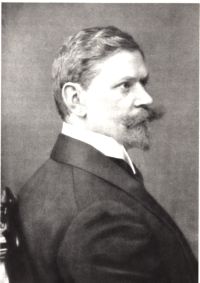
George Foot Moore,  The Covenanters of Damascus; A Hitherto Unknown Jewish Sect

“ Jews and Samaritans not only lived in many of the lands of their dispersion among peoples who used the thirty-day month, but encountered this calendar in commercial centres on the very borders of Palestine with which they had close relations. The advantages of a system in which the festivals came on fixed dates, instead of shifting within wide limits, as they must in the lunar-solar year with its irregular intercalation, are obvious,79 and an attempt to reform the Jewish calendar accordingly may have been made more than once and in more than one region. ”
Source: Gutenberg

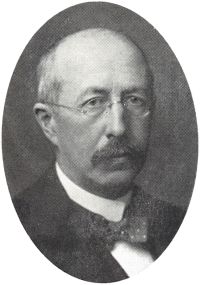
Portrait of Martin P. Nilsson Martin P. Nilsson,  Primitive Time-reckoning

“ The systematising tendency which arose at the end of the kingdom of Judah, and became ever stronger during and after the Exile, necessitated a calendar. If this tendency was unrelated to practical life, it was all the more closely bound up with the religious cult. Since people were now accustomed to numbering the months, the novelty consisted in the fixing of a calendarial beginning of the year. ”
Source: Gutenberg

Get perspective with Kwize: daily news enlightened by great literature