Hildegard von Bingen

Definition and stakes

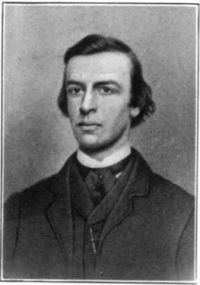
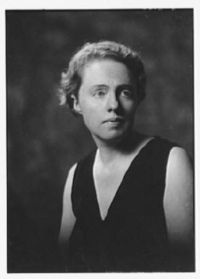
Portrait of Henry Osborn Taylor Henry Osborn Taylor,  The Mediaeval Mind (1911)

“ A more imposing personality than Elizabeth was Hildegard of Bingen, [6] whose career extends through nearly the whole of the twelfth century; for she was born in 1099 and died in 1179. Her parents were of the lesser nobility, holding lands in the diocese of Mainz. A certain holy woman, one Jutta, daughter of the Count of Spanheim, had secluded herself in a solitary cell at Disenberg—the mount of St. Disibodus—near a monastery of Benedictine monks. Drawn by her reputation, Hildegard's parents brought their daughter to Jutta, who received her to a life like her own. ”
Source: Wikisource

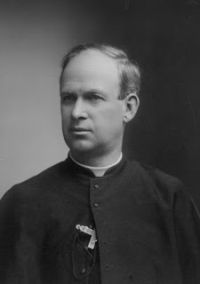
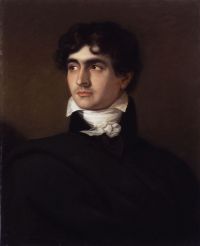
Portrait of William Osler William Osler,  Studies in the History and Method of Science…

“ The extensive literature that has risen around the life and works of Hildegard has come from the hands of writers who have shown no interest in natural knowledge, while those who have occupied themselves with the history of science have, on their side, largely neglected the period to which Hildegard belongs, allured by the richer harvest of the full scholastic age which followed. This essay is an attempt to fill in a small part of the lacuna.
II. Life and Works
Hildegard of Bingen was born in 1098, of noble parentage, at Böckelheim, on the river Nahe, near Sponheim.
”
Source: Gutenberg

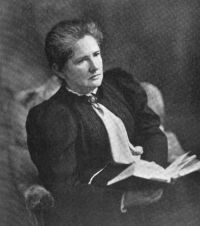
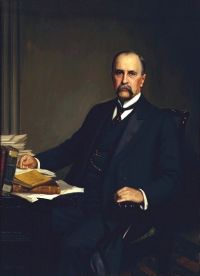
Portrait of Samuel Willoughby Duffield Samuel Willoughby Duffield,  The Latin Hymn-writers and Their Hymns

“ Wretched sinners! save and love us.
There are two notable sequences attributed to the nun Hildegard of Bingen (1104-78) , a visionary and prophetess who commanded the respect of Bernard and his pupil, Pope Eugenius, by her castigations of the disorders of Christendom, as did Birgitta of Sweden and Catherine of Sienna in a later period. There is extant a letter of hers to Bernard, written during his visit to Germany to preach the second crusade, in which she explains in very imperfect Latin the nature of her gift. Her life was begun by Gottfried and finished by Theodorich, monk of Trier.
”
Source: Gutenberg

Get perspective with Kwize: daily news enlightened by great literature