“ Never before nor since did such a wave of feminine genius pass over the fragrant valleys and vine-clad plains of Greece. Never in any other place or time shone so brilliant a galaxy of women of talent and imagination; never was there a more perfect flowering of female intelligence of the highest order. According to tradition, there appeared in the favored land of Hellas, when the entire population of the country was not equal to that of a fair-sized modern city, within the brief space of a century, no fewer than seventy-six women poets. ”
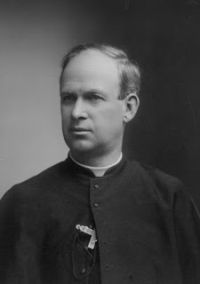
J. A. Zahm
Summary
J. A. Zahm’s Woman in Science explores the historical roles of women in intellectual and scientific endeavors, highlighting individuals such as Hypatia of Alexandria and Aspasia of Miletus, who made significant contributions to mathematics, philosophy, and literature, challenging the norms of ancient Greek society. Published at a time that contrasts classical antiquity with the author’s modern reflections on education and gender roles, the work emphasizes the systemic obstacles women encountered despite their intellectual abilities.
Zahm contends that the restriction of women’s academic potential during the Middle Ages and later hindered advancement, while also acknowledging their often-overlooked brilliance. By comparing the flourishing female intellects of Greece with the perceived absence of similar figures in America, the text emphasizes the ongoing conflict between innate ability and available opportunity in shaping scientific and cultural heritage.
Quotes from Woman in Science (J. A. Zahm)
“ Can we wonder that such an ardent lover of Nature and such a strenuous votary of science was able to forget herself in her work and was able, notwithstanding her toils and her sufferings, to produce six quarto volumes of reports, in as many years, on the unexplored regions which she had so carefully surveyed and charted? Can we be surprised that her labors received due recognition from learned societies in both the New and the Old World, and that she was acclaimed as an explorer who had rendered distinct service to the cause of natural science, as well as to geography? ”
“ America has produced no Raphael or Michaelangelo; no Mozart or Wagner or Tschaikovsky. Nor has it given us a Descartes, a Leibnitz, a Newton or a Darwin. Would any one, from this complete absence in America of representatives of the highest order in literature, art and science, ever dream of concluding that we shall never have such favorite sons of genius and such giants of intellect? ”
