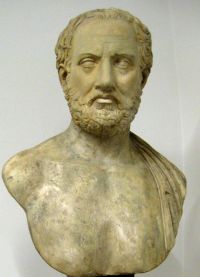
Hipparchus of Nicaea

Definition and stakes

Edward Huntington Williams A History of Science — Volume 1

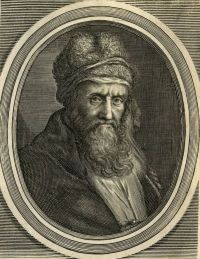
Eratosthenes left no immediate successor. A generation later, however, another great figure appeared in the astronomical world in the person of Hipparchus, a man who, as a technical observer, had perhaps no peer in the ancient world: one who set so high a value upon accuracy of observation as to earn the title of "the lover of truth." Hipparchus was born at Nicaea, in Bithynia, in the year 160 B.C. His life, all too short for the interests of science, ended in the year 125 B.C. The observations of the great astronomer were made chiefly, perhaps entirely, at Rhodes.
Source: Gutenberg

James Wood The Nuttall Encyclopædia — H

Hipparchus, ancient astronomer, born at Nicæa; flourished in the 2nd century B.C.; discovered among other things the precession of the equinoxes, determined the place of the equinox, and catalogued 1000 fixed stars.
Hippias, tyrant of Athens, son of Pisistratus; expelled from Athens, applied to the Persians to reinstate him, and kindled the first Persian War with Greece; fell at Marathon, 490 B.C.
Hippocrates, the father of medicine, born at Cos, 460 B.C.; was a contemporary of Socrates and Plato; was of wide-spread renown as a physician
Source: Wikisource

Portrait of Plutarch Plutarch Plutarch's Lives (1864)

Not for the like of him and his slave-brands,
Did Athens put the sherd into our hands.
And, in fact, none ever afterwards suffered this sort of punishment, but Hyperbolus was the last, as Hipparchus the Cholargian, who was kin to the tyrant, was the first. There is no judgment to be made of fortune; nor can any reasoning bring us to a certainty about it. If Nicias had run the risk with Alcibiades, whether of the two should undergo the ostracism, he had either prevailed, and, his rival being expelled the city, he had remained secure
Source: Wikisource

Get perspective with Kwize: daily news enlightened by great literature