“ Woman was to continue to play a fateful part in the history of the usurped power of Pisistratus. The tyrant ill-treated his young wife, and this threw her father, Megacles, again into the party of the opposition. Pisistratus was once more driven from Athens, and this time from Attica as well. But he returned a third time, and established his power so firmly that at his death he bequeathed it to his sons unimpaired. Hippias and Hipparchus ruled wisely at first, and carried on the many public works in which Pisistratus had engaged ”
Pisistratus
Definition and stakes
Pisistratus, a pivotal figure in ancient Athenian history, was a tyrant whose rule shaped the political and cultural landscape of 6th-century BCE Athens. Historians and writers such as Herodotus, Plutarch, and Mary Macgregor portray him as a complex leader—both a controversial autocrat and a benefactor of public works and intellectual life.
While Plutarch emphasizes his manipulation of public opinion to gain power, Macgregor focuses on his transformative initiatives, including temple building and the promotion of literary culture. Meanwhile, Mitchell Carroll and Thucydides highlight the turbulent nature of his reign, characterized by family conflicts and political opposition. These diverse viewpoints collectively reveal Pisistratus as a figure whose legacy blends despotism with foundational contributions to Athenian identity.
Quotes about “Pisistratus”
 Plutarch,
Plutarch's Lives
(1864)
Plutarch,
Plutarch's Lives
(1864)
“ But observing the poor men bent to gratify Pisistratus, and tumultuous, and the rich fearful and getting out of harm's way, he departed, saying he was wiser than some and stouter than others; wiser than those that did not understand the design, stouter than those that, though they understood it, were afraid to oppose the tyranny. Now, the people, having passed the law, were not nice with Pisistratus about the number of his clubmen, but took no notice of it, though he enlisted and kept as many as he would, until he seized the Acropolis. ”
J. N. Larned, History for ready reference, Volume 1…
“ The people's friend had suffered in the people's cause; his life was in danger. The incident roused the Athenians to an unusual exercise of political power. Without any previous discussion in the Council, a decree was passed by the people allowing Pisistratus to surround himself with a body-guard of fifty men, and to arm them with clubs. Thus protected, he threw off all disguises, and established himself in the Acropolis as tyrant of Athens [B. C. 560] . ... Herodotus tells us that Pisistratus was a just and moderate ruler. ”
Related terms
Authors who wrote about “Pisistratus”
HerodotusBaron Edward Bulwer Lytton Lytton HomerPlutarchArthur Thomas MalkinKarl Friedrich BeckerJ. N. Larned
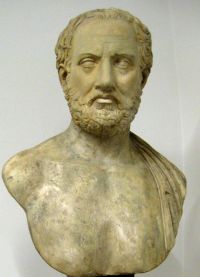 ThucydidesMitchell CarrollMary Macgregor
 Aristotle
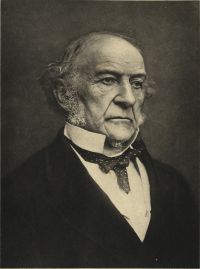 W. E. Gladstone
 Clifford Herschel Moore
 Niccolò Machiavelli
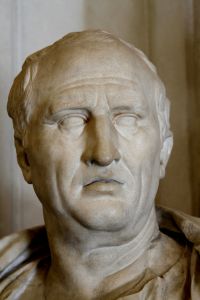 Marcus Tullius Cicero
 Charles Victor Langlois
 Kenneth MorrisWilliam Lucas Collins
 John LemprièreT. M. Hughes
HomerPlutarchArthur Thomas MalkinKarl Friedrich BeckerJ. N. LarnedThucydidesMitchell CarrollMary MacgregorAristotleW. E. GladstoneClifford Herschel MooreNiccolò MachiavelliMarcus Tullius CiceroCharles Victor LangloisKenneth MorrisWilliam Lucas CollinsJohn LemprièreT. M. Hughes