Lampsacus

Definition and stakes

1911 Encyclopædia Britannica (1911)

“ After the battle of Mycale (479 B.C.) , Lampsacus joined the Athenians, but, having revolted from them in 411, was reduced by force. It was defended in 196 B.C. against Antiochus the Great of Syria, after which its inhabitants were received as allies of Rome. Lampsacus was the chief seat of the worship of Priapus, a gross nature-god closely connected with the culture of the vine. The ancient name is preserved in that of the modern village of Lapsaki, but the Greek town possibly lay at Chardak immediately opposite Gallipoli. ”
Source: Wikisource

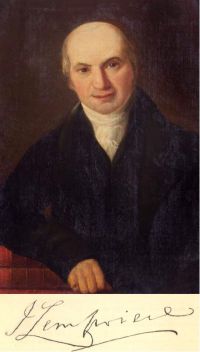
Portrait of John Lemprière John Lemprière,  A classical dictionary (1904)

“ He soon became a favourite of the people of Lampsacus, but he was expelled by the inhabitants on account of the freedom which he took with their wives. This violence was punished by the son of Venus, and when the Lampsacenians had been afflicted with a disease in the genitals, Priapus was recalled, and temples erected to his honour. Festivals were also celebrated, and the people, naturally idle and indolent, gave themselves up to every lasciviousness and impurity during the celebration. His worship was also introduced in Rome ”
Source: Gutenberg

Portrait of Clement of Alexandria Clement of Alexandria,  ../../../ (1885)

“ When asked when a woman after being with her husband attends the Thesmophoria, said, “From her own husband at once, from a stranger never.” Themisto too, of Lampsacus, the daughter of Zoilus, the wife of Leontes of Lampsacus, studied the Epicurean philosophy, as Myia the daughter of Theano the Pythagorean, and Arignote, who wrote the history of Dionysius. ”
Source: Wikisource

Get perspective with Kwize: daily news enlightened by great literature