“ His imagination presented to him the gesture with which Hippolyte had lowered her black veil after the last kiss. And the sun, the azure, the flowers, the general joyousness of nature, suggested to him only this reflection: "Without her, life for me is impossible." ”
Hippolyte
Definition and stakes
The theme of "Hippolyte" spans myth, literature, and philosophy, embodying figures ranging from the Amazonian queen to tragic literary characters. Alexandre Dumas portrays her as a heroic swimmer saving lives, while Mrs. Lang depicts her in whimsical, almost surreal domesticity. Seneca’s tragedies connect her to classical myth, where she becomes a symbol of divine struggle.
In "The Triumph of Death," Hippolyte emerges as a figure of poignant vulnerability, entwined with themes of mortality and yearning. These varied portrayals reveal Hippolyte as both a mythic archetype and a vessel for exploring human emotion, bridging ancient legend and literary imagination.
Quotes about “Hippolyte”
“ Her white hair hung down the sides of her waxen cheeks; the mouth, without lips, resembled a deep furrow; her eyes were sealed forever beneath the corroded eyelids; her entire air expressed a reminiscence of innumerable pains."Is she dead?" asked Hippolyte in a whisper, stopping, seized by fear and respect.The multitude was pushing about the Sanctuary. The processions whirled around chanting, beneath the cruel sun. One of these processions came from under the great portal and turned towards the open space, preceded by its cross-bearer. ”
“ The small leaves, of a grayish green, agitated their thin points beneath the white or azure flowering. Every flower resembled a half-closed mouth, and bore two spots, black as eyes. Among those that were not yet faded, the superior petals slightly covered the spots, like pale eyelids on pupils which regard sidewise. The quivering of all those lipped and eyed flowers had a strange animal expression, attractive and indescribable.George thought: "How happy Hippolyte will be here! She has a delicate and passionate taste for all the humble beauties of the earth. ”
 Alexandre Dumas,
My Memoirs, Vol. I, 1802 to 1821
Alexandre Dumas,
My Memoirs, Vol. I, 1802 to 1821
“ Fortunately, Hippolyte was there, and he could swim like a fish. In an instant he was in the water, and when my father reached the edge of the moat he had already almost saved the first of the three. My father, who was a splendid swimmer, like most Colonials, threw himself into the water and saved the second; and Hippolyte saved the third.They were all pulled out in less than five minutes' time, but one of the three bathers had already lost consciousness, and, seeing him lying with his eyes shut and not breathing, I thought he was dead. ”
Mrs. Lang, The Strange Story Book (1913)
“ But she need not have troubled herself; Hippolyte did not pay the slightest attention to her, but merely woke up Aurore to ask her opinion about the boots, and then sat down before the fire, not wishing even to sleep, as that would be to lose some minutes of exquisite joy. At length, however, fatigue got the better of him, and in the morning when the maid came to wake Aurore, she found Hippolyte stretched on the floor in front of the hearth, unconscious of everybody and everything—even of his boots. ”
“ And the recollection of the concubine crossed his mind; he found in his memory certain details of the horrible altercation with that odious man, in the country house, in front of the open window through which he had heard the cries of the little bastards, in front of the large table littered with papers on which he had perceived the disk of glass and the obscene vignette."How heavy the air is!" murmured Hippolyte, removing her gaze from the white sail, which still remained motionless in the infinite. "Does it not oppress you, too?" ”
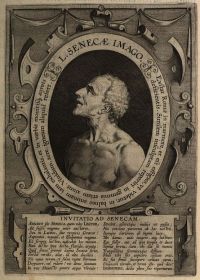 Lucius Annaeus Seneca,
The Tragedies of Seneca
Lucius Annaeus Seneca,
The Tragedies of Seneca
“ Hippolyte, a queen of the Amazons, possessed of the belt of Mars; Eurystheus imposed upon Hercules as his ninth labor that he should secure and bring this belt, or girdle, to him; this the hero accomplished, Agam. 848; H. Fur. 245, 542; H. Oet. 21, 1183, 1450. HIPPOLYTUS (Hippolytus) , son of Theseus and Hippolyte, or, according to others, of Theseus and Antiope; represented as devoted to the hunt, and to Diana, the goddess of the hunt, Hip. 1; the object of the guilty love of Phaedra, his father's wife, ibid. *99; he hates and avoids all womankind, ibid. ”
“ And, turning, he crossed the threshold with a firm step.Hippolyte lay upon the sofa, recomposed, pale, her eyes half-closed. At the approach of her lover, she smiled."Come, sit down!" she murmured, with a vague gesture.He bent over her, and saw tears between her eyelashes."Are you suffering?" he asked."I feel a slight suffocation. I have a weight here, as if a ball were rising and falling."She pointed to the centre of her chest. He said: "It is suffocating in this room. Make an effort, and get up. Let us go out. The air will do you good. Come!" ”
E. M. Berens, Myths and Legends of Ancient Greece and Rome
“ The Girdle of Hippolyte.—The Amazons, who dwelt on the shores of the Black Sea, near the river Thermodon, were a nation of warlike women, renowned for their strength, courage, and great skill in horsemanship. Their queen, Hippolyte, had received from her father, Ares, a beautiful girdle, which she always wore as a sign of her royal power and authority, and it was this girdle which Heracles was required to place in the hands of Eurystheus, who designed it as a gift for his daughter Admete. ”
“ Stop, stop!" said Hippolyte, affected.The carriage stopped."Run, Aligi! The gentlefolk are kind to you. Come, get up!"The good Christian approached. He was gasping, bent over his stick, covered with dust, bathed in perspiration, dazed by the sun. A collar of reddish beard surrounded his chin from one ear to the other, and framed his face dotted with freckles; locks of reddish hair emerged from under his hat, sticking to the forehead and temples; his hollow eyes, converging towards the base of the nose, of no precise color, recalled those of epileptics. ”
by various authors, Dictionary of Greek and Roman Biography and Mythology (1870)
“ Hygin. Fab. 30.) According to another tradition, Hippolyte, with an army of Amazons, marched into Attica, to take vengeance on Theseus for having carried off Antiope; but being conquered by Theseus, she fled to Megara, where she died of grief, and was buried. Her tomb, which was shown there in later times, had the form of an Amazon's shield. (Paus. i. 41. §7; Plut. Thes. 27; Apollod. ii. 5. §9; Apollon. Rhod. ii. 968.) In some accounts Hippolyte is said to have been married to Theseus instead of Antiope. Euripides, in his Hippolytus, makes her the mother of Hippolytus. ”
Mrs. Lang, The Strange Story Book
“ Hippolyte would [182] not have allowed anything of the sort, for he liked Aurore to be with him, whatever he was doing. They had many friends too, both boys and girls, with whom they climbed trees, played games, and even kept sheep, which means that they did not keep them at all, but let them trample down the young wheat in the fields or eat it, if they preferred, while they themselves were dancing. If they were thirsty, they milked the cows and the goats; if they were hungry they ate wild apples or made a fire and cooked potatoes. ”
Various, Encyclopaedia Britannica, 11th Edition…
“ They chose finally to enter the atelier of Ingres, who became not only their instructor but their friend for life. At first considerably hampered by poverty, Hippolyte’s difficulties were for ever removed by his taking, in 1832, the Grand Prix de Rome, awarded for his picture of the “Recognition of Theseus by his Father.” This allowed him to study five years at Rome, whence he sent home several pictures which considerably raised his fame. “St Clair healing the Blind” was done for the cathedral of Nantes, and years after, at the exhibition of 1855, brought him a medal of the first class. ”
Mrs. Lang, The Strange Story Book (1913)
“ Deschartres, as has been said, performed the duties of a steward of the estate, as well as those of tutor to the children, and on one occasion he left Nohant quite early in the morning to superintend the sale of some cattle at a neighbouring fair. Hippolyte always did his lessons in the room of the great man, and it occurred to him that it would be fun to play at being the great man himself. ”
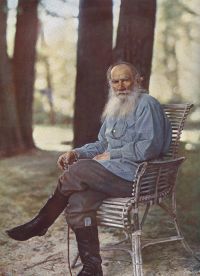 Leo Tolstoy,
War and Peace
(1869)
Leo Tolstoy,
War and Peace
(1869)
“ Prince Hippolyte, under pretense of helping, was in everyone’s way. ”
 Hippolyte Taine,
The Philosophy of Art
Hippolyte Taine,
The Philosophy of Art
“ Head, in Racine, the first dialogue of Oreste and Pyrrhus, and the whole of the part of Acomat and of Ulysse; nowhere is greater tact or oratorical dexterity apparent; nowhere more ingenious compliments and flatteries, exordiums so well poised, such a quick revelation, such an ingenious adjustment, such a delicate insinuation of appropriate motives. The wildest and most impetuous lovers—Hippolyte, Britannicus, Pyrrhus, Oreste, and Xipharès —are accomplished cavaliers who turn a madrigal and bow with the utmost deference. ”
Mrs. Lang, The Strange Story Book (1913)
“ On the other hand, it is not to be denied that the boy displayed the most amazing ingenuity in showing up the absurdities of Deschartres. Often, during lesson hours, Deschartres would be obliged hurriedly to leave his pupils to attend to something which had gone wrong in the house or the farm. Then Hippolyte would instantly seize his master’s flageolet and play it with all the airs and graces assumed by Deschartres. Ursule on her side, who worked steadily as long as her tutor was present, grew perfectly wild when they were left to themselves. ”
Antipope Hippolytus, Philosophumena; or, The refutation of all heresies… (1921)
“ See Euphrates Alcibiades, of Apamea. See Elchesaites Alcinous, chief source of Hippolytus for Plato’s doctrines, i. 51 n. 3 Alés, Adhémar d’, his Théologie de St. Hippolyte quoted, i. 66 n. 1 Amygdalus, Phrygian name of Attis, i. 140 Anaxagoras, his teaching, i. 44-46 Anaximander, his teaching, i. 42, 43 Anaximenes, his teaching, i. 43, 44 Andronicus the Peripatetic, quoted by Sethiani, i. 167 Apelles, follower of Marcion. His tenets, ii. 96, 97; his prophetess Philumena, ii. 96; summary of doctrines of, ii. 166 Apocatastasis, return of worlds to Deity, ii. 75 n. ”
Hippolytus, Ante-Nicene Fathers Vol. V, Hippolytus… (1885)
“ The account given by Hippolytus, the friend of the apostles. [1] In another little book bearing the name of Hippolytus, the friend of the apostles, I found a story of the following nature:—There lived a certain most noble and beautiful maiden [2] in the city of Corinth, in the careful exercise of a virtuous life. At that time some persons falsely charged her before the judge there, who was a Greek, with cursing the times, and the princes, and the images. Now those who trafficked in such things, brought her beauty under the notice of the impious judge, who lusted after women. ”
Hippolyte Taine,
A Tour Through the Pyrenees
“ There springs from it a tall, straight reed, with shining thongs, the stem, swollen with juices, striking deep into the slime; with every day it expands and changes: green at the outset, it reddens like the sun behind the mists. ”
Hippolyte Taine,
History of English Literature Volume 2…
“ Rochester begins by depriving love of all its adornment, and to make sure of grasping it, converts it into a stick. Every refined sentiment, every fancy; the enchantment, the serene, sublime glow which transforms in a moment this wretched world of ours; the illusion which, uniting all the powers of our being, shows us perfection in a finite creature, and eternal bliss in a transient emotion—all has vanished ”
Hippolyte Taine,
A Tour Through the Pyrenees
“ The road, as far as the eye can reach, curves and lifts anew its white girdle around the hills; this sinuous movement is of infinite sweetness; the long riband tightens to their figure their veil of fair harvests or their robe of green meadows. ”
Hippolyte Taine,
The Philosophy of Art
“ Nothing in his heads is overlooked—the finest lines and wrinkles, the faintly mottled surface of the cheeks, the black specks scattered over the nose, the bluish flush of imperceptible veins meandering under the skin, nor the reflection of objects in the vicinity on the eye. ”
Hippolyte Taine,
The French Revolution - Volume 1
“ It is like some tree of a unique species whose trunk, thickened by age, preserves in its annual rings and in its knots, branches, and curvatures, the deposits which its sap has made and the imprint of the innumerable seasons through which it has passed. ”
Hippolyte Taine,
History of English Literature Volume 1…
“ Suddenly a golden eagle, which soars near the sun, and glitters like a carbuncle, descends with the swiftness of lightning, and carries him off in his talons above the stars, dropping him at last before the House of Fame, splendidly built of beryl, with shining windows and lofty turrets, and situated on a high rock of almost inaccessible ice. ”
Hippolyte Taine,
A Tour Through the Pyrenees
“ In this wasted solitude you meet, all of a sudden, the most smiling parterre. A throng of the lovely iris crowds itself into the bed of a dried torrent: the sun stripes with rays of gold their velvety petals of tender blue; the harvest of plumes winds with the sinuosities of the bank, and the eye follows over the whole plain the folds of the rivulet of flowers. We climb a last eminence, sown with iris and with stones. There is a hut where you breakfast and leave the horses. You arm yourself with a stout stick, and descend upon the glaciers of the amphitheatre. ”
Hippolyte Taine,
The Philosophy of Art
“ Like Rubens, these artists delighted in painting ruddy and healthy flesh, the rich and quivering palpitation of life, the fresh and sensuous pulp which is diffused so richly over the surface of the living being, the real, and often brutal types, the transport and abandonment of unfettered action, the splendid lustrous and embroidered draperies, the varying hues of silk and purple, and the display of shifting and waving folds. ”
Hippolyte Taine,
The Philosophy of Art
“ They have been great through this harmony, and it is very necessary that it should ever be so. Phidias and Ictinus, the constructors of the Parthenon and of the Olympian Jupiter, were, like other Athenians, pagans and free citizens, brought up in the palæstra, exercising and wrestling naked, and accustomed to deliberate and vote in the public assemblies; possessing the same habits, the same interests, the same ideas, the same faith; men of the same race, the same education, the same language; so that in all the important acts of their life they are found in harmony with their spectators. ”
Hippolyte Taine,
History of English Literature Volume 1…
“ Shall I speak of dazzling Cleopatra, who holds Antony in the whirlwind of her devices and caprices, who fascinates and kills, who scatters to the winds the lives of men as a handful of desert dust, the fatal Eastern sorceress who sports with love and death, impetuous, irresistible, child of air and fire, whose life is but a tempest, whose thought, ever barbed and broken, is like the crackling of a lightning flash? ”
Hippolyte Taine,
History of English Literature Volume 1…
“ The delicate fancies of the old Welsh poetry, the grand ruins of the German epics, the marvellous splendors of the conquered East, all the recollections which four centuries of adventure had scattered among the minds of men, had become gathered into one great dream; and giants, dwarfs, monsters, the whole medley of imaginary creatures, of superhuman exploits and splendid follies, were grouped around a unique conception, exalted and sublime love, like courtiers prostrated at the feet of their king. ”
Hippolyte Taine,
A Tour Through the Pyrenees
“ The heather crowds its white bunches, small, open, vase-shaped flowers, from which springs a crown of garnet stamens. In the sheltered hollows, the blue campanulas swing their pretty bells; the least wind lays them low; they live for all that, and smile, trembling and graceful. ”
Hippolyte Taine,
A Tour Through the Pyrenees
“ Rosy hues, of an inexpressible softness, rest on the summits, then steal down along the slopes. One could never have believed that these gaunt old creatures were capable of an expression so timid and so tender. The light broadens, heaven expands, the air is filled with joy and life. ”
Hippolyte Taine,
History of English Literature Volume 1…
“ All the powers of his mind are concentrated in the present image or idea. He is buried and absorbed in it. With such a genius, we are on the brink of an abyss; the eddying water dashes in headlong, swallowing up whatever objects it meets, and only bringing them to light transformed and mutilated. ”
Hippolyte Taine,
History of English Literature Volume 1…
“ She continually harps upon the same ideas, repeats her reasons, piles them up and confounds them, like a stubborn mule who runs along shaking and ringing his bells, so that the stunned listeners remain open-mouthed, wondering that a single tongue can spin out so many words. ”
Hippolyte Taine,
The French Revolution - Volume 2
“ War, like a black cloud, rises above the horizon, overspreads the sky, thunders and wraps France filled with explosive materials in a circle of lightening, and it is the Assembly which, through the greatest of its mistakes, draws down the bolt on the nation's head. ”
