Homoptera

Definition and stakes

Theodore Wood,  The Animal World, A Book of Natural History

“ The order of the Homoptera, or same-winged insects, is followed by that of the Heteroptera, or different-winged insects, in which that part of the wings nearest to the body is hard and leathery, while the rest is softer and thinner, and is generally almost transparent. Some of these live upon land, while others spend most of their lives in the water. ”
Source: Gutenberg

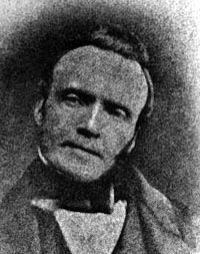
Portrait of James Duncan James Duncan,  The Naturalist's Library (1840)

“ Homoptera.
This, the second great division of the Hemipterous order, will be readily distinguished by having the rostrum apparently originating from the lower part of the head, near the breast; the hemelytra of a uniform consistence, approaching to membranous, throughout their whole extent; never overlapping each other when closed, and inclined on each side, forming a kind of roof over the body; the latter thick and convex; mesothorax and metathorax more developed than the prothorax; antennæ short and inconspicuous, terminating in a bristle; scutellum minute; ovipositor always distinct.
”
Source: Wikisource

George Herbert Carpenter,  1911 Encyclopædia Britannica (1911)

“ The Membracidae are remarkable on account of the backward prolongation of the pronotum into a process or hood-like structure which may extend far behind the tail-end of the abdomen. Two other allied families, the Cercopidae and Jassidae, are more numerously represented in our islands. The young of many of these insects are green and soft-skinned, protecting themselves by the well-known frothy secretion that is called “cuckoo-spit.”
In all the above-mentioned families of Homoptera there are three segments in each foot. The remaining four families have feet with only two segments.
”
Source: Wikisource

Get perspective with Kwize: daily news enlightened by great literature