Hyginus

Definition and stakes

1911 Encyclopædia Britannica, Volume 14… (1911)

“ Both are abridgments and both are by the same hand; but the style and Latinity and the elementary mistakes (especially in the rendering of the Greek originals) are held to prove that they cannot have been the work of so distinguished a scholar as C. Julius Hyginus. It is suggested that these treatises are an abridgment (made in the latter half of the 2nd century) of the Genealogiae of Hyginus by an unknown grammarian, who added a complete treatise on mythology. ”
Source: Wikisource

Various,  Encyclopaedia Britannica, 11th Edition…

“ Writers who have treated of this branch are Celsus (50 B.C.-A.D. 7) and Soranus of Ephesus (A.D. 98-138) , who refers in his works to the fact that the Roman midwives frequently called to their aid practitioners who made a special study of diseases of women. These midwives attended the simpler gynaecological ailments. This was no innovation, as in Athens, as mentioned by Hyginus, we find one Agnodice, a midwife, disguising herself in man’s attire so that she might attend lectures on medicine and diseases of women. After instruction she practised as a gynaecologist. ”
Source: Gutenberg

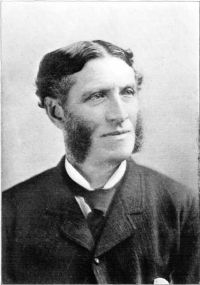
Portrait of Matthew Arnold Matthew Arnold,  The poetical works of Matthew Arnold (1897)

“ But Merope had borne to Cresphontes a third son, called Æpytus; him she gave to her own father to bring up. He, when he came to man's estate, returned secretly to Messenia, and slew Polyphontes and the other murderers of his father."
Hyginus says:—"Merope sent away and concealed her infant son. Polyphontes sought for him everywhere in vain. He, when he grew up, laid a plan to avenge the murder of his father and brothers. In pursuance of this plan he came to king Polyphontes and reported the death of the son of Cresphontes and Merope.
”
Source: Wikisource

Get perspective with Kwize: daily news enlightened by great literature