Amphioxus

Definition and stakes

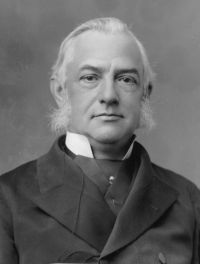
Francis M. Balfour,  The Works of Francis Maitland Balfour…

“ It is always formed in fundamentally the same manner as in Amphioxus. With reference to the second point it is to be noted that Amphioxus is exceptional amongst the Chordata in the fact that, before the closure of the neural groove, the layer of cells which will form the neural tube becomes completely separated from the adjoining epiblast (fig. 3 A) , and forms a structure which may be spoken of as the medullary plate; and that in the closure of the neural canal the lateral epiblast forms a complete layer above this plate before the plate itself is folded over into a closed canal. ”
Source: Gutenberg

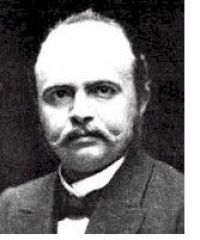
Portrait of Ernst Haeckel Ernst Haeckel,  The Evolution of Man — Volume 2

“ The Amphioxus differs more from the fishes than the fishes do from man and the other vertebrates. As a matter of fact, it is so different from all the other vertebrates in its whole organisation that the laws of logical classification compel us to distinguish two divisions of this stem: 1, the Acrania (Amphioxus and its extinct relatives) ; and 2, the Craniota (man and the other vertebrates) . The first and lower division comprises the vertebrates that have no vertebrae or skull (cranium) . ”
Source: Gutenberg

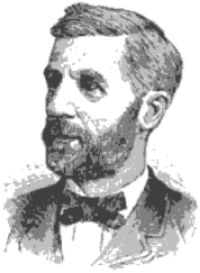
Walter Holbrook Gaskell,  The Origin of Vertebrates — Chapter XII (1908)

“ According to this explanation, the whole ventral portion of the somatic musculature of the adult Amphioxus belongs to the extension of the pleural folds, the original body-musculature being confined to the dorsal region. This is expressed roughly on the external surface of Amphioxus by the direction of the connective tissue septa between the myotomes (cf. Fig. 162, B) . These septa, as is well known, bend at an angle, the apex of which points towards the head. The part dorsal to the bend represents the part of the muscle belonging to the original body ”
Source: Wikisource

Get perspective with Kwize: daily news enlightened by great literature