 Henry David Thoreau,
Yankee in Canada
(1866)
“ Trade and commerce, if they were not made of India-rubber, would never manage to bounce over the obstacles which legislators are continually putting in their way; ”
Henry David Thoreau,
Yankee in Canada
(1866)
“ Trade and commerce, if they were not made of India-rubber, would never manage to bounce over the obstacles which legislators are continually putting in their way; ”
William Augustus Miles, The Letters of Gracchus on the East India Question
“ Surely, if the foundations of the empire in both hemispheres have nothing more to threaten them, than whether the out-port shipping shall carry their cargoes home to their respective ports, or repair to the dock-yards in the port of London, the most timid politician may dismiss his alarms and resume his confidence. When the East India Company, by conceding a regulated Export Trade, have at once demonstrated the absurdity of all the predictions which foretold, in that Trade, the overthrow of the Indian Empire ”
John Welsh Dulles, Life in India (1855)
“ With a rude machine, costing, with all its appurtenances, but a half dollar or dollar, seated on the ground of his clay-built hut, the Hindu weaver produces fabrics of wonderful fineness and elegance, that once were the admiration of the world. Now, however, the great cheapness of the goods made by the aid of machinery and steam in Europe and America, has diminished the demand for Indian cloths abroad, and even threatens in India itself to drive the laborious Hindu from competition with his more ingenious competitors. ”
Sir Valentine Chirol, India, Old and New
“ Western civilisation in all its parts,—religion, education, art, business and government,—is gross, materialistic and therefore degrading to India. The patriotic Indian must recognise the grave danger lurking in every element of Western influence, must hate it, and must be on his guard against it. India ought to be made truly Indian. There is no place for Europeans in the country. Indians can manage everything far better than Europeans can. The British Government, Missions, European trade and Western influence of every kind, are altogether unhealthy in India. ”
 George Dodd,
The History of the Indian Revolt and of the Expeditions to Persia…
“ Commercial men, estimating nations and countries by a standard familiar to themselves, had long complained that the Company did not encourage independent commerce in India; and now they said: ‘If you had acted with English good sense, the revolt would never have occurred. Afford facilities for the construction of railways, canals, and docks; build ships and steamers; develop your mineral wealth in coal and iron; sell or let plots of land to men who will bring English experience and English machinery to bear on its cultivation ”
Edmond Kelly, Twentieth Century Socialism: What It Is Not…
“ In India, as has been described, the destruction of hand-loom weavers by machinery brought about a misery hardly paralleled in the history of war; "the bones of the cotton-weavers are bleaching on the plains of India." ”
“ They can not protect and subsidise Indian industries, as that is opposed to free trade and detrimental to British industries. Yet they want the Indians to believe that the British Government in India is primarily conducted in the interests of India. ”
 John Timbs,
Knowledge for the Time
“ Under every item of charge, military as well as civil, the return in the case of India is nil. Where the rest of the Colonies figure for upwards of 3,000,000l. in the way of cost, India makes no demand whatever. That great Empire could supply us with almost everything we want. It could send us tea and silk when China fails; and if there can be any adequate substitute for the American cotton-fields, it is in India that we must seek it. ”
Sir Valentine Chirol, Indian Unrest
“ No measure has done greater injury to the cause of Free Trade in India or more permanent discredit to British rule than this Excise duty on Indian manufactured cotton, for none has done more to undermine Indian faith in the principles of justice upon which British rule claims, and, on the whole, most legitimately claims, to be based. ”
Robert Orme, A History of the Military Transactions of the British Nation in Indostan… (1861)
“ Their real wants from abroad are only the metals; but since Europe has opened a trade to India, they have consumed large quantities of woollen manufactures, and require arms, and a variety of mechanical implements better than they can make themselves, some from fancy, but the greatest part for use. The abundance of advantages peculiar to this country have induced the eastern world to call it the paradise of India; and the western, without hyperbole, the rich kingdom of Bengal. ”
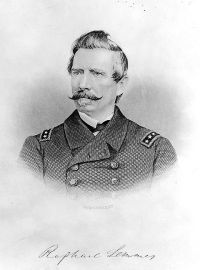 Raphael Semmes,
Memoirs of Service Afloat, During the War Between the States
“ Here is one of their conquests which no one can doubt—the transfer of the cotton supply of the world, from these Southern States to British India. The time is not far distant when Yankee spindles and looms will be spinning and weaving India cotton for the supply of their own people.The moral conquest of India, by the British people, is even more remarkable and more admirable than its physical conquest. Since their last Indian war, the whole country, from one end of it to the other, has settled down in the most profound peace. ”
| editor, The Modern Review, Volume 38, Number 6… (1925)
“ While all activity is paralysed by dissensions, foreign nations, not over-friendly to Indian interests, are pursuing their policy of exploitation and consolidation of their claims on India’s resources. The peaceful penetration will inevitably lead to forceful occupation and division of India into different spheres of influence. There lies India’s great peril. ”
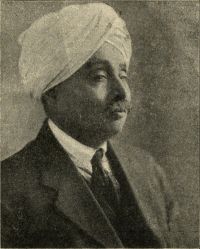 Lala Lajpat Rai,
Young India
(1916)
“ For three thousand years before England's arrival in the Orient, Indian Kingdoms and Empires had held leading places in Asia, and that means in the world. Some of the ablest rulers, statesmen, generals and financiers known to history, as well as many of the greatest thinkers and writers of mankind, have been of India’s production. How is it, then, that she suddenly becomes imbecile and unable to stand on her own feet or conduct her own affairs as soon as England appears on the scene? ”
Francis Edward Younghusband, The Empire and the century — Our True Relationship with India (1905)
“ And with the increasing pressure of Europe upon Asia, and the competition for its markets, it seems impossible to look forward to a time when India could, with advantage to the Indians or anyone else, be left to govern itself. ”
William Augustus Miles, The Letters of Gracchus on the East India Question
“ To give perfection to the great object here sketched out, it will be indispensably necessary that the local authorities in India should direct their most serious attention to this subject. As our Indian empire is our only security for our Indian trade, so our Indian trade must be rendered an object of vigilant concern to those who administer the Government of that empire. From the multiplicity and importance of their other avocations, that trade has not hitherto received all the consideration to which its high value is entitled ”
Lala Lajpat Rai,
The Political Future of India
“ But that is not the only way to look at the international importance of India. By its geographical situation it is the connecting link between the Near East and the Far East and the clearing house for the trade of the world. Racially, it holds the balance between the European Aryan and the yellow races. In any military conflict between the white and the yellow races, the people of India will be a decisive factor. In a conflict of peace they will be a harmonising element. Racially they are the kin of the European. By religion and culture they are nearer the Chinese and Japanese. ”
Francis Bradley Bradley-Birt, An American Girl in India (1911)
“ It's just typical of what Western civilization has done so far for India. Like new cloth on an old garment, it has just patched itself on in an obvious, startling, ugly patch, absolutely ruining the charm of things Eastern and picturesque. So utterly unlike, it seems impossible they should ever merge gracefully the one into the other. ”
Aleph Bey, That Eurasian (1895)
“ It is not long since India was permitted to establish its first factory, and is it not true to-day that although India has an abundance of iron, coal, cotton, timber, everything needful, yet all the government supplies must be indented for from England for the benefit of her manufacturers and commission men? Is not England jewing India at every turn for her own benefit? ”
William Augustus Miles, The Letters of Gracchus on the East India Question
“ What these causes are he thus explains:—"The export trade to India can never be extended to any degree, proportionate to the wealth and population of the Indian Empire; neither can the returns upon it be very profitable to individuals. Those [Pg 72] who attend to the manners, the manufactures, the food, the raiment, the moral and religious prejudices of that country, can be at no loss to trace the causes why this proposition must be a true one." ”
“ British statesmen, politicians, publicists and journalists all talk of the blessings of British rule in India, of what the British have done there in establishing peace and order, in making railways and canals, in imparting education, in stimulating trade, in administering impartial justice, in fostering industries,{86} in organising the postal and the telegraph systems, and in opening the country to the world. They cannot see why the Indian should wish to get rid of the British. ”
Mohandas K. Gandhi, Freedom's Battle (1922)
“ I make bold to say that the moment the Englishmen feel that although they are in India in a hopeless minority, their lives are protected against harm not because of the matchless weapons of destruction which are at their disposal, but because Indians refuse to take the lives even of those whom they may consider to be utterly in the wrong that moment will see a transformation in the English nature in its relation to India and that moment will also be the moment when all the destructive cutlery that is to be had in India will begin to rust. ”
 Laurence Housman,
Ploughshare and Pruning-hook
(1919)
“ And in so far as we have done this we have not possessed ourselves, but have dispossessed ourselves of the real beauties and values of Indian civilization; and, for the sake of trade-profit to our merchants and manufacturers, we hold in our hand a poorer India in consequence, and are the poorer possessors of it. ”
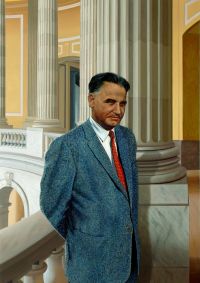 Dalip Singh Saund,
My mother India
(1930)
“ Only two hundred years ago India was the richest country in the world. Today it is the poorest. The gorgeous palaces of its kings with their enormous treasures were the objects of admiration and wonder for the other nations of the world. Its flourishing industries and its highly lucrative trade excited the greed and envy of the merchant classes everywhere. Its merchant ships laden with cargoes of valuable spices, silken and cotton manufactures, and precious jewels sailed into the harbors of England and other countries of Europe. ”
Lady Isabel Burton, The Life of Captain Sir Richard F. Burton…
“ The India House may well be quoted as 'the focus of politics for nearly all Asia, and the storehouse of romance of all the East.' It has to regulate our relations with all the neighbouring foreign Powers beyond the limits of Hindustan, and with the four hundred and sixty dependent Princes and Chiefs within our own Indian Empire."I inspected the cotton-mills. It is evident that India must become a manufacturing country, or it can no longer defend its teeming millions from famine. ”
Sir Valentine Chirol, India, Old and New
“ What drove the iron into the soul of India more than the things actually done in the Punjab, for which many Indians admit the provocation, was the reluctance of her rulers to look them in the face, and the tardiness and half-heartedness of the atonement made for them. ”
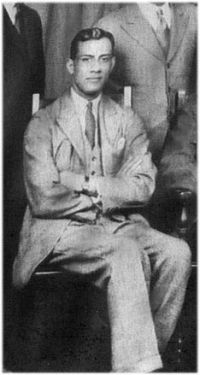 Choudhary Rahmat Ali,
India: The Continent of Dinia, or the Country of Doom
(1946)
“ The fact that it is much the same today is all the more remarkable because, in the British Period, the vast resources of the Anglo-Hindoo Entente have been systematically employed to destroy the ancient distinctions and divisions of India yet their indestructibility is such that they have survived in their entirety. The result is that, like any other continent, India remains as divided as ever. ”
Various, Blackwood's Edinburgh Magazine…
“ India is at this moment a mine of unexplored wealth. No sooner had steam-boats appeared than coal has been discovered in every direction!" The manufacture of native iron in Bengal, which had been pressed upon Lord Hastings, as the colonel seems to imply, by himself, and at first warmly adopted by him, was objected to in the council, and ultimately abandoned, "on the grounds that it would militate against the commercial interests of Great Britain—that is, against the profits of those India stockholders, possessing votes, who followed the trade of ironmongers!" ”
Sir Valentine Chirol, Indian Unrest
“ For it alone lends—and can within any measurable time lend—substantial reality to the mere geographical expression which India is. A few Indians may dream of a united India under Indian rule, but the dream is as wild to-day as that of the few European Socialists who dream of the United States of Europe. ”
Lala Lajpat Rai,
Young India
(1916)
“ If our men are capable of such initiative and valiant deeds on the actual field of battle, why, Indians naturally ask, should they not be trusted in the piping times of peace? Had they only been trained and allowed to serve, millions and millions would have sprung to the side of England at her slightest call in this, the hour of her need. Indeed, no other nation of the world has such an inexhaustible source of strength as Great Britain has in the teeming masses of India, but India has been so maimed and crippled in her manhood that she can help neither herself nor Great Britain. ”
 H. G. Wells,
The Passionate Friends
“ India gives it all from first to last, and now the modern movement, the latest half-conscious struggle of the New Thing in mankind, throws up Bombay and Calcutta, vast feverish pustules [Pg 234] upon the face of the peninsula, bridges the sacred rivers with hideous iron lattice-work and smears the sky of the dusty ruin-girdled city of Delhi,—each ruin is the vestige of an empire,—with the black smoke of factory chimneys. ”
Lala Lajpat Rai,
The Political Future of India
“ As an integral part of the Indian body politic they are entitled to all the consideration which they deserve by virtue of their intellectual or economic position. They should henceforth be Indo-British both in spirit and in name. They will find the Indians quite ready to forget the past and embrace them as brothers for the common prosperity of their joint country. ”
Sir Charles Wentworth Dilke, Greater Britain: A Record of Travel in English-Speaking Countries During 1866-7
“ Although we are forced to contemplate the speedy loss of our manufacturing supremacy as coal becomes cheaper in America and dearer in Old England, we have nevertheless as much to bestow on America as she has to confer on us. The possession of India offers to ourselves that element of vastness of dominion which, in this age, is needed to secure width of thought and nobility of purpose; but to the English race our possession of India, of the coasts of Africa, and of the ports of China offers the possibility of planting free institutions among the dark-skinned races of the world. ”
| editor, The Modern Review, Volume 38, Number 6… (1925)
“ I have shown that there is a great capacity in Indians for discovery and invention. How is this to be utilised for saving India in her present economic crisis? Let us frankly face the danger; the present unrest in India, as in Europe, is in reality ultimately due to severe economic distress. It is hunger that drives people to desperation and to the destruction of all that has been slowly built up for ordered progress. ”
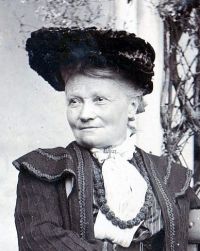 Flora Annie Webster Steel,
India Through the Ages: A Popular and Picturesque History of Hindustan
“ India is very wide, and she is very secretive. How can it be otherwise, when beyond reach of the clash and welter of kings, of courts and conquests, the great mass of the people live untouched by change, watching their crops, ploughing, sowing, reaping, "undisturbed" (as Megasthenes pointed out with wonder) , "even when battle is raging in their neighbourhood, by any sense of danger, since the tillers of the soil are regarded by the Indians as a race sacred, inviolable." To the world beyond such lives are a secret; they hold the unknown. ”
H. G. Wells,
The Outline of History: Being a Plain History of Life and Mankind
“ India had endured many changes of rulers before, but never the sort of changes in her ways that these things portended. The Moslem teachers and the Brahmins were alike alarmed, and the British were blamed for the progress of mankind. Conflicts of economic interests grew more acute with the increasing nearness of Europe; Indian industries, and particularly the ancient cotton industry, suffered from legislation that favoured the British manufacturer. ”
