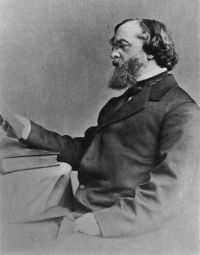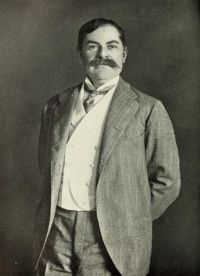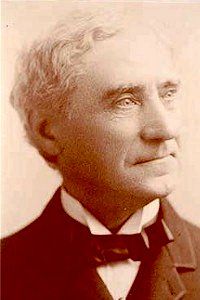
James Freeman Clarke

Definition and stakes

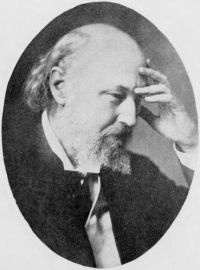
Portrait of Octavius Brooks Frothingham Octavius Brooks Frothingham Transcendentalism in New England…

James Freeman Clarke as little deserves to be ranked among the Minor Prophets as any, for he was one of the earliest Transcendentalists, a contemporary and intimate ally of Parker, a co-worker with Channing, a close friend and correspondent of Miss Fuller, a sympathizer with Alcott in his attempts to spiritualize education, a frequent contributor to the "Dial," the intellectual fellow of the brilliant minds that made the epoch what it was. But his interest was not confined to the school, nor did the technicalities or details of the transcendental movement embarrass him
Source: Gutenberg

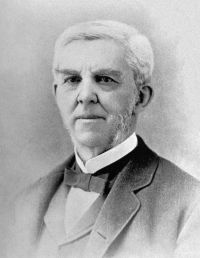
Oliver Wendell Holmes Over the Teacups

The greatly increased mortality which began with our seventh decade went on steadily increasing. At sixty we come “within range of the rifle-pits,” to borrow an expression from my friend Weir Mitchell.
Our eminent classmate, the late Professor Benjamin Peirce, showed by numerical comparison that the men of superior ability outlasted the average of their fellow-graduates. He himself lived a little beyond his threescore and ten years. James Freeman Clarke almost reached the age of eighty.
Source: Gutenberg

1911 Encyclopædia Britannica, Volume 6… (1911)

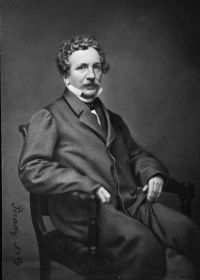
Most of Clarke’s earlier published writings were addressed to the immediate need of establishing a larger theory of religion than that espoused by people who were still trying to be Calvinists, people who maintained what a good American phrase calls “hard-shelled churches.” But it would be wrong to call his work controversial. He was always declaring that the business of the Church is Eirenic and not Polemic. Such books as Orthodoxy: Its Truths and Errors (1866) have been read more largely by members of orthodox churches than by Unitarians.
Source: Wikisource

Get perspective with Kwize: daily news enlightened by great literature